About Commelina benghalensis L.
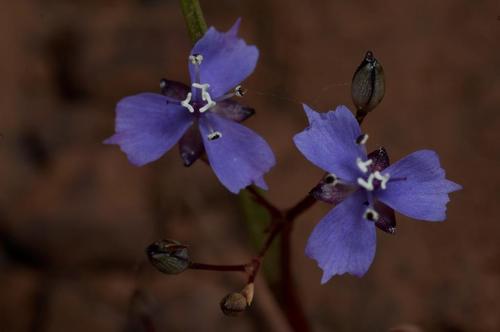
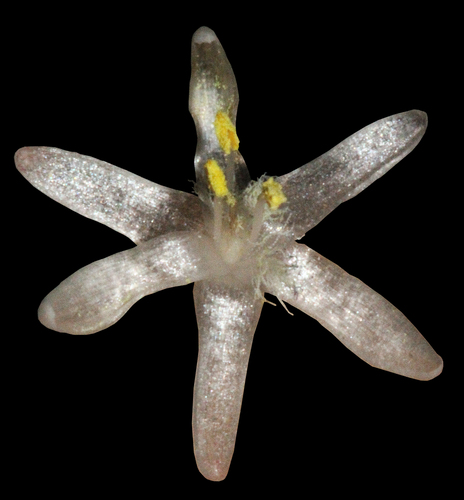
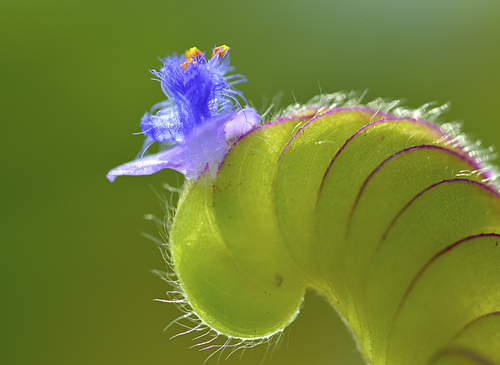
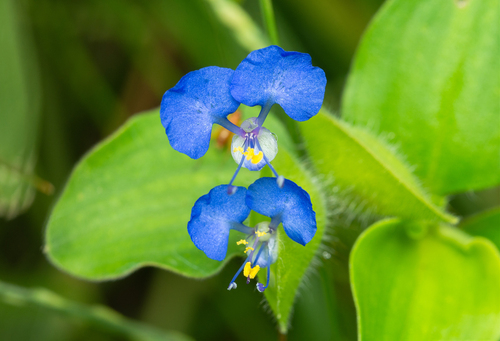
Commelina benghalensis L. shows different life cycles depending on location. In Jammu, India, it is an annual that grows from May to December and flowers from June to October. In the Andaman and Nicobar Islands, which are closer to the equator, it is a perennial that flowers year-round. The plant produces three types of branches: aerial/negatively geotropic branches, subaerial/diageotropic branches, and underground/positively geotropic branches. Underground branches do not produce leaves. Commelina benghalensis has a broad range, and is native to tropical and subtropical Asia and Africa, a region called the paleotropics. In China, it is commonly found in wet locations, growing from near sea level up to 2300 metres. Its distribution in China spans from the northeastern provinces of Hebei and Shandong, west to Sichuan, across all provinces south to the southernmost province of Hainan, and it also grows in Taiwan. In Japan, it is restricted to the southern parts of the country: from the southern Kantō region westward, including the islands of Shikoku and Kyūshū. Although its roots and tubers are eaten as food, C. benghalensis is not cultivated in Ethiopia, where it grows as a weed. The species has been widely introduced outside its native range into the neotropics, as well as to southeastern United States, California, Hawaii, Cuba, Jamaica, Puerto Rico, Martinique, Montserrat, Barbados and St Vincent. In Puerto Rico, the plant is only known from a single collection made in Cayey. It was first collected in the southeastern United States in 1928, and first collected in Hawaii in 1909. In the southeastern US, it occurs in Florida, Georgia, Louisiana and North Carolina, and is currently spreading. It was added to the US Federal Noxious Weed List in 1983, and by 2003 it was considered the most serious pest affecting Georgia's cotton crop, because common herbicides like glyphosate have little effect on it. It was introduced separately to California in the 1980s, and is the only introduced Commelina species found in the western United States. It typically grows in disturbed soils such as yards, lawns and cultivated areas, particularly in cotton crops and orange groves. Bengal dayflowers have very diverse reproductive systems. They produce three types of flowers: male chasmogamous, hermaphrodite chasmogamous, and hermaphrodite cleistogamous. All three flower types develop on aerial branches. Only hermaphrodite chasmogamous flowers develop on subaerial branches, and only cleistogamous flowers develop on underground branches. Some plants may additionally produce female flowers on their aerial branches. Developing flowers are enclosed in mucilaginous spathes. Flowers are zygomorphic with blue petals. The androecium (male reproductive organ) holds six stamens, of which only three are fertile. One fertile stamen is longer and yellow, while the other two are shorter and grey. Pollen grains are yellowish and capsule-shaped. The gynoecium (female reproductive organ) has three fused carpels. Flowers on aerial and subaerial branches have five ovules per ovary, while flowers on underground branches have three ovules per ovary. Seeds are ovoid, measuring 2 mm long and 1.5 mm wide. There are four seed types: large and small aerial seeds, and large and small underground seeds. Plants grown from large underground seeds grow the fastest during their first 2–4 weeks, suggesting they have better competitive ability. All other seed types have a dormancy period. These dormant seeds are thought to help the species survive stressful periods such as drought, or spread to new areas. Research by Kim Sang Yeol found that 75-77% of seeds are the small aerial type, while only 2-4% of seeds are underground seeds. In China, the plant is used medicinally as a diuretic, febrifuge and anti-inflammatory agent. In Pakistan, it is used as animal fodder, and is also eaten by humans as a vegetable. It is also used medicinally in Pakistan, with purported effects including acting as a laxative, and curing skin inflammations and leprosy. In Nepal, people eat the young leaves as a vegetable, make a paste from the plant to treat burns, and drink root juice to treat indigestion. Its use as a famine food in India has been recorded. In southeast Asia and Africa, it is used as fodder and used medicinally as a poultice.