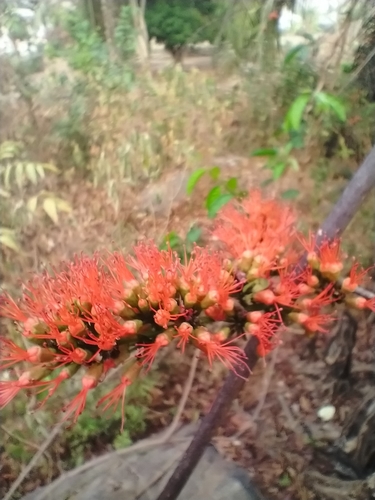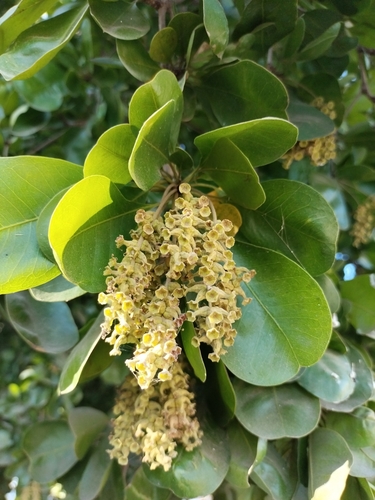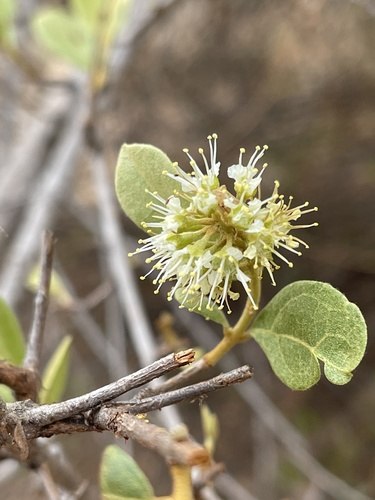
About Combretum hereroense Schinz
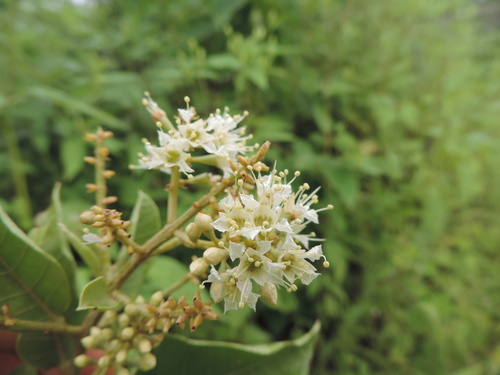
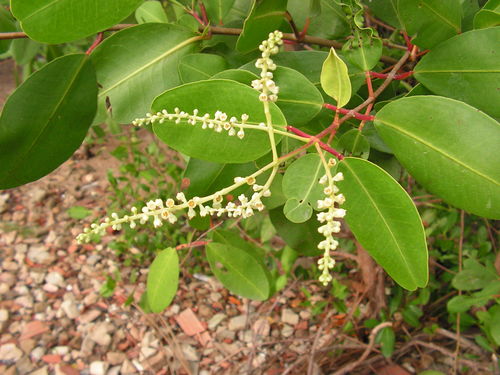
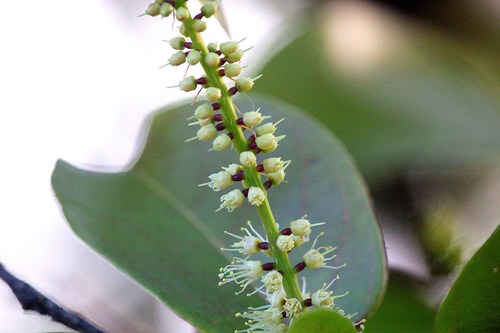
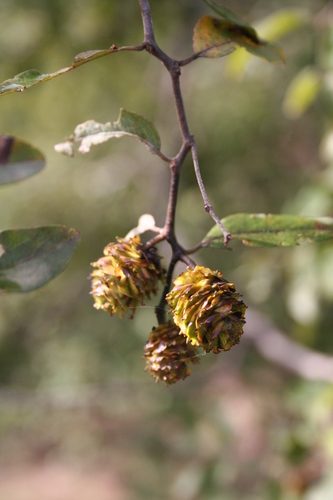
Combretum hereroense Schinz, commonly called the russet bushwillow and mouse-eared combretum, is a deciduous shrub or small tree distributed from eastern Africa to northern South Africa. Across its broad range, this species shows variation in leaf shape, fruit size, and indumentum.
Its confirmed distribution includes southern Somalia, southern Ethiopia, Uganda, Kenya, Tanzania, Malawi, Zambia, Mozambique, southern Angola, northern Namibia, Botswana, and northern South Africa. It grows at elevations ranging from near sea level to around 1,500 m above sea level, and up to 2,700 m above sea level in local areas. It is a component of various types of dry, open bushland, including mopane and secondary gusu woodlands. It is regularly found growing on termite mounds, along the edges of pans, marshes and dambos, or on river banks in northern Kenya. It occurs in both flat and rocky terrain, and grows well on sandy or silty substrates.
Human uses of this species include: dried leaves are prepared into tea, the gum produced by the plant is eaten, the wood is collected for use as fuel, and the roots are used in traditional medicine.