About Columba vitiensis Quoy & Gaimard, 1832
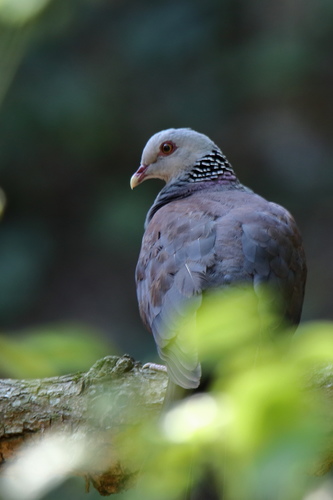
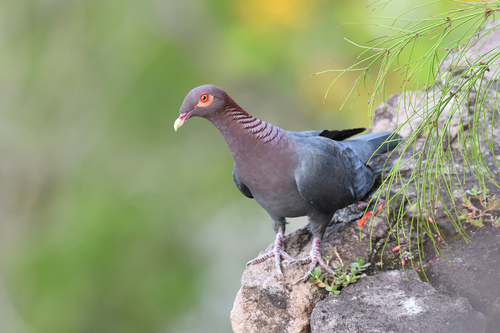
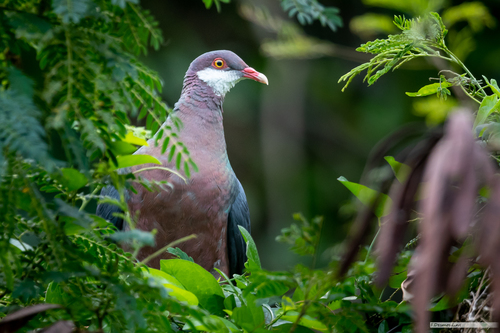
Columba vitiensis Quoy & Gaimard, 1832, also known as the metallic pigeon, can be identified by the following traits. Adult individuals have an iridescent purple and green crown, black wing and uppertail coverts, a yellowish red iris, yellow bill, red orbital skin, white or grey chin and ear coverts, and purplish feet. Their underparts are either dull chestnut or glossed purple-green, with the exact coloration depending on the subspecies. The nominate subspecies C. v. vitiensis, found in Fiji, has dull underparts, while the subspecies C. v. halmaheira from the Maluku Islands has the most iridescent plumage of the species. Males and females have similar appearance. Juvenile pigeons have duller plumage than adult individuals. This species is distributed across the tropical forests of eastern Indonesia, the Philippines, New Guinea, the Solomon Islands, Fiji, New Caledonia, Samoa, and surrounding islands in the southwest Pacific. One subspecies, the Lord Howe pigeon, was once native to Lord Howe Island in Australia, but was hunted to extinction around 1853. The metallic pigeon’s diet consists mainly of a variety of fruits, grains, seeds, and berries. Females of this species usually lay between one and two eggs per clutch.