About Columba larvata Temminck, 1809
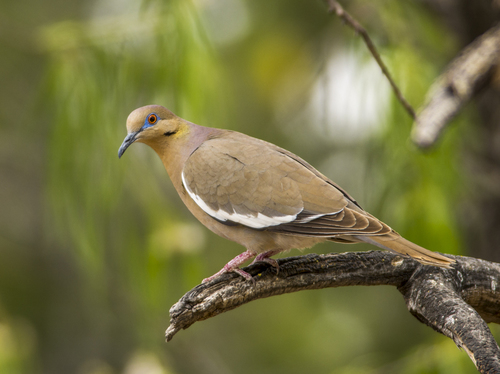
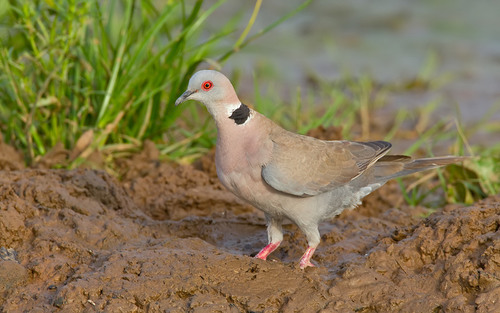
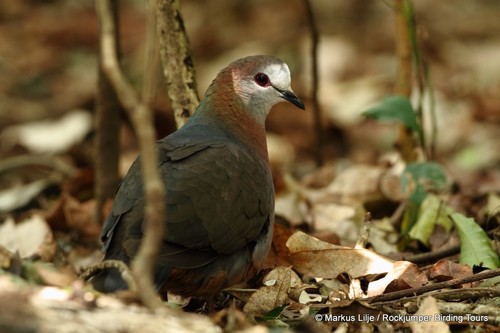
The lemon dove, scientifically Columba larvata Temminck, 1809, is a fairly small species, measuring 24–30 cm (9.4–11.8 in) in length and weighing 81.7–150 g (2.88–5.29 oz). Adult lemon doves have dark brown plumage on their upper bodies. The sides of their necks carry a weak iridescent gloss that shifts between greenish and bronze depending on light angle. Their underparts are cinnamon brown, and they have a pale whitish face that gradually blends into the brown body plumage. Their feet, iris, and orbital skin are red, while their bill is black. Males and females have very similar appearance, though females are slightly duller. Juveniles show less iridescence, have lighter brown plumage with pale fringes on wing covert and body feathers that create a barred look, and have duller grey facial markings. Western African subspecies of the lemon dove have greyer plumage than subspecies found in southern and eastern Africa. This species has a very wide range, and lives in montane forests across sub-Saharan Africa. In eastern Africa, it occurs at altitudes ranging from 100 to 3,000 metres (330 to 9,840 ft). Its diet consists mainly of a variety of small fruits, seeds, molluscs, and insects. Females typically lay two creamy white eggs.