About Coloradia pandora Blake, 1863
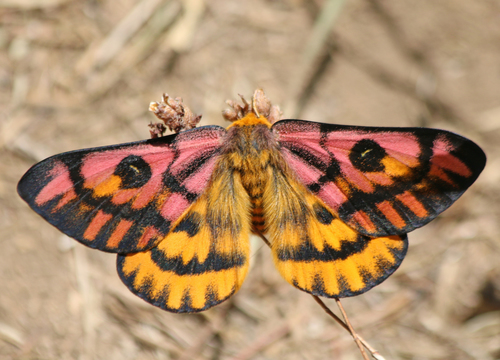
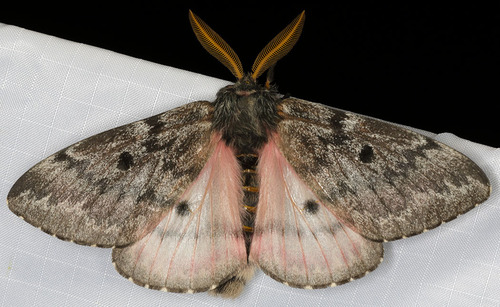
Coloradia pandora, commonly known as the Pandora moth or Pandora pinemoth, is a moth species in the genus Coloradia. It was first formally described by C. A. Blake in 1863, and is native to the western United States.
The larvae of the Pandora moth feed on the foliage of multiple pine species, including lodgepole pine, Jeffrey pine, and ponderosa pine. Larval populations sometimes grow large enough to cause severe defoliation, and recorded outbreaks have occurred in northern Arizona, central Oregon, and southern California.
Pandora moths are semivoltine, meaning they produce one new generation every two years. Adult moths emerge around the end of June, lay eggs that hatch in August. The larvae stay on host trees through the winter and continue feeding on foliage. The following summer, the larvae drop from the trees, pupate, and bury themselves in the ground, where they remain for one year (or 2–4 years in some areas) before emerging as adult moths.
The Paiute people (Nüümü) of California's Owens Valley (Payahuunadü) and Mono Lake (Kootza Paatsehota) harvest, prepare, store, and eat the Pandora moth larvae, which they call piuga or piagü. This traditional food use has brought the Paiute into conflict with the United States Forest Service, which uses insecticides to control moth populations.
Larvae are collected when they are fully mature, during their July or early August migration to the forest floor at the end of their first year of life. They are gathered by hand one to two times per day, and stored temporarily in ground trenches. The larvae are then roasted for 30 minutes to an hour in fire-heated sand; the sand cooks the larvae and removes their urticating fine hairs called setae. After roasting, the larvae are washed, sorted, and dried. When stored in a cool, dry place, the prepared larvae stay good for at least one year, and possibly up to two years. Before eating, dried piuga is reconstituted by boiling for around an hour in plain or salted water. Boiled piuga has an odor that is described as similar to cooked mushrooms. It is eaten as a finger food, and the entire larva is consumed except for the head. The water used to boil the larvae is also eaten as broth, or used as a base for a stew made with piuga and vegetables.