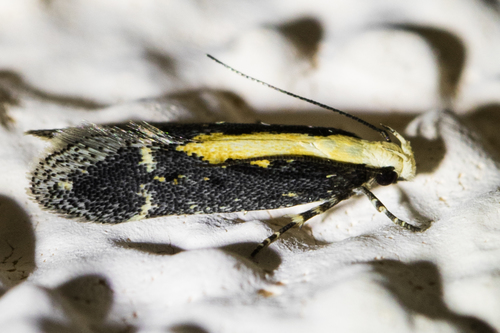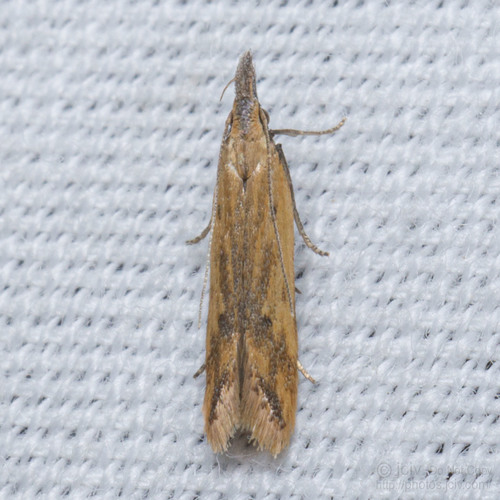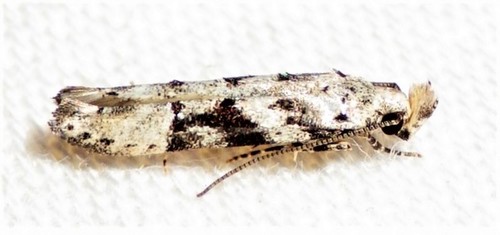
About Coleotechnites atrupictella (Dietz, 1900)
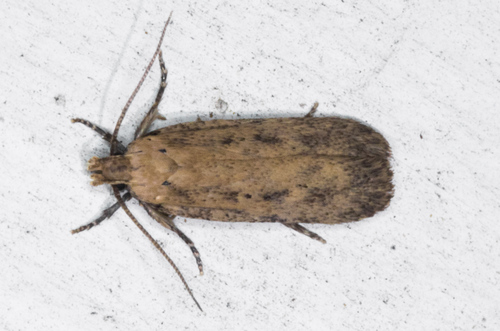
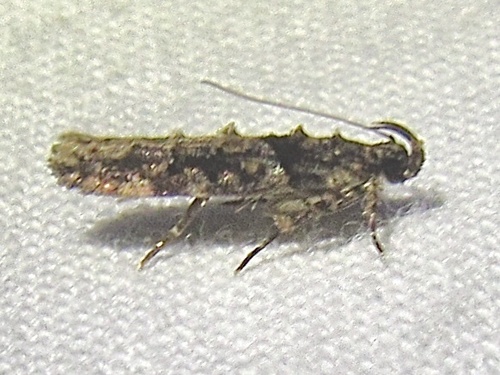
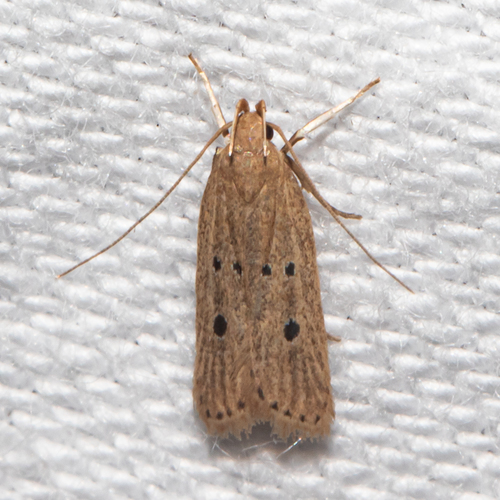
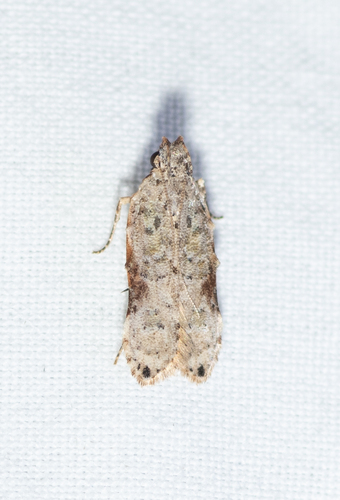
Coleotechnites atrupictella (Dietz, 1900) has a wingspan of 9–10 mm. Its forewings bear blackish markings, including a marking at the outermost edge of the costa that extends from the wing base to one-fifth of the wing’s length. An oblique fascia starts at one-fifth of the wing from the costa, reaches the dorsal margin at one-third of the wing length, is less distinct at the dorsal margin, is doubly sinuate along its outer edge, and fades gradually into the wing’s base ground color. A broad, less oblique fascia is located before the middle of the wing; it narrows toward the dorsal margin and does not reach it, and is doubly sinuate toward the wing base. A third fascia, narrower than the previous broad fascia, sits at slightly less than two-thirds of the wing length. It is slightly oblique, narrows toward the dorsal margin without reaching it, and is positioned further from the wing base at its costal end than at its dorsal end. A long stripe runs through the middle of the wing, extending from the second fascia through the third fascia and somewhat beyond it. Around the wing apex, there are five larger spots along with several very small, indistinct spots. The hindwings are pale ash-gray. Adult moths are active from April to September, and there is one generation per year. The larvae feed on the leaves of a range of conifer species, including Picea mariana, Picea engelmannii, Picea rubens, Picea glauca, Pinus contorta, Pinus ponderosa, Tsuga heterophylla, Pseudotsuga menziesii and Abies lasiocarpa. Larvae have reddish bodies and greenish-brown heads, and can be found in June and July. This species overwinters in the egg stage.