About Coleophora serratella (Linnaeus, 1761)
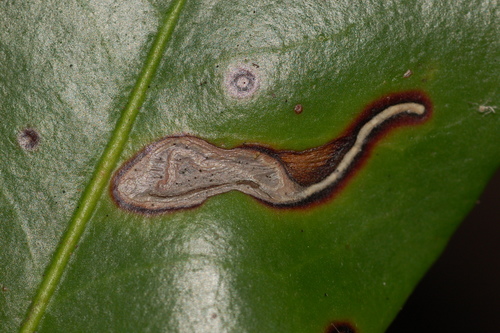
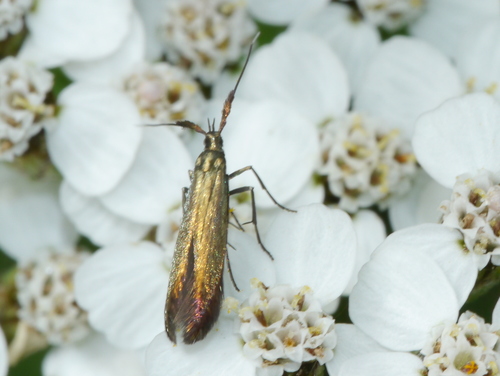
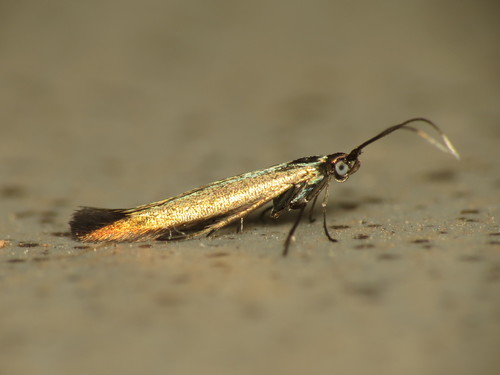
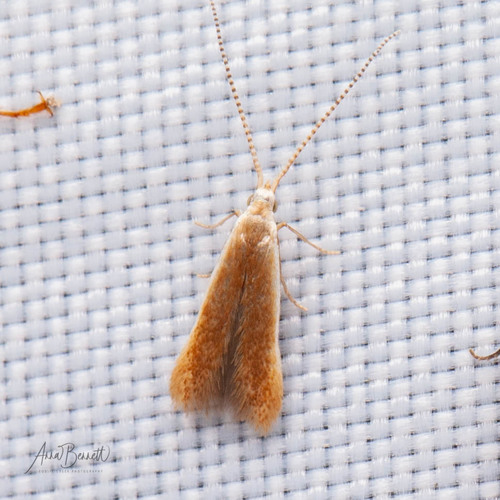
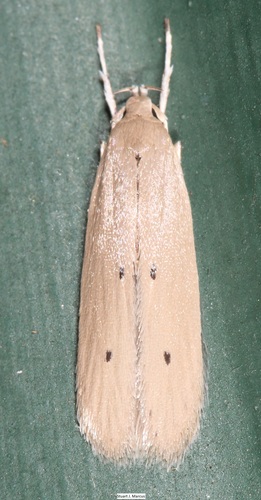
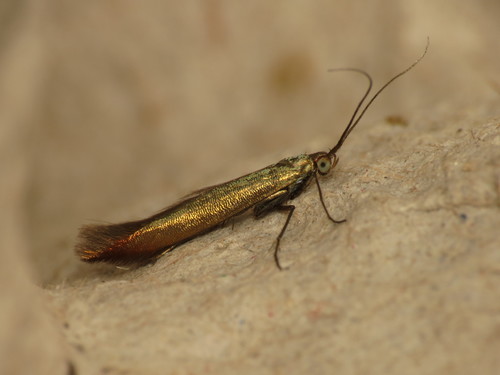
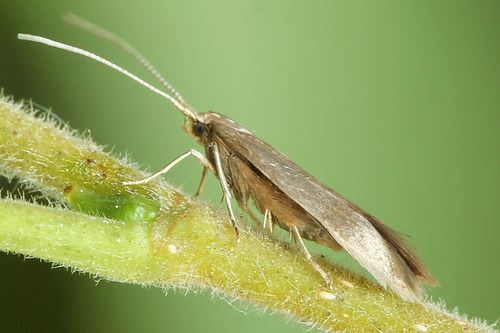
Coleophora serratella (Linnaeus, 1761) has a wingspan of 11–14 millimetres (0.43–0.55 in). All species in the Coleophora genus share these general traits: they have narrow blunt to pointed forewings and a weakly defined tornus. Their hindwings are narrow-elongate and have very long fringes. The upper surfaces of the wings have neither a discal spot nor transverse lines. Each segment of the abdomen has paired patches of tiny spines that show through the scales. When at rest, the moth holds its body horizontally with the front end raised. If the wings are rolled around the body, the cilia give the hind tip a frayed, upturned look. C. serratella has specific distinct characteristics: the head is light ochreous-fuscous; the antennae are whitish, ringed with fuscous, with ring markings becoming more faint or obsolete towards the apex, and the basal antenna joint is fuscous; the forewings are rather dark fuscous with an ochreous tinge; and the hindwings are dark fuscous. This species can only be reliably identified through dissection and microscopic examination of the genitalia. In its life cycle, the adult moth flies in June, with timing varying by location. The larvae of C. serratella feed on birches, elms, alders, hazels, apples, Crataegus, Sorbus, willows, Comptonia peregrina and Quercus wislizenii.