About Colchicum ritchii R.Br.
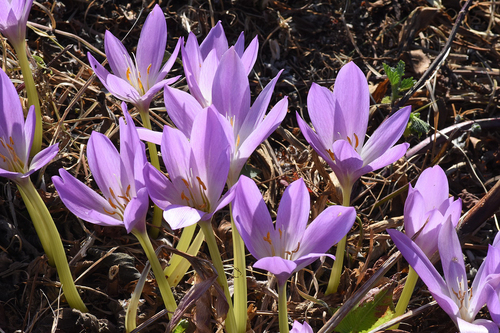
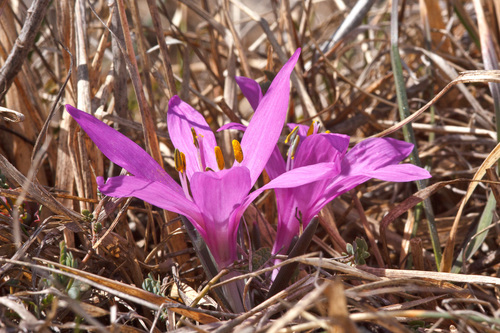
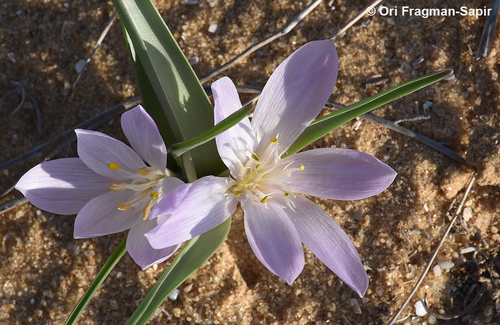
Colchicum ritchii R.Br. grows from an oval corm that measures 2–3.5 cm across, and is covered with loose brown skin. Its leaves emerge and develop at the same time as the flowers, are mostly hairless, and elongate after flowering to form a cone that protects developing fruits. Flowers appear from December to February, and are either white or pink, with plants of both colors often growing alongside one another. Each individual plant produces 2 to 10 flowers; each flower has 6 tepals, 6 anthers, and 3 styles. The inner tepals are ridged, and have only one, or at most very few, teeth at their base, near the base of the anther. The anthers themselves are black, but become covered in yellow pollen. The fruit is a green, irregularly shaped capsule that grows up to 35 mm long and 15 mm across, and contains round, globular seeds. This species grows in sand and loess soils in desert and shrub-steppe habitats. It is distributed across a range from Tunisia in the west to Jordan and Saudi Arabia. Extracts of Colchicum ritchii are used in traditional medicine to treat arthritis, rheumatism, gout, and abdominal colics. Bedouin children dig up the corms from the desert, dry them, and sell them to herbalists in Alexandria and other Egyptian cities. The anti-inflammatory drug colchicine was originally extracted from closely related species to this plant in ancient Egypt.