About Colchicum autumnale L.
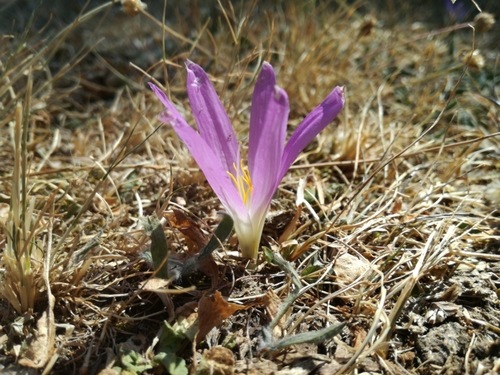
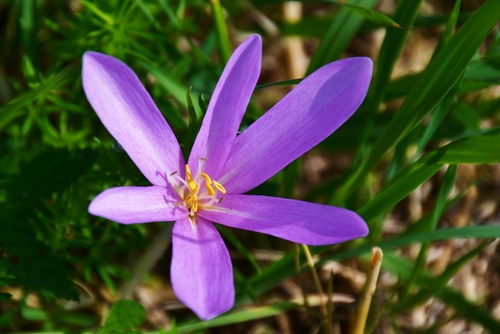
Colchicum autumnale L. is a herbaceous perennial plant. Its leaves can grow up to 25 cm (10 in) long. It produces solitary flowers that measure 4–7 cm (2–3 in) across; each flower has six tepals, six stamens with orange anthers, and three white styles. When fertilization occurs, the plant’s ovary is located below ground. This species is the only member of its family native to Great Britain and Ireland, where notable populations are managed by County Wildlife Trusts. It also grows across mainland Europe, ranging from Portugal to Ukraine, and has been reported as naturalized in Sweden, European Russia, and New Zealand. It typically grows in lowland grassy meadows. The entire Colchicum autumnale plant is lethally toxic due to the presence of colchicine. Its leaves are vaguely similar in appearance to the leaves of Allium ursinum, also called ramsons or wild garlic, so foragers often mistakenly confuse the two. This plant, and the colchicine it contains, are an especially dangerous threat to felines. While the corms (also called meadow saffron corms) hold the highest concentration of toxin, all parts of the plant are considered poisonous. The bulb-like corms of Colchicum autumnale contain colchicine, a useful pharmaceutical compound that has a narrow therapeutic index. In many countries, colchicine is approved to treat gout and familial Mediterranean fever. It is also used in plant breeding to create polyploid plant strains.