About Coenobita scaevola (Forskål, 1775)
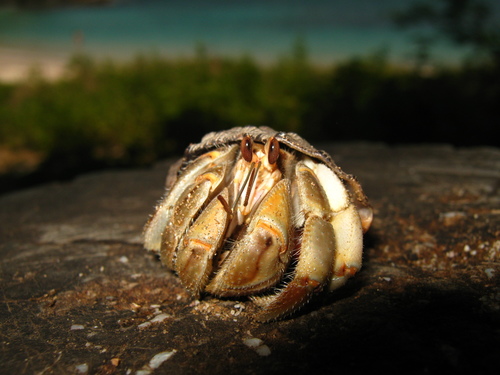
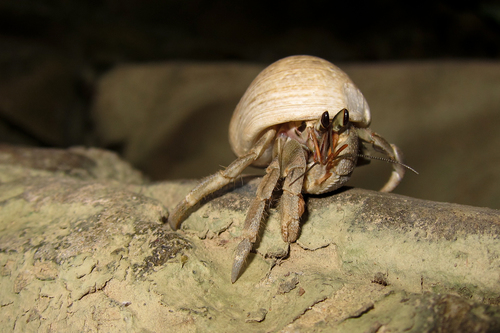
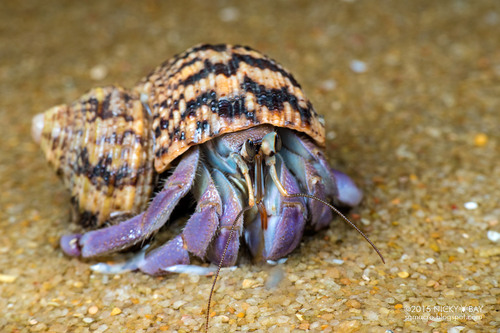
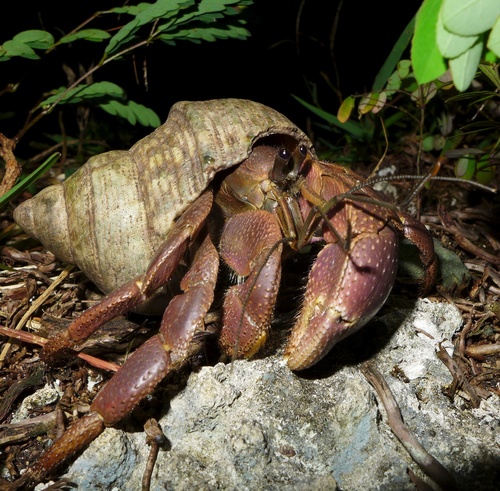
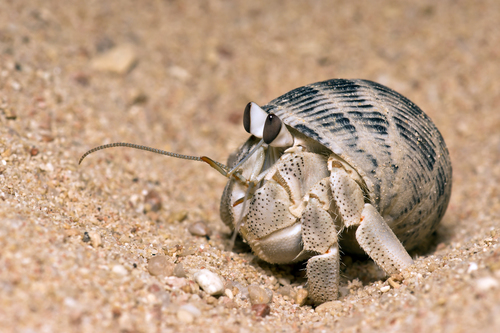
Coenobita scaevola (first described by Forskål in 1775) is a species of terrestrial hermit crab native to the western Indian Ocean and the Red Sea. Its known distribution covers parts of the Indian Ocean, including the Gulf of Aden, and the coasts of Somalia and Pakistan. While terrestrial hermit crabs of the Red Sea are not well studied, C. scaevola is the only terrestrial hermit crab species recorded in this region. Reproduction in C. scaevola occurs during the hottest months of the year, when air temperatures range from 24 to 38 °C (75 to 100 °F). Like all other hermit crabs, young C. scaevola go through multiple larval phases before developing into the glaucothoe stage, and then into juvenile crabs. C. scaevola has more zoeal phases than any other species in the genus Coenobita, with seven total zoeal phases. These phases also last longer than those of any other Coenobita species, spanning a total of 54 to 80 days. C. scaevola is able to survive in arid coastal conditions, such as those found on the Sinai Peninsula, but it can only live close to the shore, as it must return to the shore regularly to replenish the water it stores in its shell for respiration. During the hottest part of the day, C. scaevola rests inside burrows or among coastal vegetation, and emerges at night to feed. While daytime air temperatures outside these burrows can reach 33 °C (91 °F), the temperature 10 cm (3.9 in) deep in a burrow does not exceed 28 °C (82 °F). Most adult C. scaevola with a carapace length up to 7.5 mm (0.30 in) occupy shells from Nerita undata. Larger individual crabs select shells from Turbo radiatus, Polinices milanstomus and Monodonta canalifera. Small individuals, with a carapace length below 3 mm (0.12 in), occupy shells from Planaxis sulcatus and Nassarius arcularia.