About Coenobita clypeatus (Fabricius, 1787)
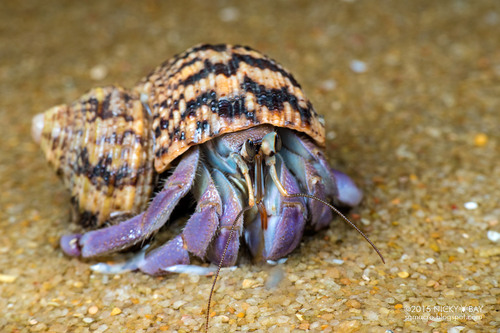
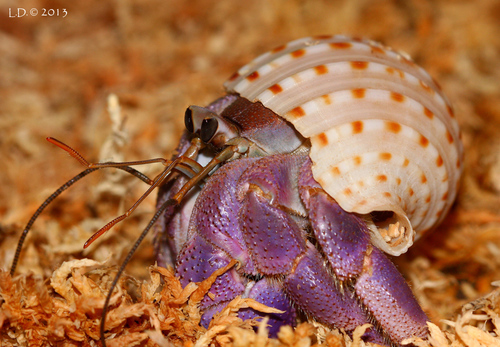
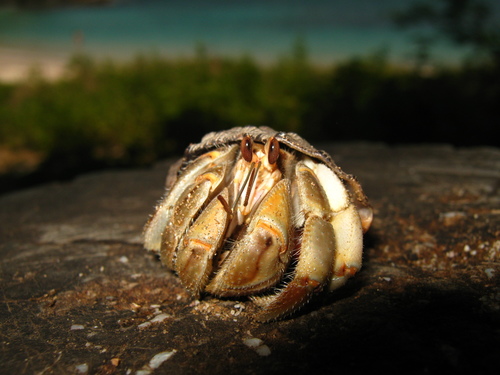
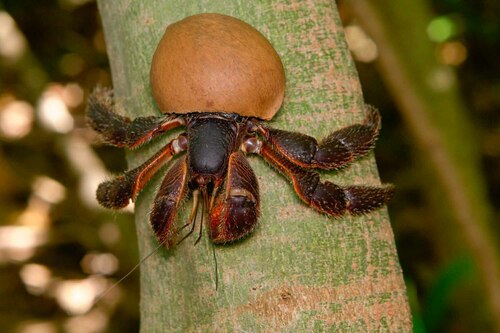
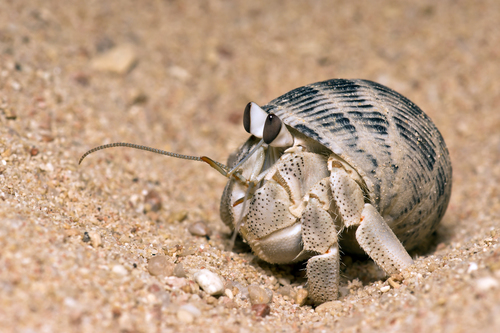
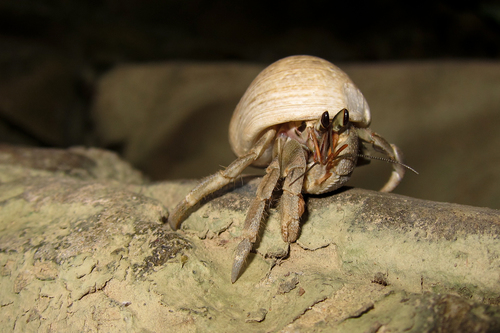
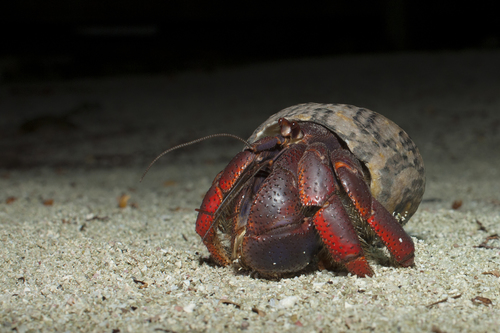
Adults of Coenobita clypeatus, the Caribbean hermit crab, burrow and hide under the roots of large trees, and can be found a considerable distance inland. Like other terrestrial decapods, they breathe air using modified gills. The discarded gastropod shells they occupy help maintain the humidity required for their gas exchange to work properly. Typically, the Caribbean hermit crab's left claw is larger than its right claw, and is purple in color. Female land hermit crabs release fertilized eggs into the ocean. This spawning activity, called "washing" in the English-speaking Caribbean, happens on certain nights, usually around August. Caribbean hermit crabs are both herbivorous and scavengers. In the wild, C. clypeatus feeds on animal and plant remains, overripe fruit, and the faeces of other animals, including the Mona ground iguana Cyclura stejnegeri. The shell of the West Indian top snail Cittarium pica is often used as the hermit crab's home. The crab can use its larger claw to cover the aperture of the shell for protection from predators. Like other hermit crab species, C. clypeatus may engage in "shell fights" and can emit a chirping noise when stressed.