About Coenagrion scitulum (Rambur, 1842)
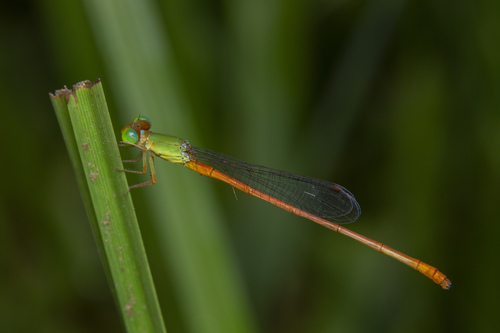
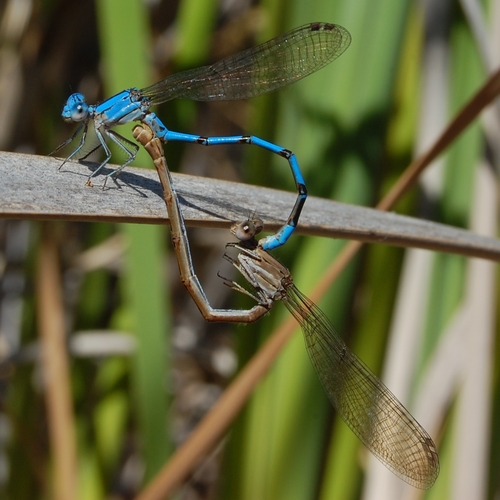
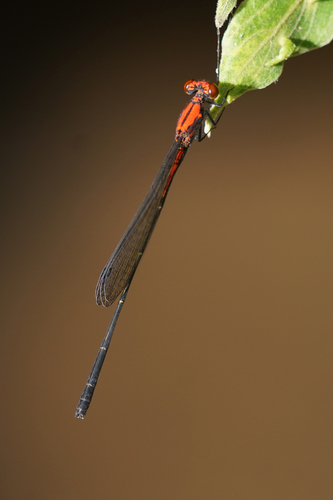
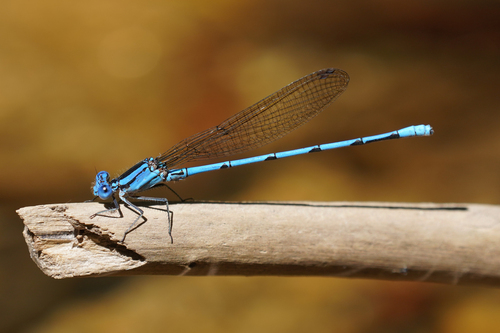
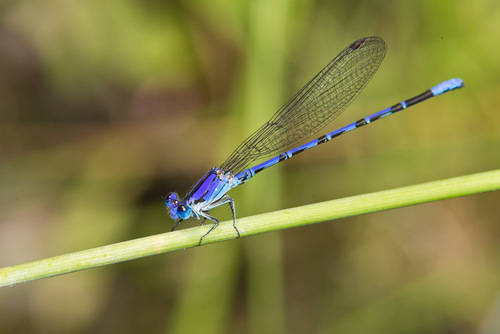
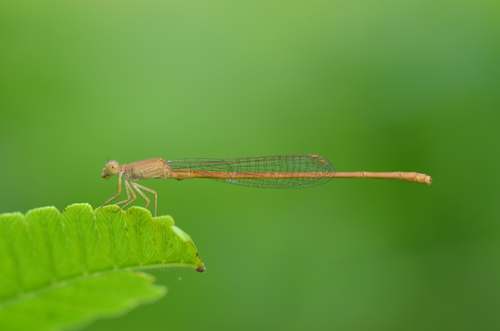
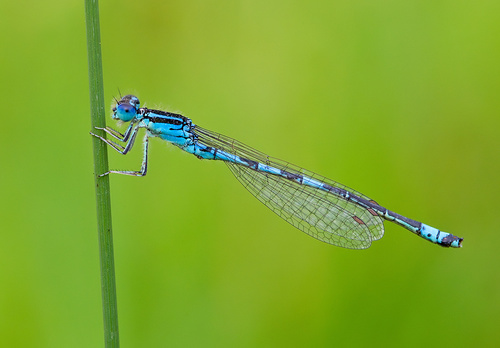
The dainty damselfly, Coenagrion scitulum (Rambur, 1842), is also commonly called the dainty bluet. It is a blue damselfly belonging to the family Coenagrionidae, and a scarce member of the predatory Odonata order (which includes dragonflies and damselflies). Mature individuals reach a total length of 30 to 33 millimeters, with hindwings measuring 15 to 20 millimeters. Males and females are easily distinguishable by their differing coloration: in males, segment eight of the abdomen is blue, while segment nine has black markings; females are mostly black near the abdomen's rear with smaller blue markings. While sexing this species is relatively straightforward, it is easily confused with the common blue damselfly. It was originally recorded as present in southern Europe, northern Africa, southwest Asia, and Central America, with more detailed records placing it mainly in western Europe, northwest Africa, the western Caspian, and the south Caucasus, with additional populations in Eastern Europe. There is an unconfirmed population in central Asia, and it is not yet clear whether this population is a separate species or descended from European individuals that dispersed across the mountains of Afghanistan and northern Iran. The species has recolonized areas in Britain after local population loss, confirming its ability to disperse. C. scitulum inhabits large, generally stagnant ponds with abundant vegetation including water-milfoil and hornwort, and can also be found in flooded ditches. Constructed wetlands are an important habitat and refuge for this species, because these wetlands lack fish that prey on insects, providing a safe environment for the damselflies to live and reproduce. They are easiest to spot during June and July, when males can often be observed perching on floating vegetation in open water. Although they are quite small, dainty damselflies can travel between ponds when resources become sparse, if the benefits of moving outweigh the costs. Multiple factors drive the geographic movement of C. scitulum, including changing temperatures, land disruption, and falling water levels. Rising temperatures are the leading cause of dispersal, as the species shifts its range to track its optimal thermal niche. In the 1990s, the northern edge of the species' range was in northern France. Climate change has led to increased poleward range shift: populations have expanded beyond their historical ranges, and established new edge populations to the north, east, and west. This poleward expansion is linked to rapid phenotypic change and founder effects, including reduced genetic diversity and increased genetic differentiation. New edge populations are genetically differentiated from core populations, and all new populations are differentiated from one another, indicating that each range expansion event is independent. Lower genetic diversity can affect colonization success, and reduces the species' resistance to stress and disease. This makes dainty damselflies more susceptible to toxins such as pesticides, which in turn slows further dispersal by reducing movement speed, population growth, and flight ability. Damselflies encounter pesticides more often as they disperse, because they must cross agricultural land to reach new habitats. Genetic changes are not only caused by climate-driven dispersal; they can also arise from natural range expansion. Overall, the genetic diversity and structure of dainty damselfly populations are shaped by both historical rapid range expansions and modern dispersal-driving processes like climate-related environmental change. C. scitulum has unusual mating habits compared to other odonates. Like other damselflies, it uses indirect insemination: males transfer sperm from the testes to the penis, from which the female obtains it. In all other studied damselfly species, this sperm translocation happens only once per mating. In C. scitulum, this process can occur up to six times during a single copulation cycle. One common hypothesis for this repeated translocation is that multiple transfers may be required to achieve full insemination. After successful fertilization of her eggs, the female lays her eggs, and the male usually remains attached to her to prevent other males from removing his sperm. Sperm removal is less successful in this species, because C. scitulum lacks the spines on the penile horns that other damselfly species have. Population sampling confirms that C. scitulum is univoltine in both its core range and newly expanded populations.