About Codakia orbicularis (Linnaeus, 1758)
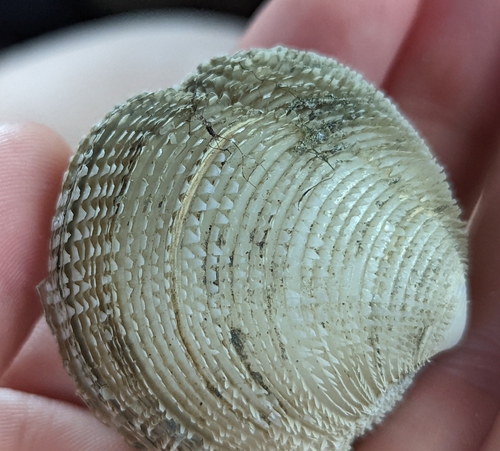
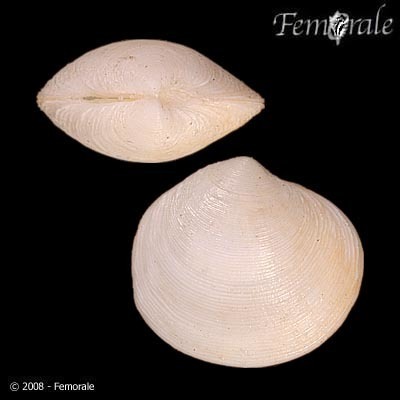
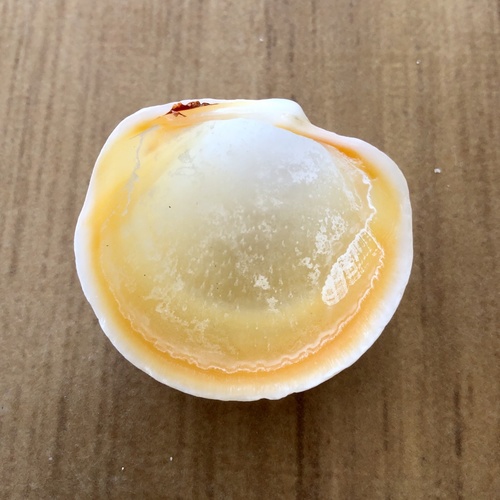
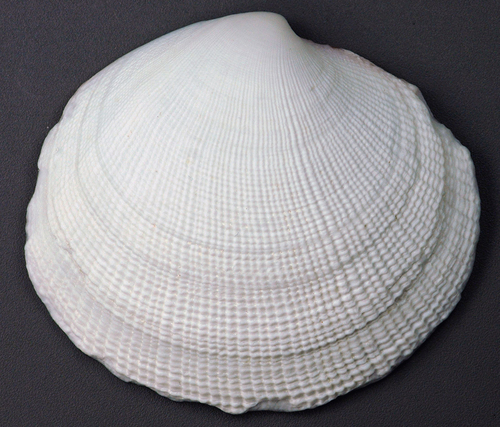
Codakia orbicularis (Linnaeus, 1758) reaches a maximum shell length of about 85 mm (3.3 in). Its two shell valves are nearly circular, with an outer surface sculpted by fine concentric rings and tightly packed radial lines. The lunule, a depressed region near the shell hinge, is heart-shaped, and the lunule on the right valve is larger than the one on the left valve. The periostracum, the thin outer layer of the shell, is brown, and the main body of the valves is white; there is often a pinkish tint near the inner margin of the shell. Compared to the smaller dwarf tiger lucine (Ctena orbiculata), this species has a more laterally compressed shell. Like other members of the family Lucinidae, Codakia orbicularis lacks an inhalant siphon. Instead, it rolls its elongated foot into a mucus-lined tube, and draws water into the gill cavity through this structure. It does have an exhalant siphon, which is formed from a highly extensible mantle flap and can be inverted and pulled back inside the shell. The gill cavity holds chemosymbiotic sulfur-oxidizing bacteria that live in specialized cells called bacteriocytes, and these bacteria help meet the clam's nutritional needs. Codakia orbicularis is native to the western Atlantic Ocean, with a range that covers Florida and the northern coast of the Caribbean Sea. It lives buried in soft sediment on the seabed, most commonly in seagrass beds of Thalassia testudinum. It can be found at depths down to a maximum of 93 m (305 ft). Its bacterial symbionts allow this burrowing bivalve to live in sulfide-rich, low-oxygen sediments that cannot support most other bivalve species. Codakia orbicularis is a large edible shellfish, and its life cycle has been studied to assess its suitability for mariculture. In the Bahamas, this species spawns between May and October. Its eggs have large yolks, are enclosed in a thick gelatinous membrane, and the early stages of development occur inside this capsule. Later-stage veliger larvae are planktonic, and metamorphosis happens around 16 days after fertilization. During growth and development, larvae may get nutrition from symbiotic chemosynthetic bacteria already present in their tissues.