About Cochleoceps bicolor Hutchins, 1991
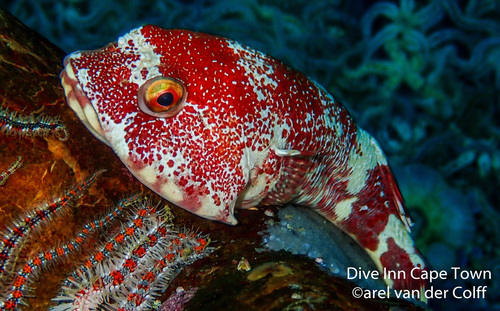
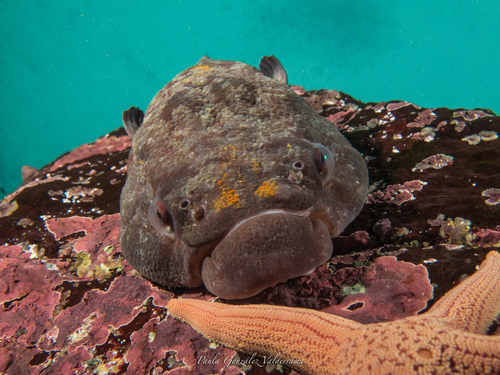
The western cleaner clingfish (Cochleoceps bicolor) has a base body color that ranges from yellowish to reddish, marked with regular transverse blue bands along its back, and a bluish-grey caudal fin. It is thought to feed on parasites that it cleans off larger fish. This species lives on rocky reefs and the piles of jetties or piers, where it sets up cleaning stations, often over sponges and ascidians. It uses a wide variety of reef-associated sites as cleaning stations; the most important criterion for a site is likely how visible it is to passing larger fish carrying parasites. A single cleaning station can host between one and multiple western cleaner clingfish, depending on demand for cleaning services and other factors. Some divers have observed shared cleaning stations where several other known temperate marine cleaner species, most notably juvenile moonlighter fish (Tilodon sexfasciatus) and rockpool shrimp (Palaemon serenus), behave cooperatively. This cooperative behavior may occur when client demand is high, and it varies based on tide and season.