About Coccinia grandis (L.) Voigt
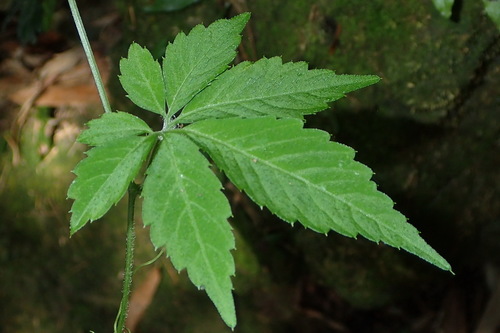
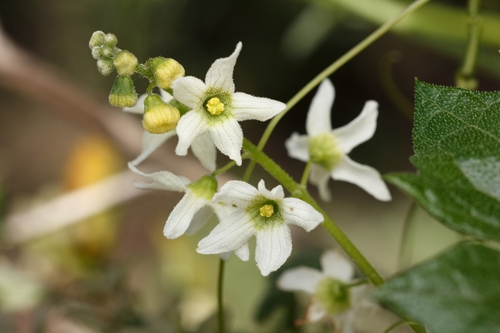
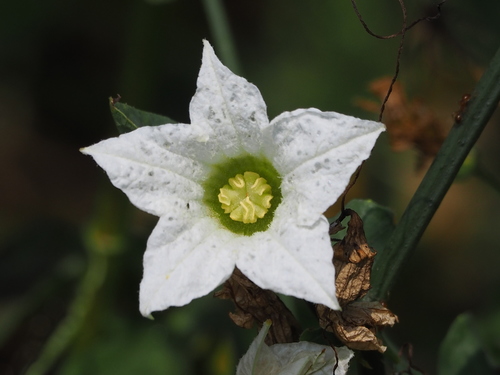
Coccinia grandis, commonly called ivy gourd, is a perennial climbing plant. It grows with single tendrils, and has hairless, five-lobed leaves that measure 6.5–8.5 cm long and 7–8 cm wide. This species is dioecious, meaning it produces separate male and female individual plants; both female and male flowers grow from leaf axils on the petiole, and each flower has 3 stamens. The native range of Coccinia grandis stretches from Africa to Asia, and also includes India, the Philippines, Cambodia, China, Indonesia, Malaysia, Myanmar, Thailand, Vietnam, eastern Papua New Guinea, and the Northern Territory of Australia. Documented introduced ranges include the Federated States of Micronesia, Fiji, Guam, Saipan, Hawaii, the Marshall Islands, Samoa, Tonga, and Vanuatu. Viable new populations can form from relocated seeds or fragments of the vine. This relocation often happens when humans move organic debris or equipment that contains C. grandis material. After ivy gourd becomes established, it is thought to spread further by birds, rats, and other mammals; in Hawaii, pigs may disperse its fruit. Most long-distance dispersal is done by humans, either because the species is used for culinary purposes or accidentally. Ivy gourd is considered highly invasive, and is included on the Hawaii State Noxious Weed List. It can grow up to four inches per day, and forms dense mats of growth that shade other plants from sunlight and take up nutrients from the environment, killing the native vegetation growing underneath it. It was first brought to Hawaii as a backyard food crop. It is sometimes allowed to grow along garden fences and other outdoor features because it has attractive white flowers. It has escaped cultivation to become an aggressive pest in Hawaii, Florida, Australia, and Texas.