About Cobitis taenia Linnaeus, 1758
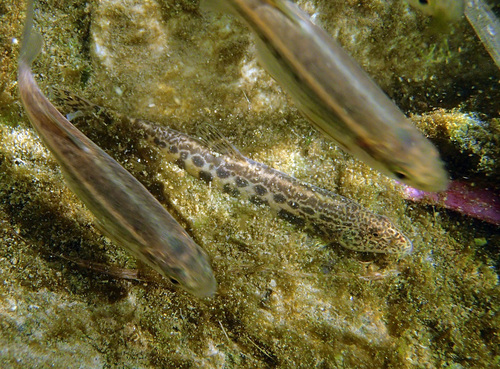
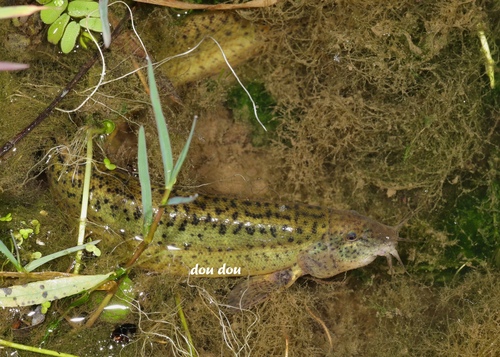
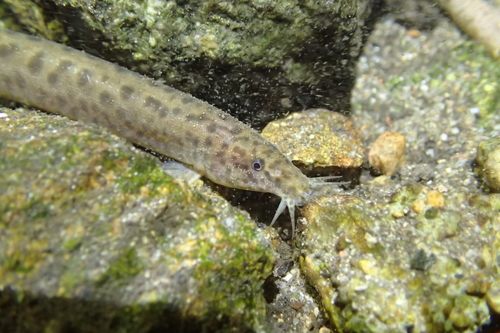
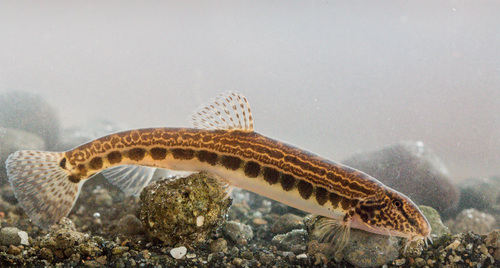
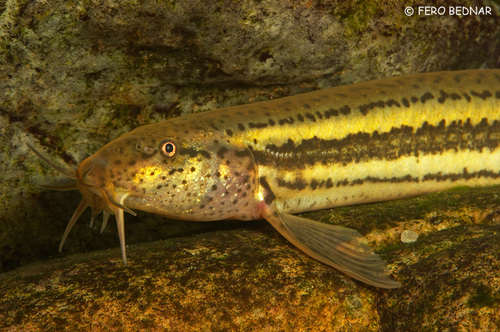
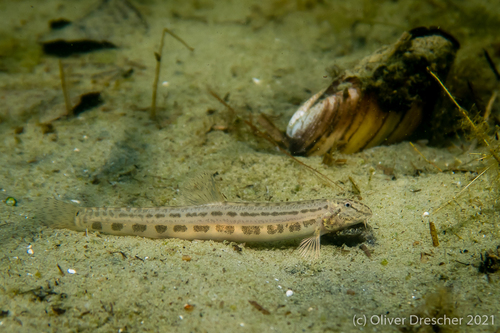
The spined loach, Cobitis taenia Linnaeus, 1758, typically reaches an adult length of 8–10 cm (3.1–3.9 in), though females may grow up to 12 cm (4.7 in). Adult spined loaches weigh between 20–60 g (0.7–2.1 oz). Their backs are yellow-brown, with many small grey or brown scales along the spinal ridge. Belly scales are pale yellow or orange. Their overall body shape is long and thin. They have six barbels around the mouth, and a two-pointed spike located under the eyes that can deliver a painful sting. This species is found from the Volga River basin west to France. It occurs across most of temperate Europe north of the Alpide belt, excluding Ireland, Scotland, Wales and northern Scandinavia. There are also small populations located just south of the Alpides. In the United Kingdom, spined loach are only found in five east-flowing river systems in eastern England: the Trent, Welland, Witham, Nene and Great Ouse. Populations in southwestern Europe were formerly classified as this species, but actually belong to other distinct branches of the genus Cobitis. As a member of the subgenus Cobitis, its close relatives are C. elongatoides, C. fahirae, C. tanaitica, and C. vardarensis, which replace it in northern Greece, most of Romania, and western Turkey. Spined loach prefer clear, oxygen-rich water, including slow-flowing brooks, rivers, and still water. They live near flat, sandy or stony substrate, often in large groups. This species is commonly kept as an ornamental aquarium fish. During the day, spined loach bury themselves in the bed of their waterbody, leaving only their head and tail exposed. They are most active at night, when they feed by consuming sand from the riverbed along with small animals and other organic material contained within it. Sand stripped of nutrients is expelled through their gills, and this process must continue all night for the fish to get enough calories to survive. Spined loaches are capable of intestinal breathing. This emergency adaptation sustains them when surrounding water is low in oxygen: they swallow air at the water's surface to bring oxygen into the intestine, and expel used air through the anus. Their spawning season runs from April to June. Females lay between 300 and 1,500 eggs near the bottom of the waterbody, attached to stones, roots or plants, which males then fertilize. Larvae hatch 4 to 6 days after fertilization. The lifespan of a spined loach ranges from 3 to 5 years in the wild, with a maximum recorded lifespan of 10 years in captivity.