About Cnidoscolus stimulosus (Michx.) Engelm. & A.Gray
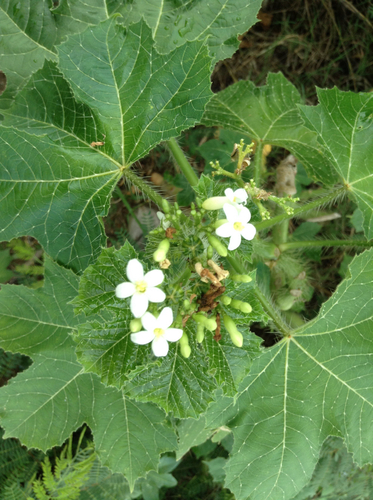
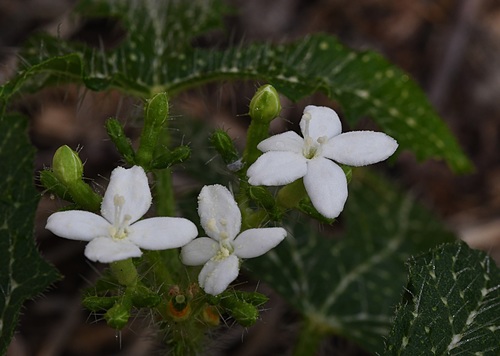
Cnidoscolus stimulosus (Michx.) Engelm. & A.Gray is an herbaceous plant that grows either erect or reclining, reaching heights between 5 cm and 100 cm (2 to 40 inches). Its green leaves are arranged alternately and have three to five toothed lobes. The plant produces large white flowers with five petals, and it is monoecious, meaning male and female flowers grow on the same individual plant. Flowering occurs throughout spring and summer, after which a small seed capsule develops that holds three large seeds. All above-ground parts of the plant, including flower petals, are covered in stinging hairs. The species' tap root can be used as a good potato substitute, and it has a flavor similar to pasta. As suggested by its common names, the plant's urticating stinging hairs hold a caustic irritant that causes a painful sting when the plant comes into contact with bare skin. Contact can lead to a painful, irritating rash, and some people may experience more serious reactions. Cnidoscolus stimulosus is native to the Coastal Plains of the southeastern United States. Its range extends from Louisiana and Florida north to Virginia and Kentucky, and it is not found in Tennessee or Arkansas. This species grows on deep, well-drained sandy soil in sparsely canopied upland areas. It also grows in disturbed sites, including old fields, roadsides, railways, bulldozed clearings, and residential lawns. Seeds of C. stimulosus are dispersed ballistically: they are forcefully expelled once the fruit matures and dries. The seeds have elaiosomes (fleshy structures attractive to ants), and ants collect the seeds and help with their dispersal.