About Cnidoscolus aconitifolius (Mill.) I.M.Johnst.
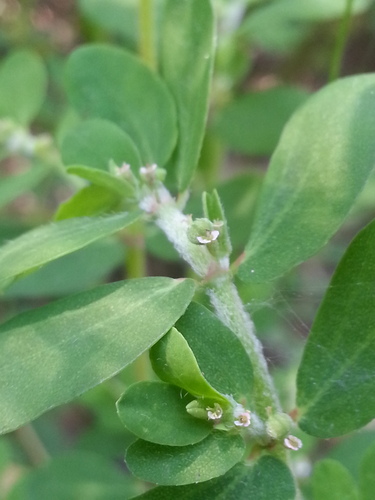
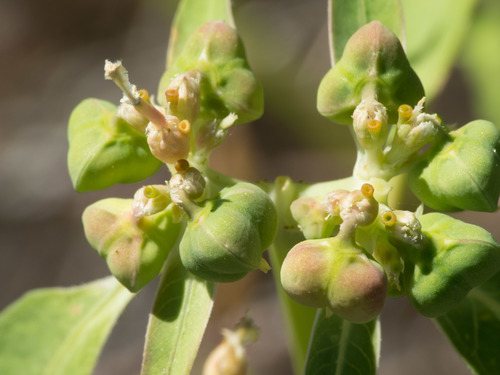
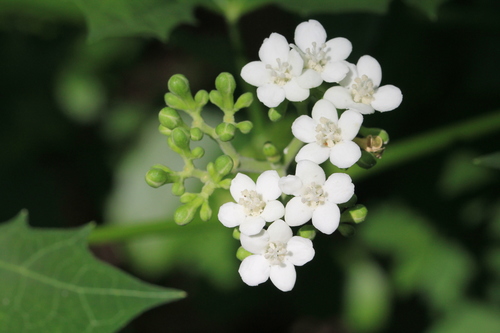
This plant, scientifically named Cnidoscolus aconitifolius (Mill.) I.M.Johnst., and commonly called chaya, can grow up to 5 metres (16 ft) tall. Its leaves are palmately lobed, with three or more secondary lobes on each primary lobe, and measure 10–30 cm (4–12 in) across, with size varying by plant age and variety. Small white flowers grow in a terminal panicle that sits well above the surrounding foliage. The seed pods are ellipsoid, marked with longitudinal stripes, and measure about 1.5 cm (1⁄2 in) across. They are green when immature, turn pale yellow to tan at maturity, and split open explosively to release seeds when fully mature. Mature seed pods are rarely seen on cultivated chaya plants, so this species is most often propagated vegetatively; cultivated specimens either produce sterile flowers or seldom flower at all.
Chaya is believed to have originated in the Yucatán Peninsula of southeastern Mexico, with its native range extending through Central America to Panama. It is now cultivated in warm regions around the world for its edible leaves, including northern South America, tropical Africa, Southeast Asia, and the Pacific.
Raw chaya leaves contain large amounts of toxic cyanogenic glycosides, and the plant also produces the irritating sap that is typical of the Euphorbiaceae plant family. Some varieties have stinging hairs, so gloves are required for harvesting. Thorough cooking destroys both stinging hairs and the toxins present in raw plant material. Care should be taken to avoid contact between raw chaya and mucous membranes, including the mouth, eyes, genitals, nose, and inner ears, as well as any open wounds or injuries. Contact can cause complications ranging from mild irritation to severe burning pain; more serious effects include temporary blindness if the material enters the eyes, or temporary loss of smell or taste if it touches the nose or mouth. While raw consumption is strongly discouraged, some sources state that no more than five raw leaves can be eaten per day. To avoid the risk of poisoning, chaya leaves must be cooked for 5–15 minutes before eating, with 20 minutes of cooking being the most common recommendation in recipes. In addition, aluminum utensils should not be used to cook chaya, because the plant's toxins may react with aluminum and make the prepared dish unsafe to eat.
Chaya is grown as a potherb, and prefers full sun and a warm climate. It is easy to cultivate, suffers very little insect damage, and tolerates heavy rain as well as some drought. In the United States, it grows as a tender perennial, and persists reliably in climates like that of Florida. Propagation is normally done with woody stem cuttings that are 15–30 cm (6–12 in) long, since cultivated plants rarely produce viable seeds. Early growth of cuttings is slow because roots develop slowly, so leaves are not harvested until the plant's second year. After the first year, chaya leaves can be harvested continuously as long as no more than 50% of the plant's leaves are removed, a practice that guarantees healthy new growth. A USDA study conducted in Puerto Rico reported that chaya produces higher yields of leafy greens than any other vegetable the researchers studied. In another study, chaya leaves were found to contain substantially greater amounts of nutrients than spinach leaves.
Chaya is a popular leaf vegetable in regional cuisines of Mexico and other Central American countries, where it is used similarly to cooked Swiss chard or spinach. Young leaves and tender stem tips can be eaten boiled, steamed, or stir-fried. The cooked plant has a mild, sometimes umami taste, and retains a distinct crunchy texture after cooking. Chaya is one of the most productive green vegetables, and is rich in protein, vitamins, calcium, iron, and antioxidants; it contains two to three times more nutrients than many other common leafy vegetables. Cooking is essential before consumption because raw chaya leaves contain toxic cyanogenic glycosides, similar to its related crop cassava. As noted earlier, aluminum utensils should not be used to cook chaya to avoid possible dangerous side effects. Traditionally, chaya leaves are simmered for 20 minutes, then served with oil or butter. The liquid or stock that chaya is cooked in is safe for consumption, because heat causes cyanogenic glycosides to decompose and release hydrogen cyanide into the air. In Mayan traditional medicine, a leaf infusion of chaya is used to treat kidney stones, high blood pressure, and diabetes. Experiments conducted on rabbits suggest that chaya leaves may have an antidiabetic effect.