About Clypeaster rosaceus (Linnaeus, 1758)
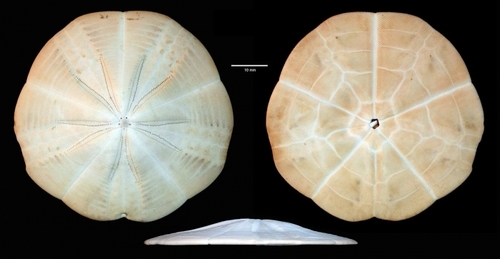
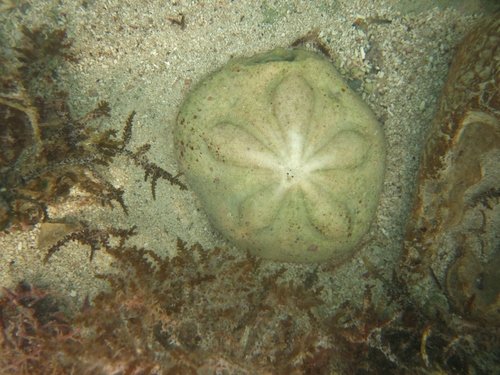
Clypeaster rosaceus is a very large sea biscuit with a strong, inflated test, reaching a maximum length of around 200 mm (8 in). Its shape ranges from ovate to slightly pentagonal, with a thicker margin at the anterior end. The petaloid area is broad; the anterior (front) petal is longer than the two equal-length paired posterior petals, and the area between the pores is wide and raised above the rest of the aboral (upper) surface. The oral (under) surface is fairly flat, with a deep depression surrounding the mouth and deeply indented food grooves. The anus is located on the oral surface near the posterior margin. This species has short, coarse spines. When alive, it is dark brown in color, while its bare test is whitish.
Clypeaster rosaceus is distributed in the western Atlantic Ocean, with its range extending from South Carolina to the West Indies, Barbados, Texas, and Venezuela. It occurs on soft sandy bottoms, especially in seagrass meadows, from the littoral zone down to about 50 m (160 ft).
Clypeaster rosaceus is a nocturnal species that lives on the surface of sandy seabeds. It feeds on fragments of dead plant material and algae, particularly among seagrass plants. When feeding, it grinds sand particles using its Aristotle's lantern mouthparts; it has been estimated that this species reduces 5.5 kg (12.1 lb) of coarse sediment particles to fine particles over the course of one year. During the daytime, it is inactive and either buries itself or covers its test with shell fragments and pieces of seagrass, holding these materials in place with its tube feet. In Panama, breeding occurs annually during the rainy season, and individuals release spawn into the sea. The eggs contain a large amount of yolk to support developing larvae, which settle on the seabed and undergo metamorphosis after around six days.