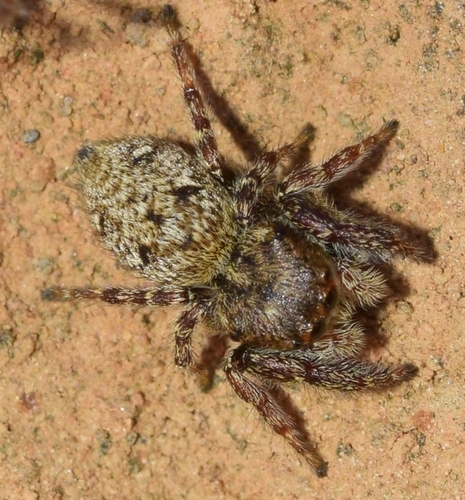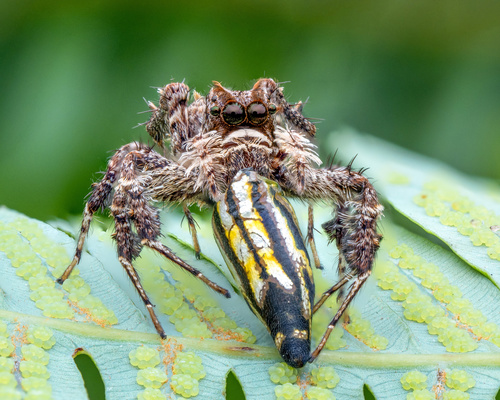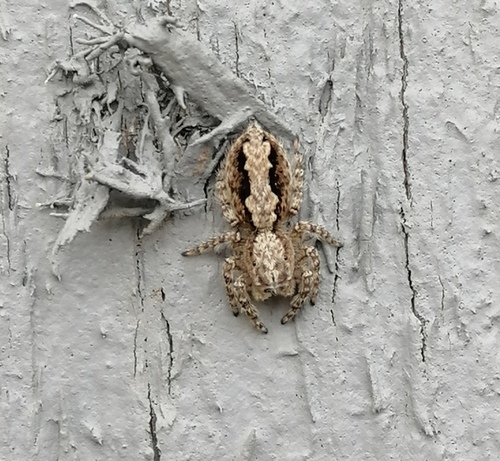
About Clynotis severus (L.Koch, 1879)
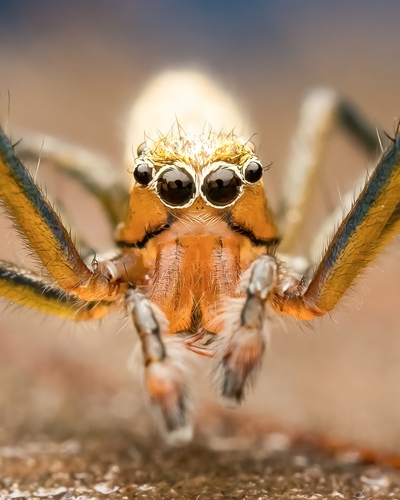
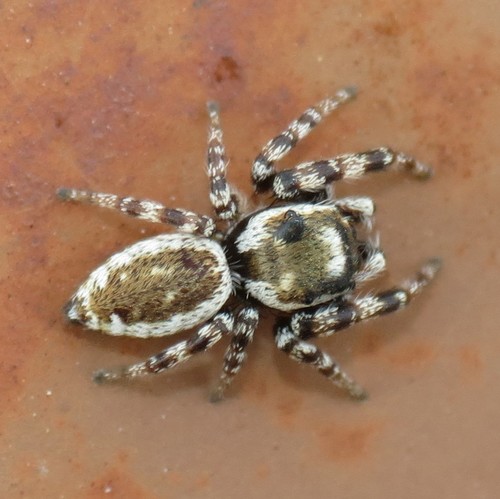
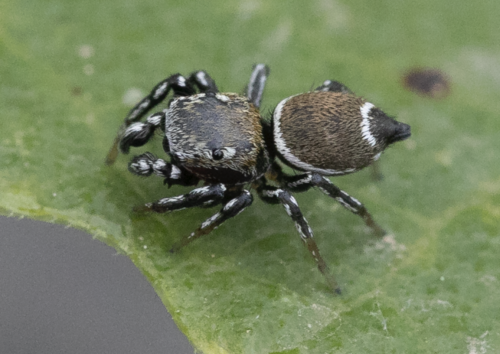
Clynotis is a genus of jumping spiders (family Salticidae, subfamily Marpissinae). Members of this genus are found across Australia and New Zealand; some species live on the Auckland Islands, and one species is found exclusively on Snares Island. Eight species of Clynotis are currently described. The genus's type species, Clynotis severus, was first documented in Queensland and New South Wales, Australia in 1879 by Ludwig Carl Christian Koch. The most recently described species was named in 1931 by Lucien Berland. Two species that were previously classified within Clynotis have since been reclassified into the genus Tara. Like most jumping spiders, Clynotis spiders are able to jump with agility and have strong vision. They can be identified by the distinct shape of their cephalothorax and their characteristic eye arrangement. Of their eight total eyes, the front row of four includes a dramatically prominent pair of anterior median eyes. The rear row of four eyes may be described as strongly bent, or rearranged into two separate rows, with two large posterior lateral eyes positioned furthest back. The rear eyes provide lateral vision, while the four forward eyes are adapted to produce detailed, three-dimensional vision. This vision lets Clynotis spiders estimate the range, direction, and nature of potential prey, allowing them to aim their attacking leaps with great precision. Like other jumping spiders, Clynotis spiders use silk as safety lines when jumping. They build silken shelters called "pup tents", where they shelter from bad weather and sleep at night. They molt inside these shelters, build and store egg cases within them, and also overwinter inside these structures. The type species of this genus is Clynotis severus, first described by L.Koch in 1879.