About Clusia rosea Jacq.
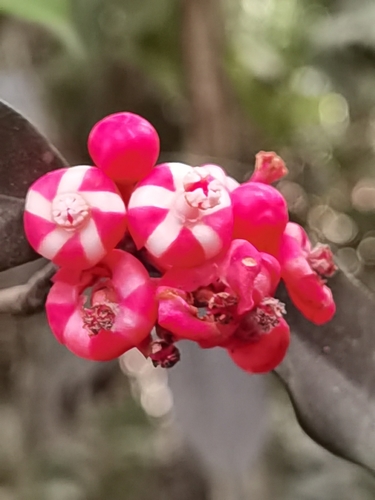
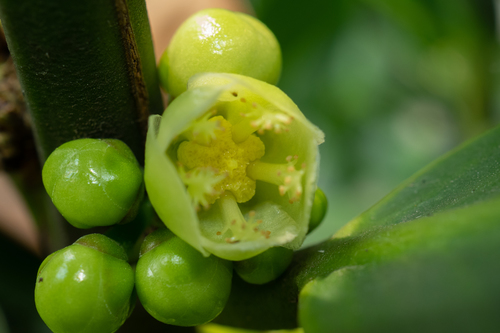
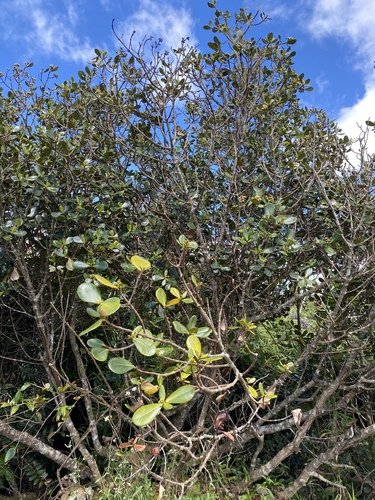
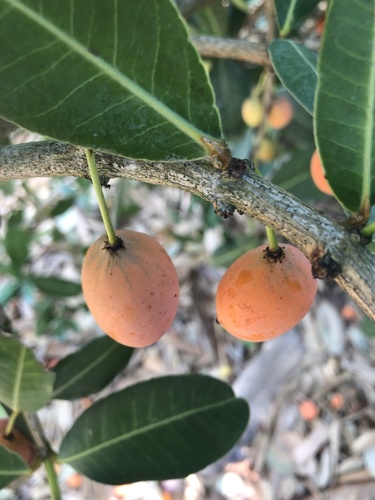
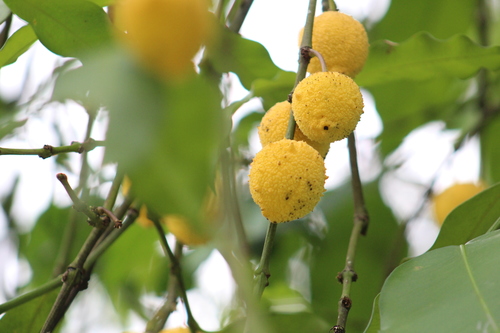
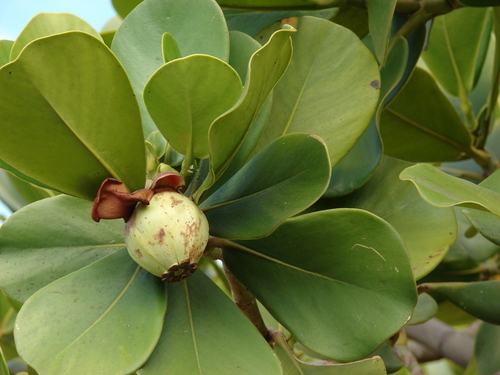
Clusia rosea Jacq. is a tree native to the Caribbean, including the Bahamas, Hispaniola (specifically Los Haitises National Park), Cuba, Puerto Rico, and Florida. It is a hemiepiphyte, meaning it begins its life growing as an epiphyte on rocks or other trees, and behaves like a strangler fig as it grows larger. Similar to strangler figs, it successfully competes for light by outgrowing and overtopping its host tree, and "strangles" the host with its many aerial roots. These aerial roots are among the fastest growing ever recorded, able to reach up to 30 cm (12 in) of growth in 24 hours. The plant's petals range in color from pink to white. The thin upper tissue of its leaves can hold visible "writing", which gives the species its common common name "autograph tree". The tree produces a fleshy, light green toxic fruit; after the fruit splits open, its seeds are eaten by birds and other wildlife. Most Clusia species are normally dioecious, but C. rosea only has pistillate (female) individuals, and produces seeds through agamospermy. This plant is cultivated as an ornamental plant, valued for its flowers, foliage, and fruit. It is planted as a fruiting and ornamental tree in gardens of sub-tropical climates, and used as a houseplant in many other climates. Historically, its leaves were used to make playing cards in the West Indies. Some people sign their autographs on the leaves and watch the signature grow with the leaf. In past Puerto Rico, parts of the plant were used to make game balls, to make tar, and as firewood.