About Clinus superciliosus (Linnaeus, 1758)
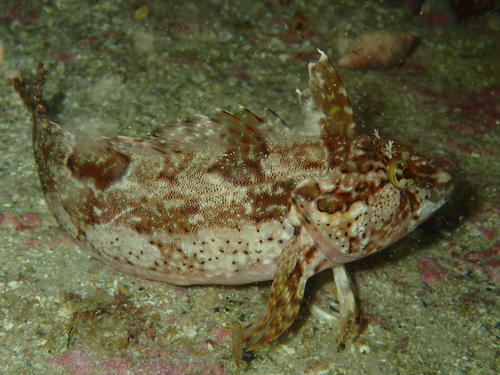
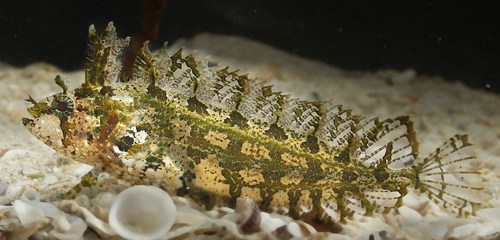
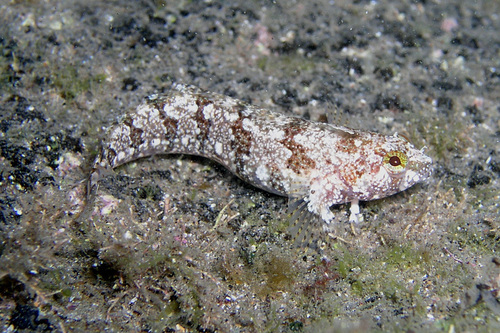
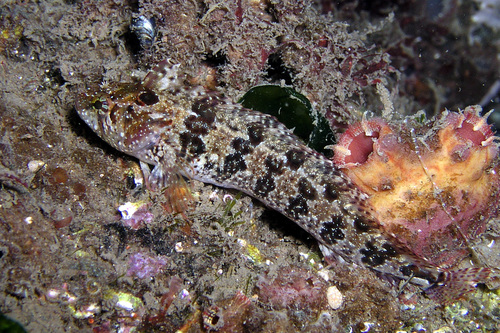
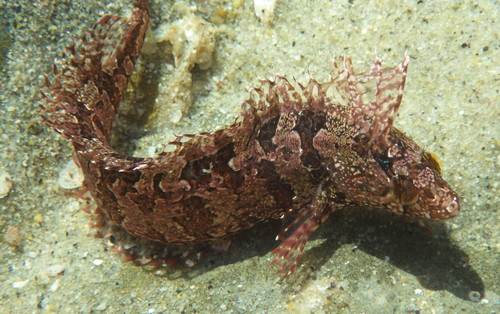
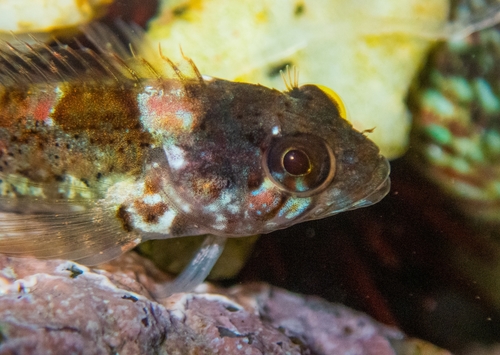
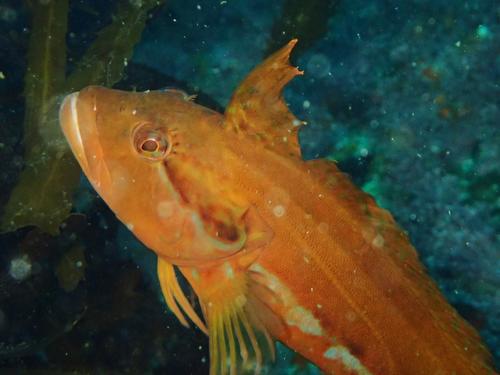
Clinus superciliosus can reach a maximum size of 30 cm. Individuals have a robust build that is slightly compressed overall. Males have a tall dorsal crest made up of the first three dorsal spines, followed by a deep notch in the fin membrane along the rest of the dorsal fin. Females have a lower, more rounded dorsal crest. The head is large and pointed, with a large mouth and thick lips. Prominent cirri sit above the eyes; these cirri may be barely branched, or quite bushy in mature adults. Body colouration is highly variable, ranging from white through yellow, orange, red, and brown, to dark green. A dark marking on the upper section of the operculum is very common. Body patterning follows a few distinct types: completely uniform body colour with no distinct pattern; a broad white band running from behind the eye, across the opercle, and tapering toward the caudal fin, which may be continuous or broken, with the rest of the body a roughly uniform colour; or a highly mottled pattern with vertical and horizontal bars and bands. Head pattern is also variable, ranging from broad oblique bars to a complex reticulated pattern. The eyes have broad radiating bars that match the body colour, and the iris may be red or yellow. Pectoral fins match the body's colour, with translucent fin membrane. This species ranges from Namibia to areas beyond East London. It occurs from intertidal rock pools down to at least 50 m depth. Habitat preference generally corresponds to individual body colouration, though individuals can also be found on contrasting backgrounds. Pale-coloured animals typically prefer sand substrates, light green individuals associate with Caulerpa beds, dark green individuals are found on Codium, and red individuals are found on red algae.