About Clinopodium vulgare L.
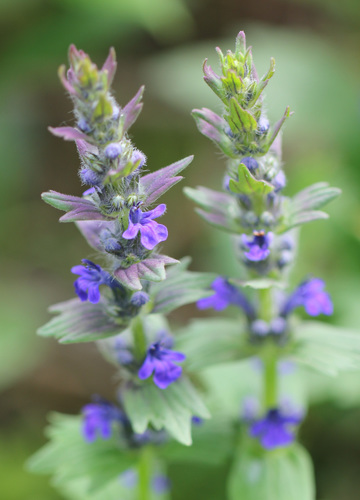
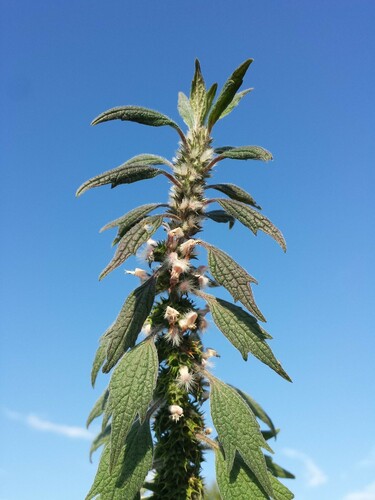
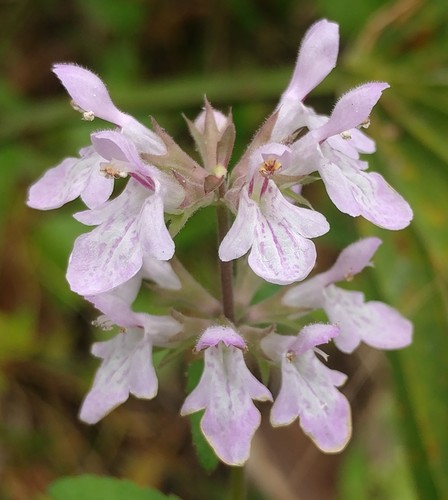
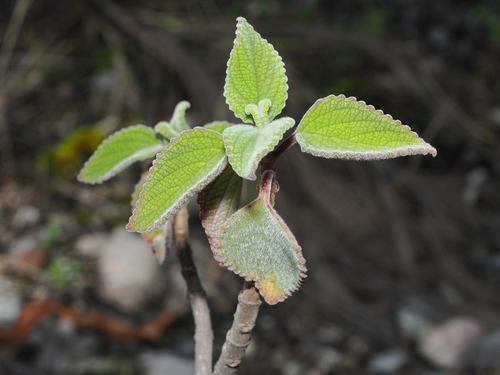
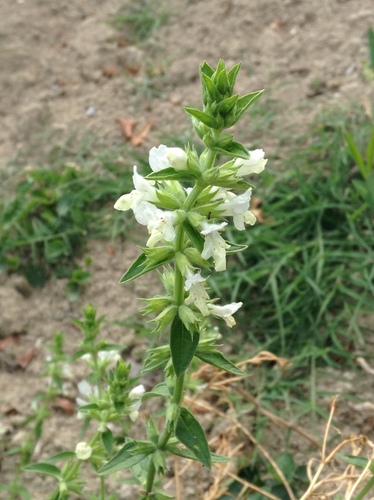
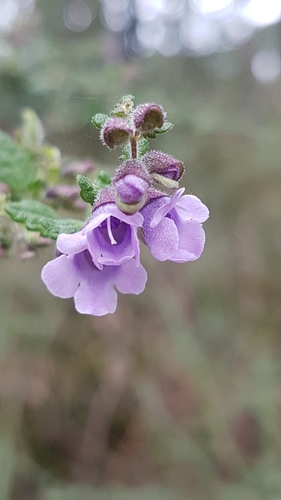
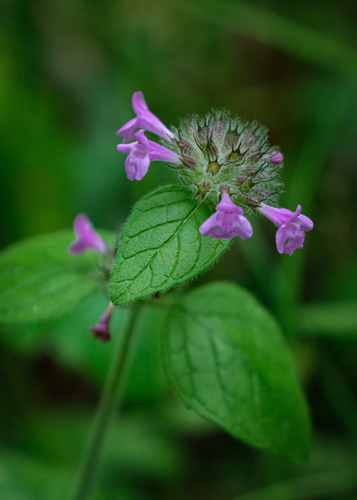
Clinopodium vulgare L., commonly called wild basil, is a perennial rhizomatous herb. It has square, upright, hairy stems with opposite pairs of leaves. The leaves are hairy, ovate or lanceolate in shape, have short or no stalks, wedge-shaped bases and bluntly-toothed margins. The inflorescence is a terminal spike made up of several loose whorls of flower clusters that grow in the leaf axils. Each flower has a short stalk, five sepals around 10 mm (0.39 in) long, and five petals 12 to 15 mm (0.47 to 0.59 in) long that are fused into a tube. The flowers are pink, violet or purple, have two lips, and contain four stamens, a long style and fused carpels. Wild basil grows in suitable locations across most of Europe, western and central Asia, North America and North Africa. Its typical habitat is dry grassland and heathland, usually on limestone or chalky soils. Though its distribution is patchy, it is widespread and not threatened in the UK. Pollination of this plant is done by bees and Lepidoptera. The leaves of wild basil are used as an aromatic herb in preparing food dishes and to make herbal tea. They can also be used to make both brown and yellow dye. This plant has traditionally been used as an astringent, a cardiac stimulant, an expectorant, to reduce flatulence and to increase perspiration. It has been used traditionally in Bulgaria for healing wounds and has been shown to have anti-bacterial properties.