About Clibanarius erythropus (Latreille, 1818)
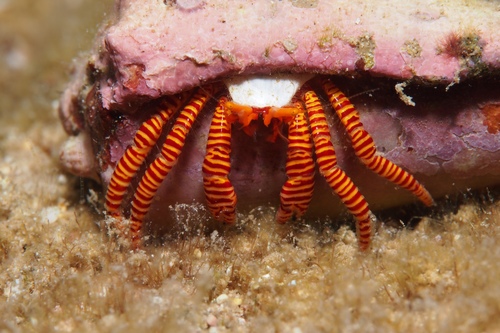
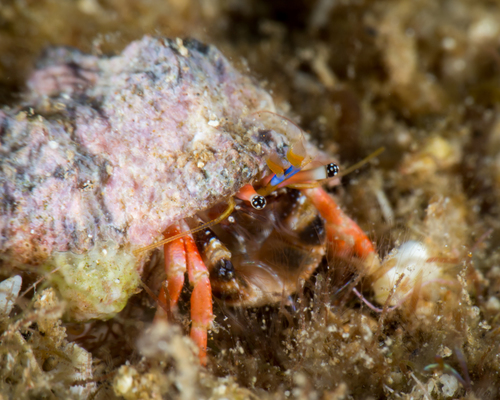
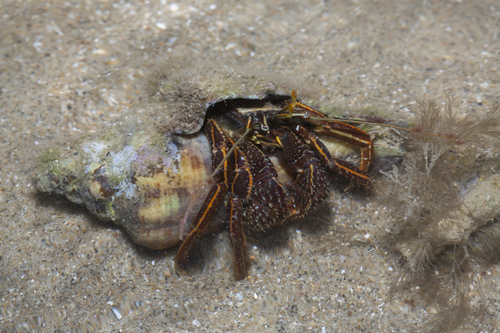
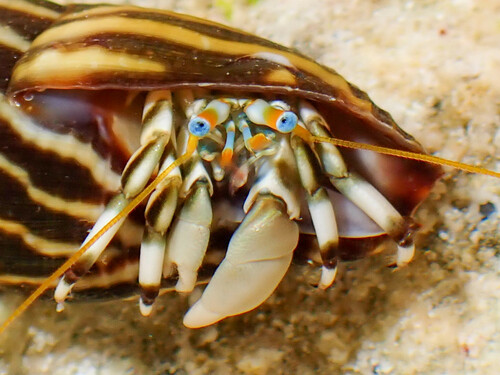
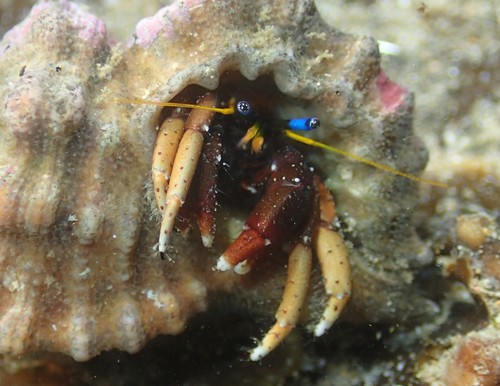
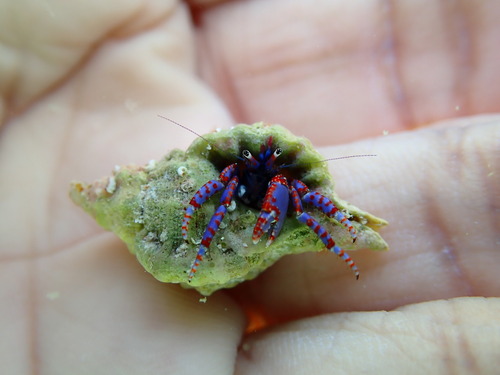
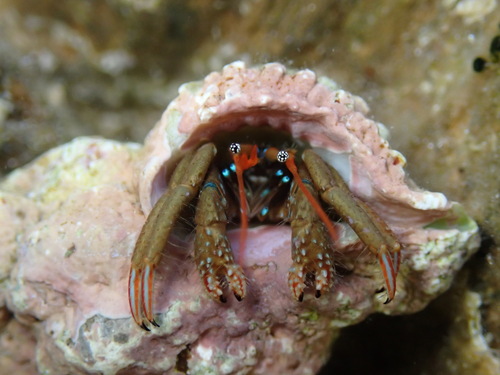
Clibanarius erythropus (Latreille, 1818) is a species of hermit crab that inhabits rockpools and sublittoral waters. Its distribution covers the Mediterranean Sea, the Black Sea, and the eastern Atlantic Ocean, ranging from the Azores to Brittany, the Channel Islands, and as far north as the south coast of Cornwall. Individuals of this species can reach a maximum carapace length of 15 millimetres, which is equal to 0.6 inches. Clibanarius erythropus uses a wide variety of different gastropod shells for its shelter. In the Azores, the most frequently used shells are from Littorina striata, Mitra, Nassarius incrassatus, and Stramonita haemastoma; these four species collectively account for 85% of all shells used by the crabs studied in the Azores. In the Mediterranean, the most commonly used shells are from Cerithium, Alvania montagui, and Pisania maculosa. Like all other hermit crabs, Clibanarius erythropus feeds on organic debris, decayed and fresh macro-algae along with the associated fauna and epiphytic algal flora growing on the algae, small invertebrates, and macroscopic pieces of both dead and live animal tissues. Studies have shown that Clibanarius erythropus individuals select substrates that allow them to cover larger distances. The research also found that globose shells give this species greater mobility than elongate shells.