About Cleyera japonica Thunb.
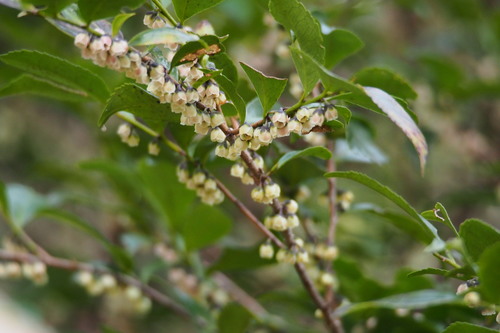
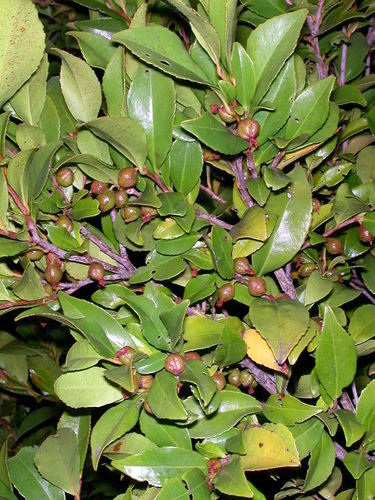
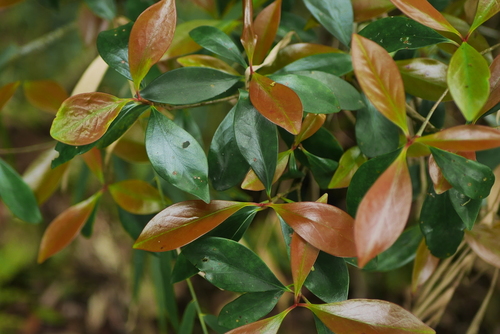
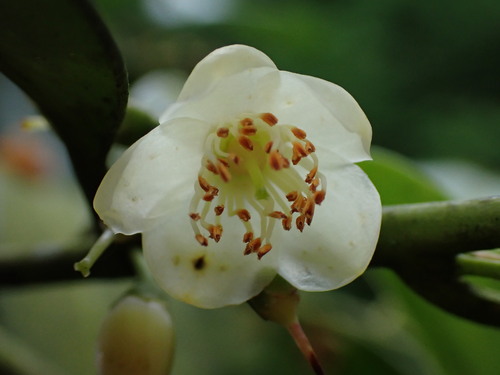
Cleyera japonica, commonly called sakaki, is a flowering evergreen tree native to warm regions of Japan, Taiwan, China, Myanmar, Nepal, and northern India. It can grow up to 10 meters (33 feet) tall. Its leaves are 6–10 cm (2.4–3.9 in) long, smooth, oval, and leathery; they are shiny dark green on the upper surface and yellowish-green on the lower surface, with deep furrows that hold the leaf stem. The bark is smooth and dark reddish brown. Its small, scented cream-white flowers bloom in early summer, and are followed by berries that start red and turn black when fully ripe. Sakaki is a common tree that grows in the second layer of evergreen oak forests. It is regarded as sacred to the Japanese Shintō faith, and is included among traditional offerings at Shintō shrines. Sakaki wood is used to make utensils, especially combs, as well as to make building materials and fuel. The tree is commonly planted in gardens, parks, and at Shintō shrines. Alongside other evergreens including hinoki (Japanese cypress) and kansugi (sacred cryptomeria), sakaki is considered a sacred tree in the Shinto religion. Traditionally, Shinto shrines are surrounded by shinboku (sacred trees) that form a himorogi (divine fence). During Shinto ritual offerings to kami (gods or spirits), sakaki branches are decorated with paper streamers called shide to create tamagushi. In the Japanese myth of Amaterasu hiding in a cave after Susanoo’s tantrum, when the Yata no Kagami was forged and placed in front of Amaterasu’s cave, the mirror was said to be perched on the branches of a sacred 500-branched sakaki tree that faced the entrance of the cave.