About Clerodendrum floribundum R.Br.
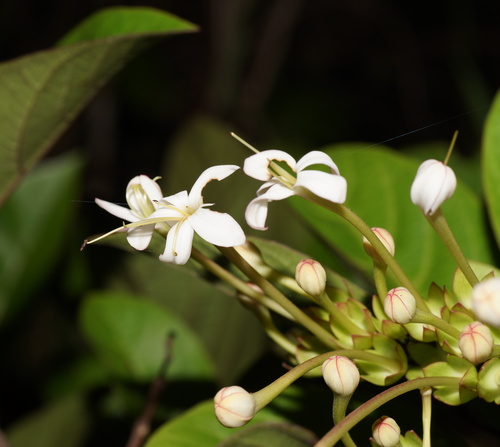
The scientific name of this plant is Clerodendrum floribundum R.Br. Its leaves are variable in shape, tapering to a blunt tip, a small prickle, or a sharp tip, and are usually 4 to 15 cm long and 2 to 6 cm wide. Young leaves of this species are less hairy than the leaves of the related species Clerodendrum tomentosum, also called downy chance. The generic name Clerodendrum comes from Greek, and translates to 'lottery tree'. The word 'lottery' in this name refers to the uncertain likelihood that plants of this genus hold medicinal value. The specific epithet floribundum refers to the abundant flowers that grow in showy clustered heads. The fruit of Clerodendrum floribundum is a black drupe that develops atop an enlarged, red, fleshy calyx. The fruit has a glossy, succulent appearance, which gave the species its common name 'lolly bush'. While it usually grows as a small tree, individuals have been recorded reaching 30 metres in height with a 30 cm stem diameter at Booyong Flora Reserve in northern New South Wales. White, fragrant flowers grow in cymes between September and December. There is ongoing debate over this species' southern distribution in Australian rainforests of the Illawarra. Author A.G.Floyd states the species grows as far south as Batemans Bay, extends north to Cape York (Australia’s northernmost point), and grows west through the Northern Territory and Western Australia. However, the Royal Botanic Gardens, Sydney notes that existing records of this species in the far southeast may not be accurate. In its ecology, the leaves of Clerodendrum floribundum act as a host plant for caterpillars of the fiery jewel butterfly. For cultivation, the plant can be regenerated from fresh seeds or cuttings. It is easy to grow, but requires access to plenty of water.