About Clematis ligusticifolia Nutt. ex Torr. & A.Gray
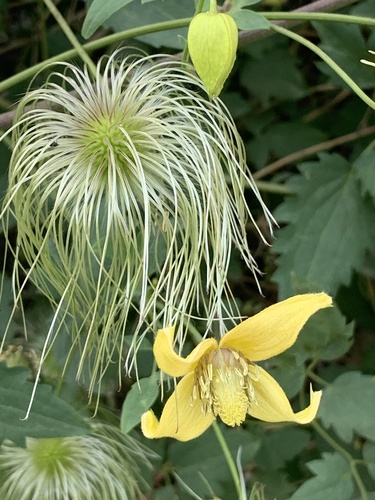
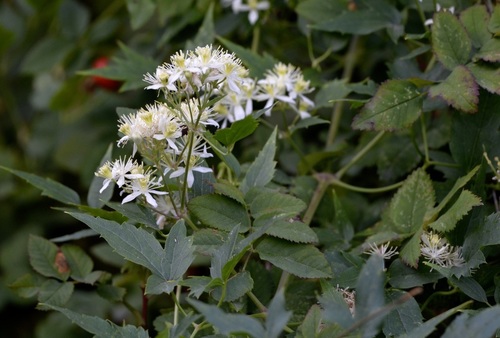
Clematis ligusticifolia Nutt. ex Torr. & A.Gray is a climbing, spreading vine that bears showy flowers. It goes by multiple common names: old-man's beard, yerba de chiva, and virgin's bower. Note that the name old-man's beard can also refer to Clematis vitalba, and virgin's bower can also refer to Clematis lasiantha. This species is native to North America, and is widespread across the western United States. It grows in streamside thickets, wooded hillsides, and coniferous forests at elevations up to 8,500 feet (2,600 m). Early travelers and pioneers of the American Old West called this plant "pepper vine". They used it as a substitute for pepper to flavor food, because real black pepper (Piper nigrum) was costly and rarely available in that region and time. Like all other species in the genus Clematis, this plant contains essential oils and compounds that are extremely irritating to the skin and mucous membranes. Unlike the compounds found in black pepper or Capsicum, the compounds in this clematis can cause internal bleeding of the digestive tract if ingested in large amounts. Large enough amounts of this plant are toxic when consumed, and it can also be toxic to small animals. Native Americans used very small amounts of this clematis to treat migraine headaches and nervous disorders. It was also used as an effective treatment for skin infections. A hot water extract made from the whole plant was used to treat eczema, and a leaf compress was applied to treat chest pain, sores, and boils. This species is dioecious, meaning male and female flowers grow on separate individual plants.