About Claytosmunda claytoniana (L.) Metzgar & Rouhan
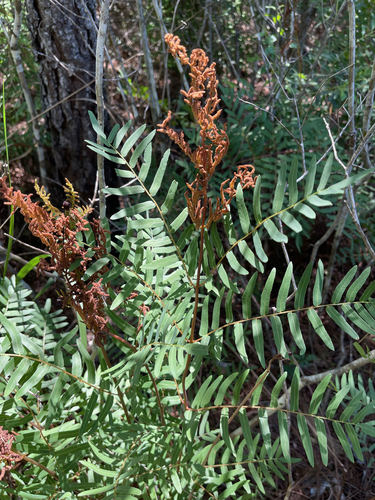
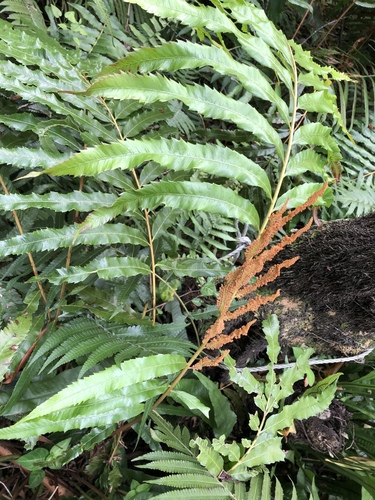
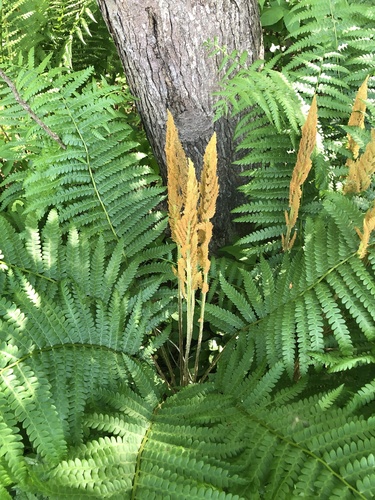
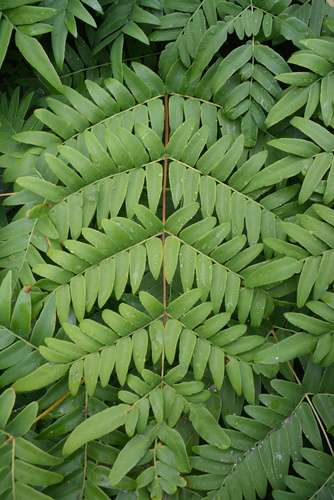
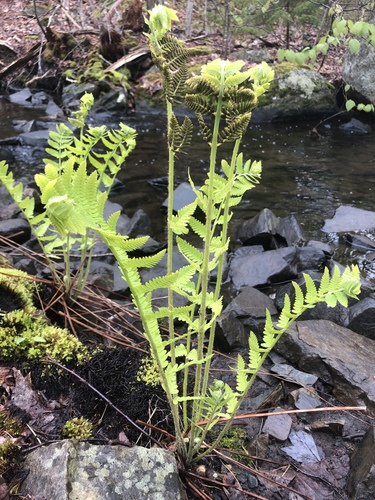
The fronds of Claytosmunda claytoniana are bipinnate. They grow 40–100 cm (16–39 in) tall and 20–30 cm (8–12 in) broad. The blade is made up of alternate segments, forming an arching shape that tapers to a pointed tip. The base of the frond is slightly narrower than the rest, because the lowest segments are shorter. Three to seven short, cinnamon-colored fertile segments are positioned in the middle of the frond’s length; this distinct feature gives the species its common name of interrupted fern. When these fertile segments are absent, all growth stages of C. claytoniana look very similar to Osmundastrum cinnamomeum, the cinnamon fern. The base of the segments can be used to tell the two species apart: O. cinnamomeum has characteristic felt-like hairs, while the few hairs on C. claytoniana are extremely short, and usually require a magnifying glass to see clearly. Like other species in the Osmundaceae family, C. claytoniana grows a very large rhizome that retains persistent stipe bases from previous years of growth. It forms small, dense colonies, spreading locally via its rhizome, and often creates fairy rings. Claytosmunda claytoniana grows in humid areas, most often in forests. It can also be found in more open habitats and biomes, but it rarely grows in bogs. Interrupted fern is commonly found growing alongside ostrich fern, cinnamon fern, and sensitive fern. The Iroquois people used this plant to treat blood disorders and venereal diseases.