About Clavulinopsis sulcata Overeem
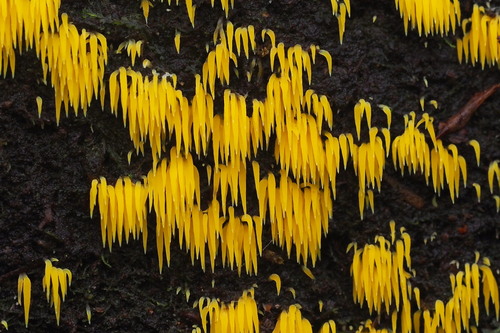
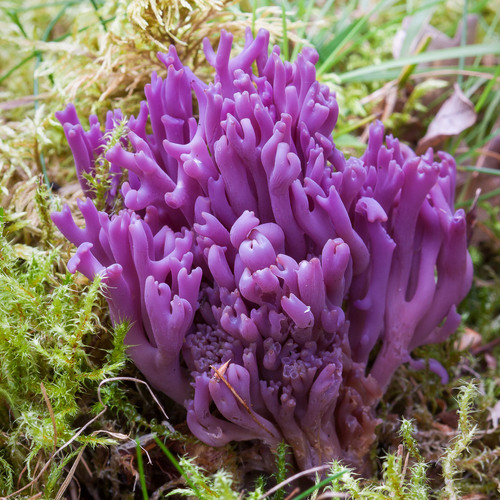
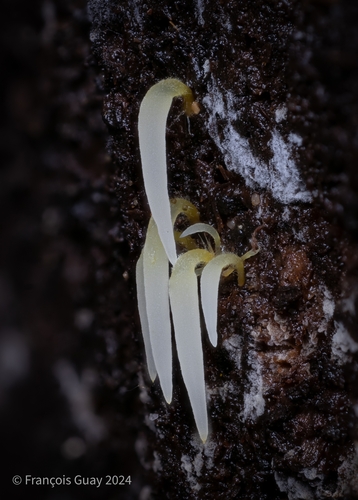
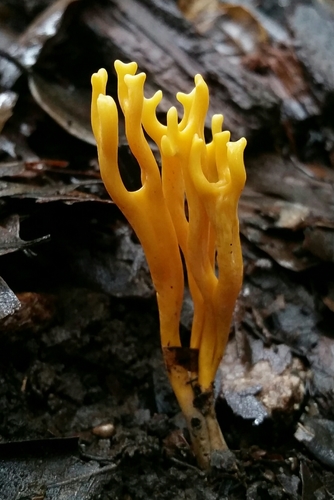
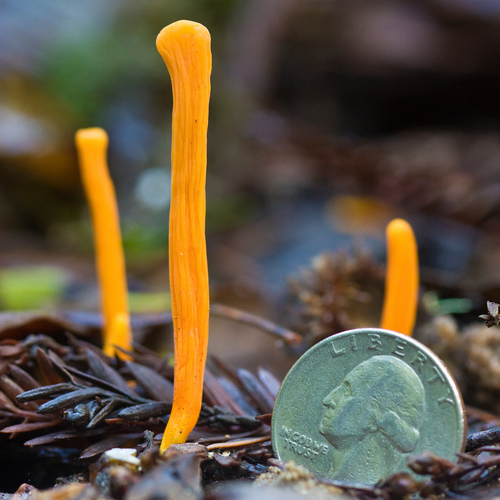
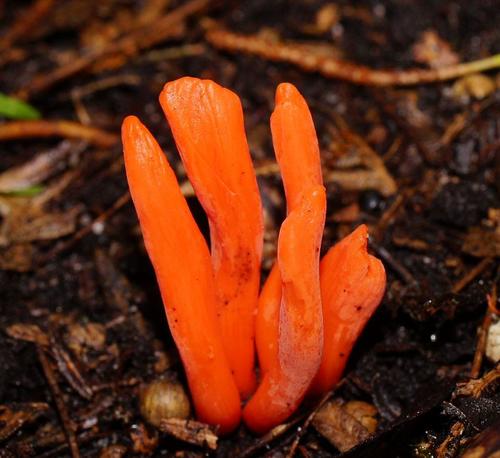
Clavulinopsis sulcata produces cylindrical or somewhat club-shaped fruit bodies, measuring up to 70 mm in height and 7 mm in width. Each fruit body grows from a cylindrical stipe that can reach up to 20 mm long. Fruit bodies may grow singly, in pairs, in trios, or clustered closely together. When young, they are tapered, but they develop into irregularly fleshy or inflated structures as they mature. As they age, they become ridged or wrinkled, and have a somewhat waxy texture. The flesh is pink or orange-pink; the stipe shares this similar color, though its base is pale pinkish-salmon. The fungus has no distinctive odor, has a mild carrot-like taste, and leaves a slightly bitter aftertaste. Spores develop on the sides of the club-shaped fruit bodies, and have thin walls. They are globose, opalescent, and measure 5.8–7.2 μm by 5.8–6.8 μm. This species was first described from Indonesia, and has also been reported from eastern Australia and New Zealand. In Australia, it occurs in the states of Queensland, New South Wales, Victoria, and Tasmania. In New Zealand, it is found on both the North and South Islands. It is a fairly common fungus and has been assessed as a species of least concern for conservation. It grows on the ground among leaf litter. In Tasmania, it is found in mixed woodland containing Nothofagus and Leptospermum.