About Cladonia perforata A.Evans
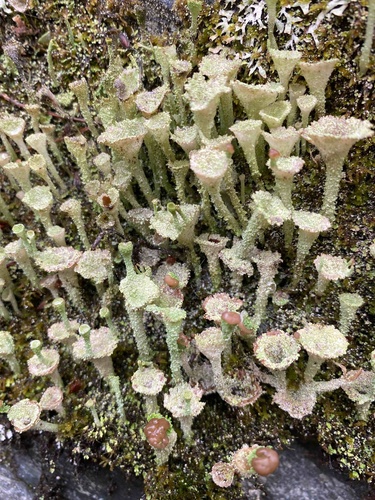
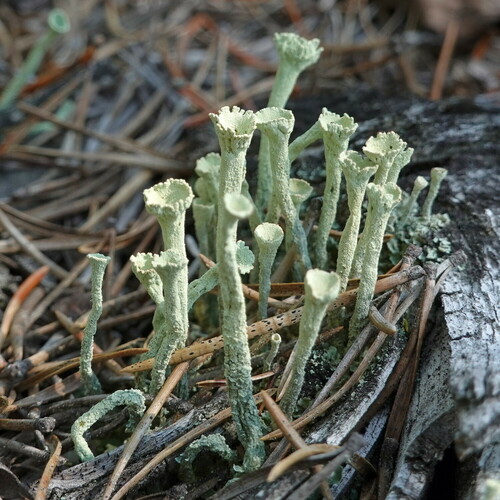
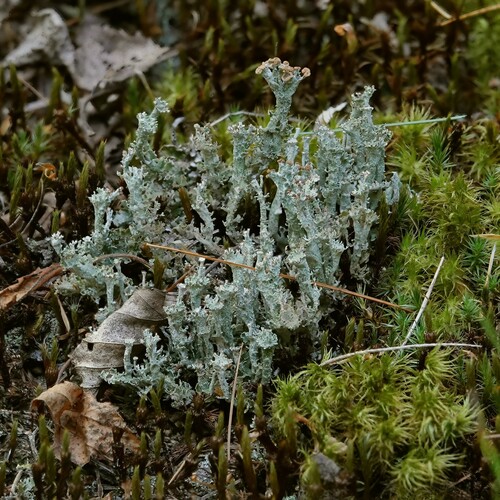
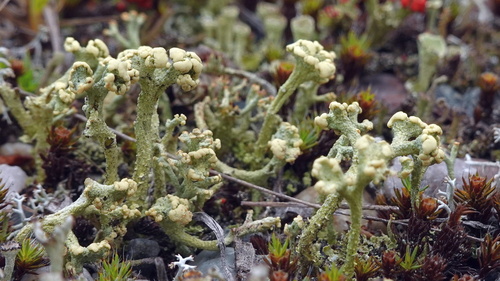
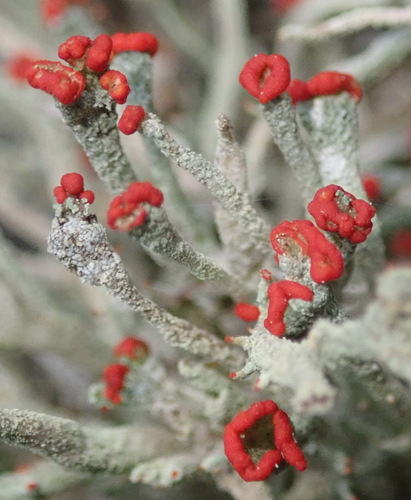
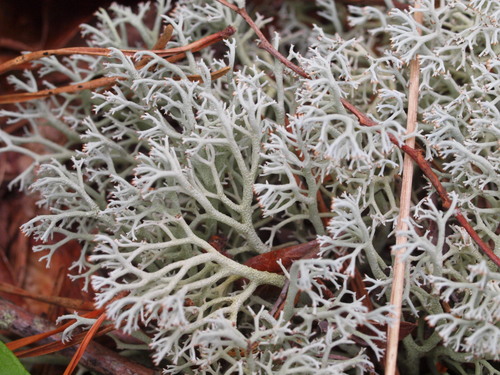
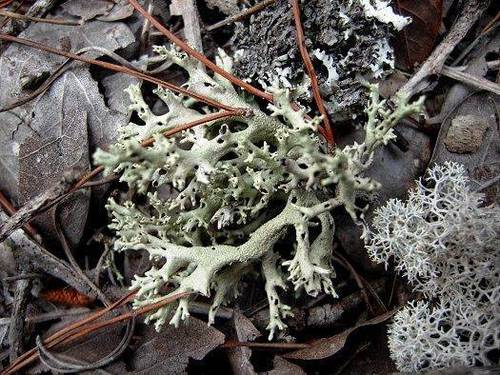
Cladonia perforata A.Evans is a relatively large lichen. Its visible fruiting body is yellow-gray, slightly glossy, and can reach up to 6 centimeters (2.4 inches) in length. This structure is branching and tufted; its branches, called podetia, have hyphae lining their inner surfaces and are perforated with tiny holes. This species and similar related lichens reproduce vegetatively: they clone themselves by physically breaking apart and spreading. No sexual reproduction has been observed for this lichen, and its biological dispersal occurs when fragments are swept or blown to new locations. Overall, this species remains poorly studied. Little information is available about its life history, including its exact reproductive cycle, growth patterns, population dynamics, or any potential seasonal changes it may undergo. This lichen is endemic to the white sand of Florida scrub, an already rare and endangered ecosystem, and it requires a very specific location within this habitat. It grows on high dunes and ridges among sand pines (Pinus clausa), in an open scrub understory area called a rosemary bald, which is dominated by Florida rosemary (Ceratiola ericoides). It occupies very dry, open sandy sites with little surrounding plant cover, and it is often found tangled in clumps with other lichen species. It is difficult to estimate the total abundance of this species. Much of the existing population data is outdated. The lichen is often small and can be hard to spot on the ground or in leaf litter. In addition, it is not always clear what counts as a single individual organism: one living lichen can be several centimeters long, or just a tiny fragment. Populations fluctuate frequently, known occurrences are sometimes destroyed, and several new populations have been discovered or rediscovered in recent years. This species was first discovered in 1945 by George A. Llano on Eglin Air Force Base property on Santa Rosa Island, near Pensacola. This location, the lichen's type locality, was later paved over, and the original population is presumed destroyed. A population was rediscovered in this Florida Panhandle region in 1989. The species has a disjunct distribution: all other known populations are located on the east and west coasts of Florida's main peninsula.