About Cladonia parasitica (Hoffm.) Hoffm.
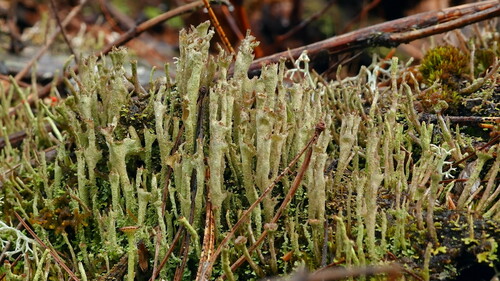
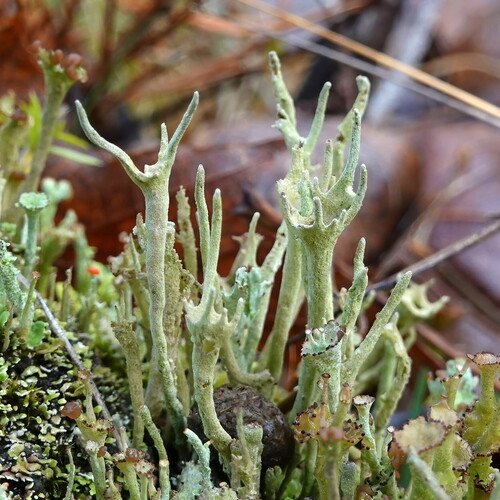
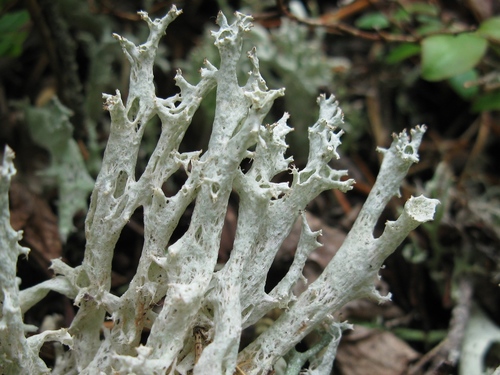
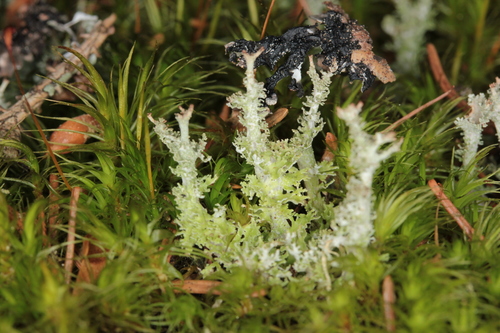
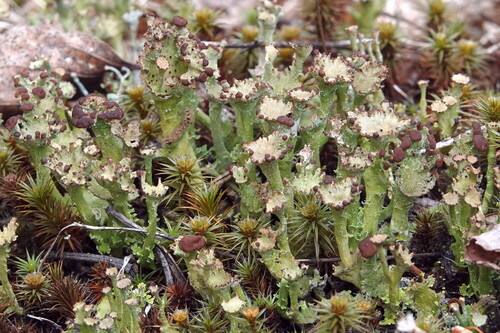
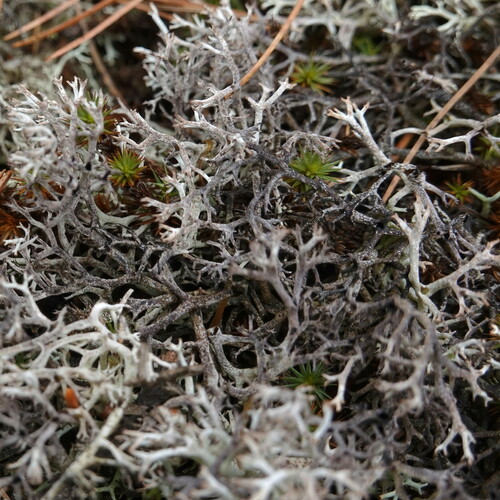
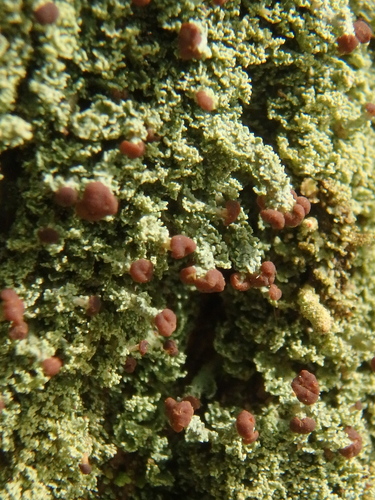
Cladonia parasitica mainly grows on old oak and pine wood. Its thallus is brown or grey, and its squamules are minutely divided, with a shape resembling coral or small scales. When apothecia are present, they form small brown morel-like protrusions on the tops of the branches. This species occurs in North America and Eurasia, within the boreal, boreal-nemoral, and nemoral regions. In Sweden, Cladonia parasitica is red-listed and categorized as Near Threatened. It acts as a signal species that indicates high-value old-growth forest. Its known secondary metabolites are barbatic acid, decarboxythamnolic acid, and thamnolic acid.