About Cladonia furcata (Huds.) Baumg.
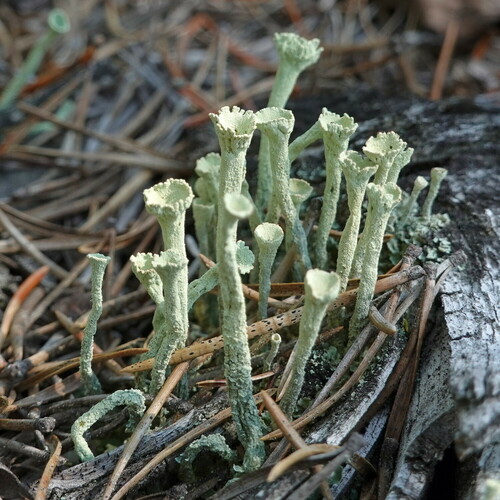
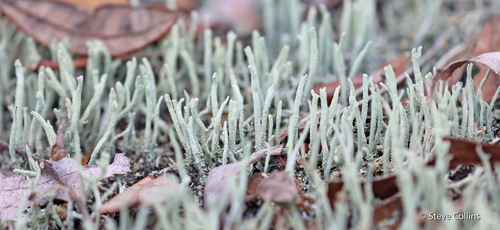
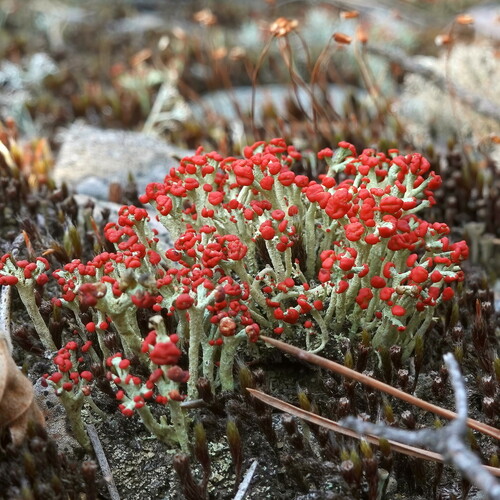
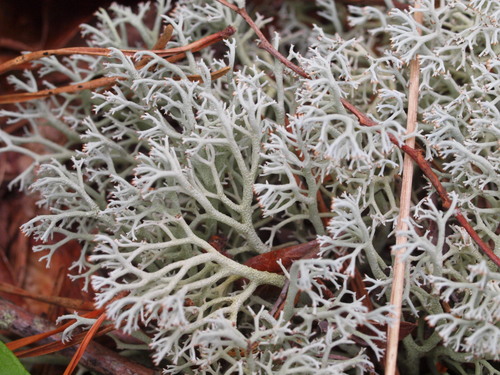
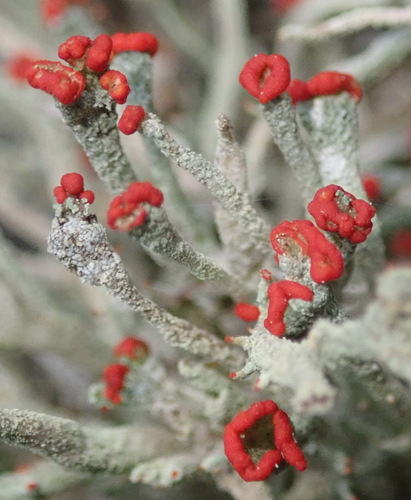
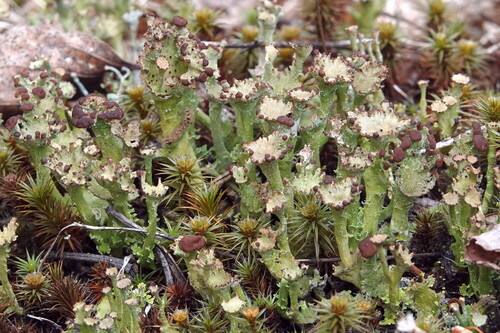
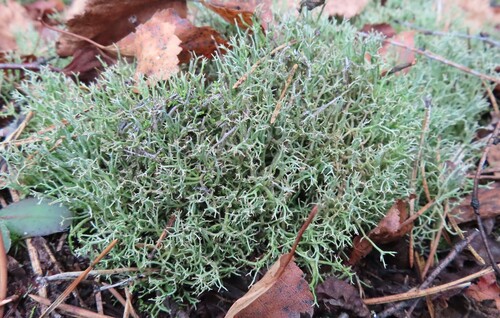
Like other lichens in the genus Cladonia, the fruiting body of Cladonia furcata is composed of a flattened primary thallus and an upright secondary stalk that forms the secondary thallus. This secondary thallus, called a podetium, is extensively branched and can grow up to 10 centimetres (3.9 inches) tall. Podetia of Cladonia furcata range in color from grayish or pale green to brown. The axil, the inner junction where a branchlet meets a branch or another branchlet, is open with inrolled branches, and often has a longitudinal groove that runs down the podetium starting from the axil. The fertile reproductive branches of this lichen are more or less flattened and frequently grooved. Cladonia furcata does not produce the vegetative reproductive structures soredia and isidia. Instead, it forms apothecia: cup-shaped ascocarps that hold asci, which bear ascospores. These brown, small apothecia grow at the tips of the branches. Cladonia furcata is most often found in forests near coastlines, at low to mid elevations. It grows on moss, humus, and soil, and occurs more rarely on rotten wood or at the base of trees. In North America, it occurs from Alaska to California, and is very common in the western Cascade Range.