About Cladonia digitata (L.) Baumg.
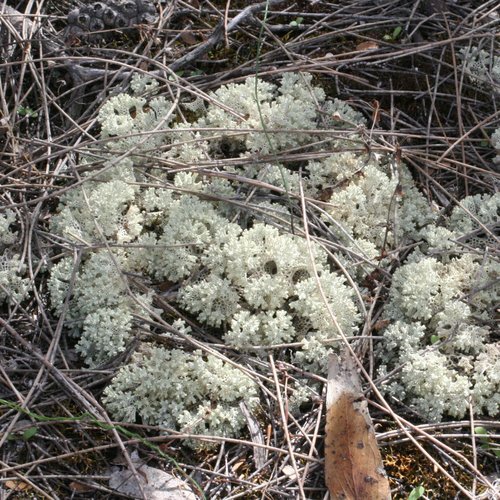
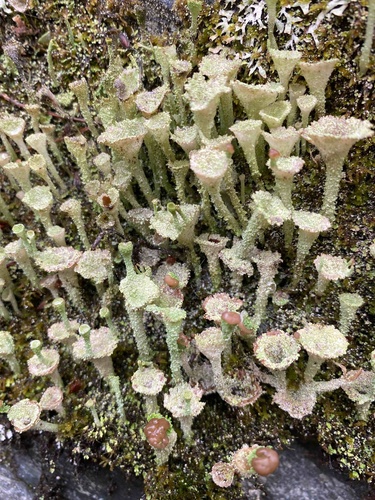
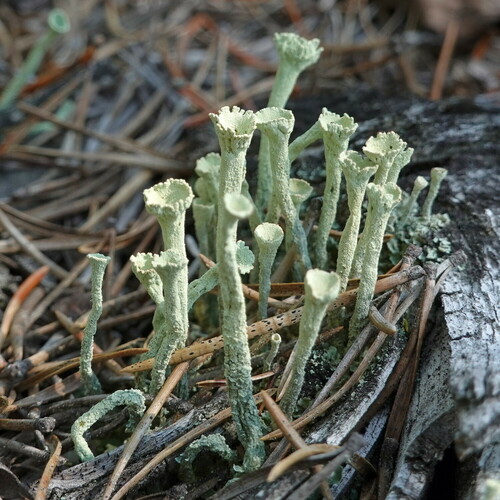
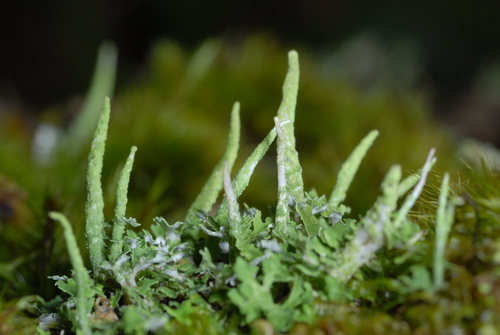
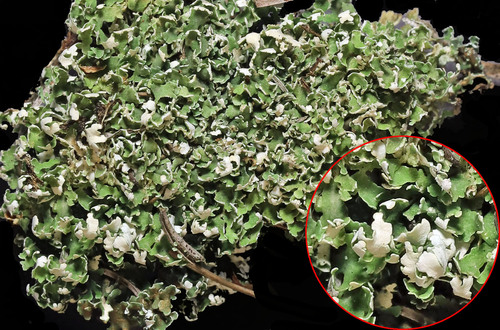
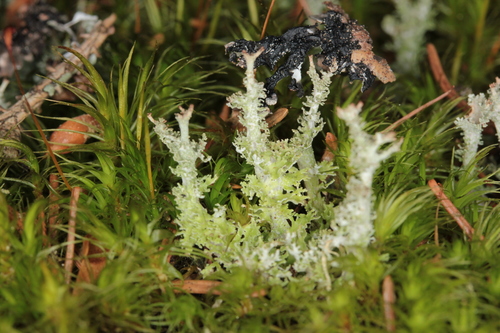
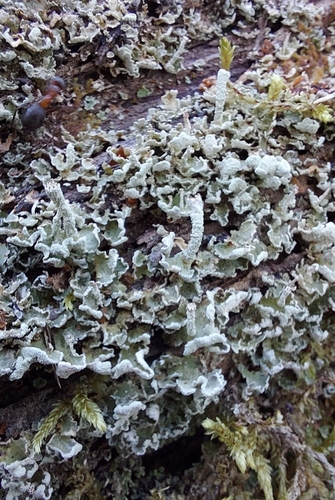
Cladonia digitata (L.) Baumg. is a fruticose lichen that occurs primarily in northern Eurasia and North America. It grows mostly on rotten wood, and can also be found growing on nutrient-rich soils or living plants. Its primary thallus is made up of large to medium-sized squamules that measure 2–15 mm in length. These squamules are involute or somewhat flat, and are sometimes sorediate at the margin or on the lower surface. Podetia grow from the surface of the primary thallus, and are typically around 10–15 mm long. The lower portion of the podetium measures 0.5–4 mm in diameter, and is cylindrical, or often thickened (incrassate) below the cups. Proliferation of the podetium is either simple or repeated. The upper portion of the podetium, and especially the cups, are sorediate, and the cavity of the cup is corticate. The lower part of the podetium, or sometimes the entire podetium, is covered by a continuous cortex and does not bear squamules. The cups are medium-sized: 10–15 mm in diameter and 2–5 mm high. The margin of the cup is usually slightly incurved, and can be sub-entire, dentate radiate, or proliferate. The sexual reproductive structures (ascoma) are apothecial, apothecioid, or hymenial. The apothecia are reddish in color, and are usually medium-sized (rarely small), measuring 0.5–5 mm in diameter. Apothecia form at the tips of branches, or more rarely on the cup margins; they may be simple or clustered, and either convex or immarginate. The paraphyses are simple, rarely branched, and are slightly wider toward the apex. Asci are cylindrico-clavate and lecanoralean, with a thickened tholus. Each ascus normally contains 8 ascospores.