About Cladonia confusa R.Sant.
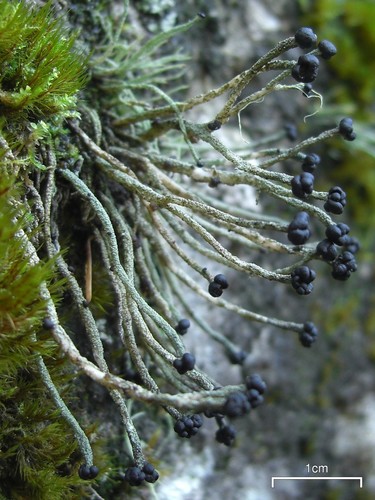
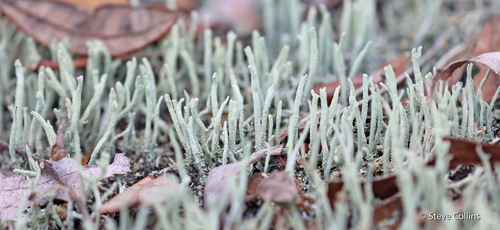
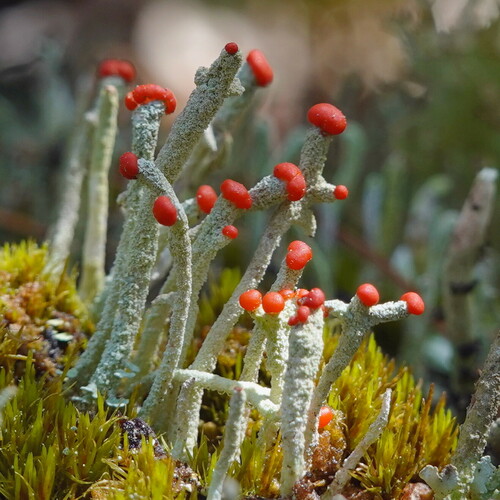
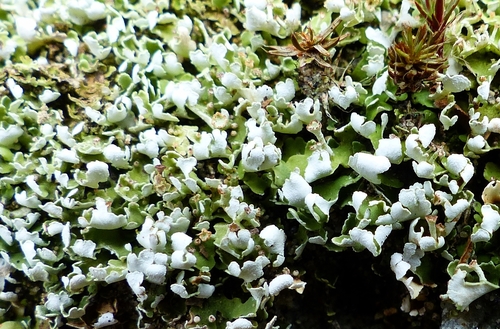
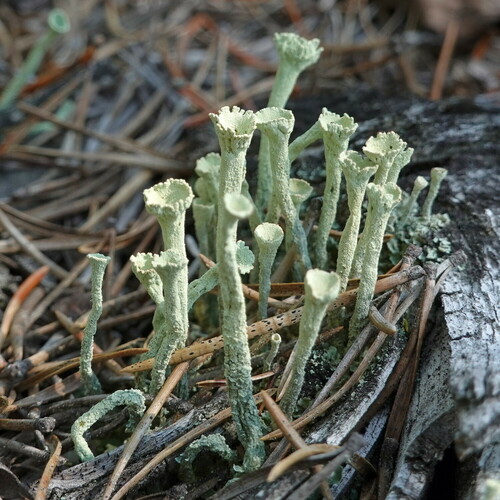
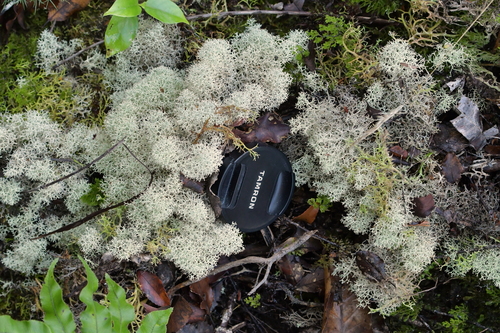
This lichen, Cladonia confusa R.Sant., forms cushiony clumps of yellow-green podetia that can reach up to 15 cm in height. Its branches may be isotomous, meaning all are of equal length, or sometimes anisotomous, with branches of unequal length. Trichotomous branches of this species have perforate axils. The apothecia are terminal, brown, and convex. The outer surface is arachnoid, with a cobwebby or cottony texture. The primary thallus of Cladonia confusa is evanescent. This species is known to contain usnic acid and perlatolic acid, and sometimes also contains ursolic acid. Its range includes both the North and South Islands of New Zealand, as well as the Three Kings Islands. It is one of the most common lichens found in the neotropics. It also occurs in Tasmania, South Australia, Lord Howe Island, Norfolk Island, and the island of Réunion. Cladonia confusa is a terricolous lichen, meaning it grows directly on soil, rather than on rocks or trees. In New Zealand, it can be found at elevations ranging from sea level up to around 2000 m. It grows in New Zealand heathland, sometimes occurring alongside Leptospermum and Dracophyllum.