About Citrus hystrix DC.
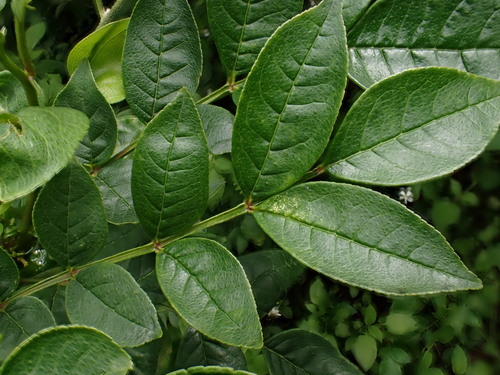
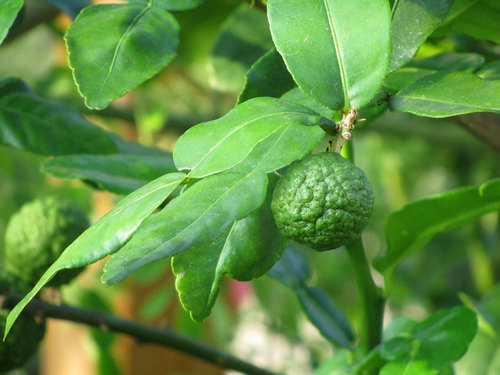
Citrus hystrix DC., commonly known as C. hystrix, is a thorny shrub or small tree that grows 2 to 11 metres (6 to 35 ft) tall. It produces aromatic, distinctively shaped "double" hourglass leaves, which are made up of a leaf blade plus a flattened, leaf-like winged petiole. Its fruit is rough and green when unripe, ripening to yellow, with a characteristic bumpy exterior and a small size of approximately 4 cm (2 in) wide. The fruits have thick pericarps (skins), and taste very acidic and slightly bitter. Its fragrant flowers have four to five white petals. C. hystrix contains significant amounts of furanocoumarins in both its peel and pulp. Furanocoumarins are known to cause phytophotodermatitis, a potentially severe skin inflammation, and cases of phytophotodermatitis caused by external use of C. hystrix have been reported. In traditional medicine of some Asian countries, the juice and rinds of the peel are used. The fruit's juice is often added to shampoo, where it is believed to kill head lice. In Thailand and occasionally Cambodia, the juice is used as a cleanser for clothing and hair. In Cambodia, lustral water mixed with slices of the fruit is used in religious ceremonies. Makrut lime oil from this plant is used as a raw material across many industries, including pharmaceutical, agronomic, food, sanitary, cosmetic, and perfume industries. It is also widely used in aromatherapy, and serves as an essential ingredient in various cosmetic and beauty products. C. hystrix is grown worldwide in suitable climates as a garden shrub for home fruit production. It grows well in container gardens, and in large garden pots placed on patios, terraces, and inside conservatories.