About Citrullus naudinianus (Sond.) Hook.fil.
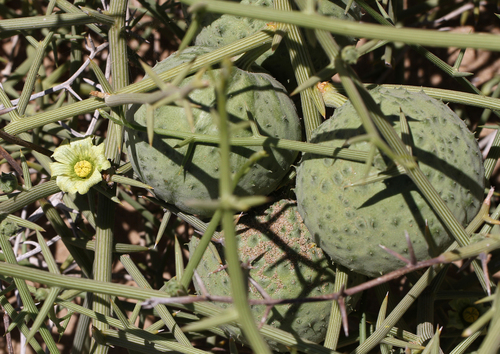
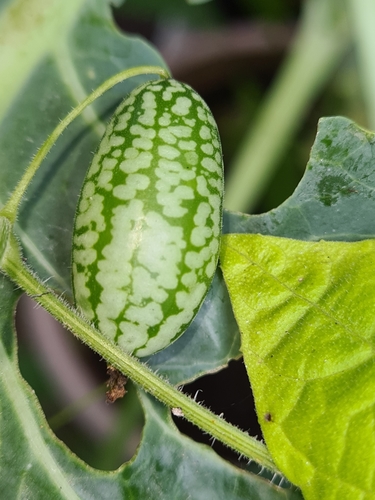
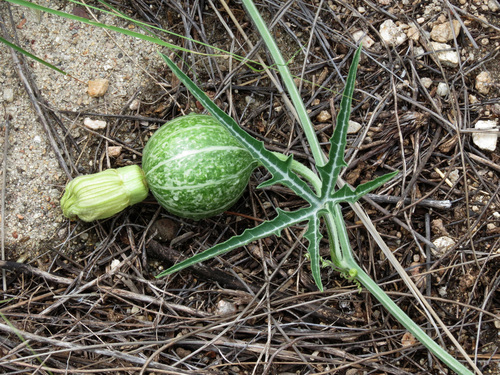
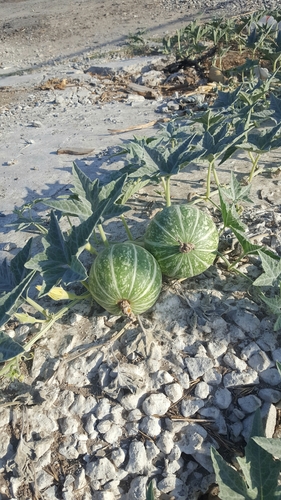
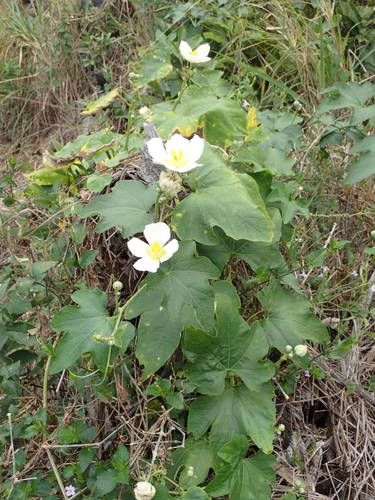
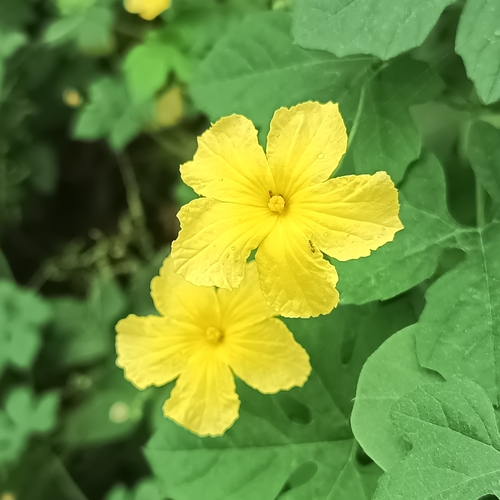
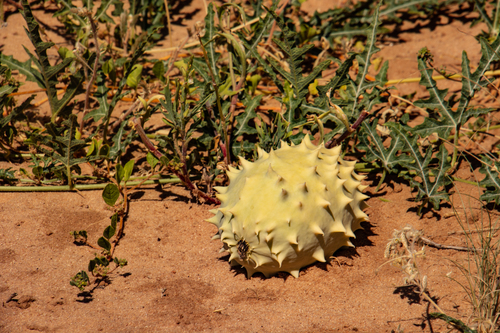
This species has the scientific name Citrullus naudinianus (Sond.) Hook.fil. Its leaves are typically deeply palmately 5-lobed and alternately arranged, and its stem can reach up to 6 meters in length. The stems bear tendrils that have been modified into weak spines. Its flowers are yellow or white, and the species is dioecious, meaning male and female flowers grow on separate individual plants. The fruit measures 4 to 12 centimeters long, is covered in spines, and starts green before ripening to pale yellow. The ripe fruit is edible, but eating unripe fruit causes a burning sensation in the mouth. The plant itself is not poisonous, but when combined with the blood of Diamphidia beetle larvae, it forms a poison used to make poison arrows. Its tuberous roots can reach 1 meter in length and are poisonous. Citrullus naudinianus is native to southern Africa, where it occurs in Namibia, Zambia, Zimbabwe, Botswana, Mozambique, Angola, and South Africa. It grows naturally in woodland, wooded grassland, and grassland habitats. It prefers sandy soil, cannot tolerate frost, and can be grown in USDA zone 9.