About Citharichthys spilopterus Günther, 1862
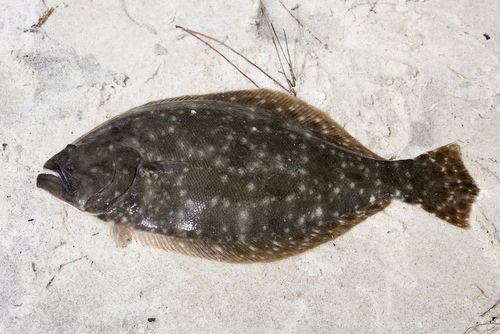
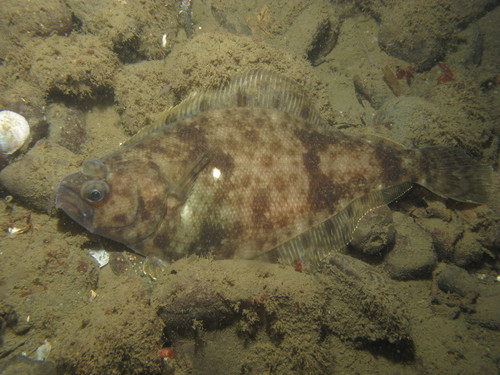
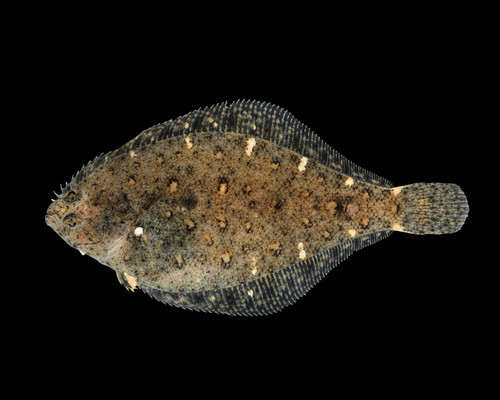
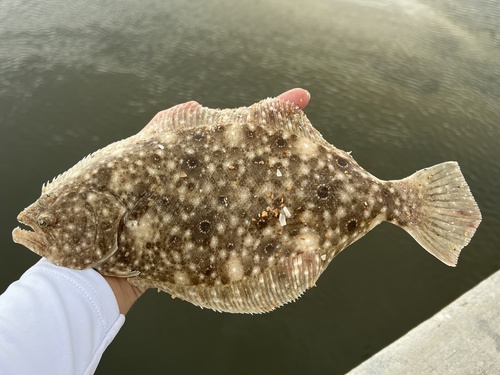
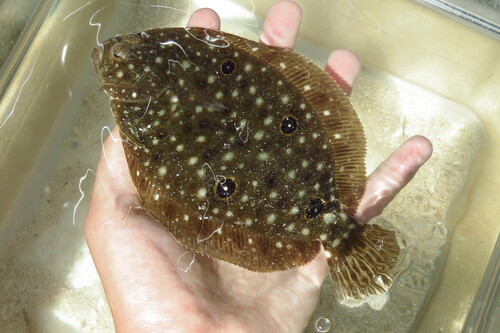
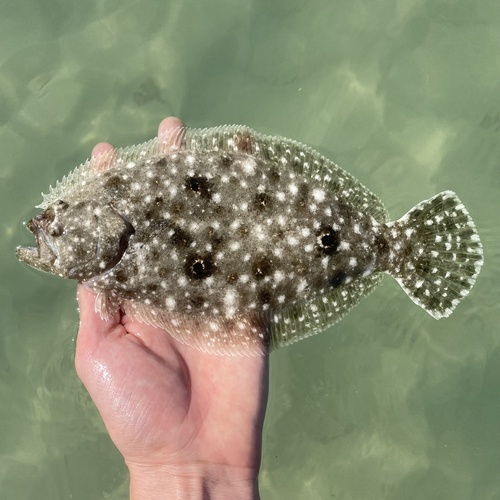
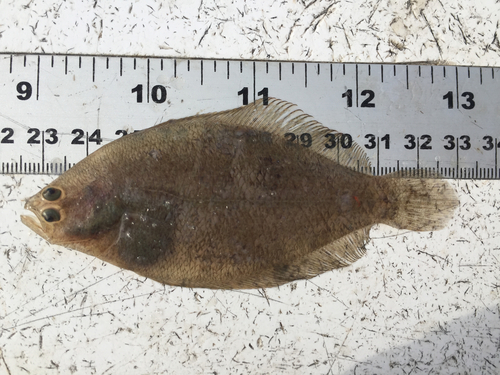
The bay whiff, with the scientific name Citharichthys spilopterus, belongs to the family Paralichthyidae, which is commonly called the "left-eye flounders". It is one of the most common flatfish species native to the Gulf of Mexico. It is a benthic ambush predator that can camouflage itself on or just below the seabed surface. This species is typically solitary, with only small numbers of individuals found in one area. Living bay whiffs vary in color from light to dark, and become brownish after death. They have two dark spots on the caudal peduncle and a light spot under the pectoral fin. The average body length of the bay whiff is 15 cm, and the maximum recorded length is 20 cm. Their lateral line runs straight along the body, they have a large mouth, the opercle on the blind side has no cirri, and their pelvic fins are asymmetrical. Bay whiffs live along the bottom of coastal waters, at depths ranging from 20 to 40 fathoms. They have a very high salinity tolerance, and have been found in areas as low-salinity as 0.9 psu, close to freshwater, as well as in coastal waters with salinity exceeding 35 psu. This species is distributed across the western Atlantic Ocean, ranging from New Jersey through the Caribbean to Brazil. It is found throughout the Gulf of Mexico, and moves into bays and shallow waters during the warmer months of the year. The spawning season of Citharichthys spilopterus varies by location, and water temperature is the main driver of this variation. Brazilian populations spawn from March to May and in November, the spawning season in North Carolina is limited to February and March, populations in Puerto Rico spawn from November to May, spawning peaks in both winter and spring in Louisiana, and the large number of juveniles seen in Florida in May indicates a spring spawning season.