About Cistus salviifolius L.
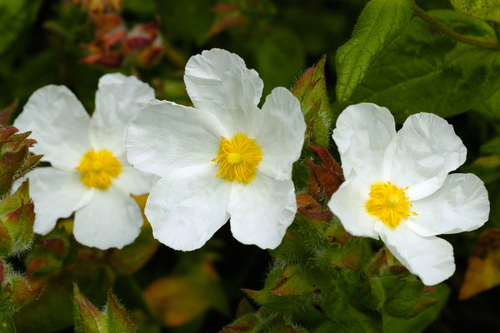
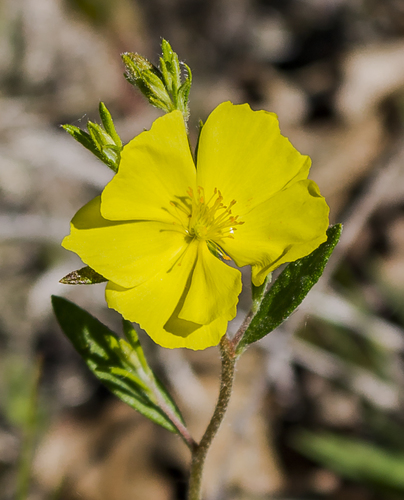
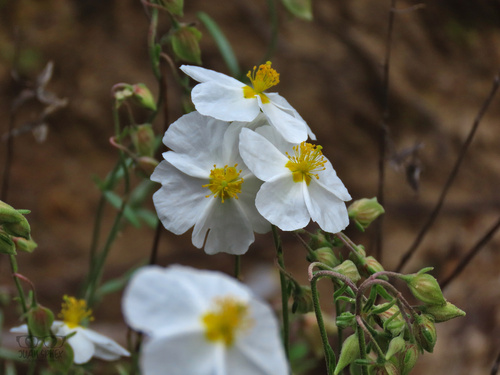
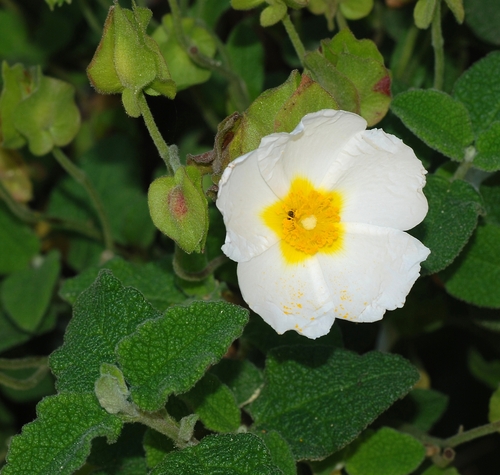
Cistus salviifolius is a bushy shrub with spreading stems covered in clumpy hairs. It grows to an average height of 30–60 centimetres (12–24 inches), and can reach a maximum height of 100 centimetres (39 inches). Its oval-shaped green leaves are 1–4 centimetres (0.4–1.6 inches) long, arranged oppositely, with a reticulate structure, tomentose covering on both sides, and a short petiole that measures 2–4 millimetres. The inflorescence holds one or more round, long-stalked flowers that grow at leaf axils. Each flower has five white petals, each with a yellow spot at the base, forming a corolla 4–6 centimetres (1.6–2.4 inches) in diameter. The stamens are also yellow, and the anthers produce large amounts of yellow pollen. This species is pollinated by insects (entomophily), most commonly by bees. It flowers from April through May. Its fruit is a pentagonal capsule 5–7 millimetres long. This showy wildflower is native to the Mediterranean region, including southern Europe and parts of Western Asia and North Africa. It prefers habitats of dry hills, scrubland, and open woodlands, growing at altitudes between 0 and 1,200 metres (0–3,937 feet) above sea level, and it regrows very quickly after fires. Cistus salviifolius is cultivated by the nursery industry, and grown in private gardens and public landscapes, most often valued for its drought tolerance and its ability to support pollinator habitats.