About Cisticola juncidis (Rafinesque, 1810)
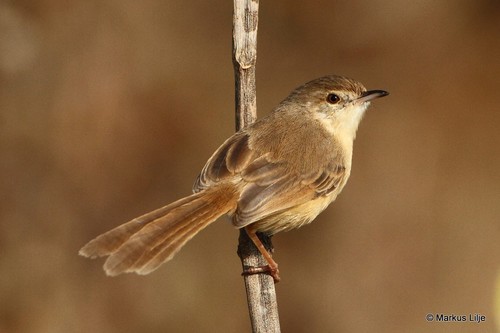
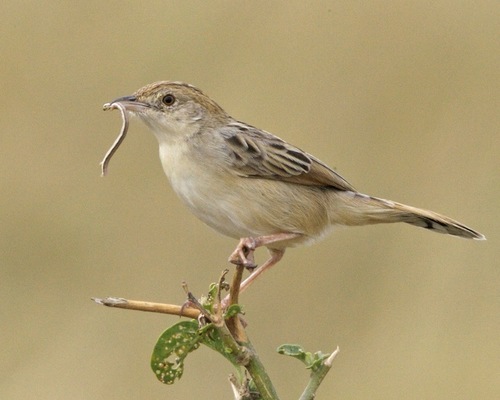
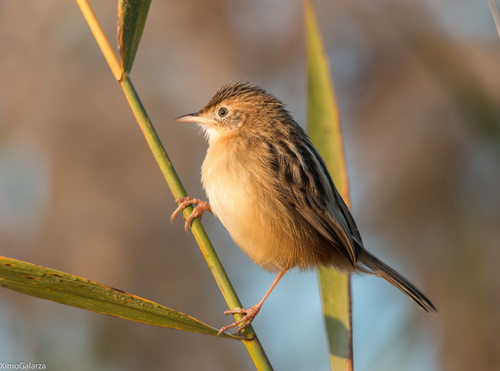
The zitting cisticola, scientifically named Cisticola juncidis (Rafinesque, 1810), measures 10 to 12 cm (3.9 to 4.7 in) in length. It is brown on its upper body, heavily marked with heavy black streaks. Its underparts are whitish, and its broad tail has white tips; the tail is flicked very frequently, which is how the species got its alternative common name. Adult males have less streaking on the crown and more marking on the back than females, but there are no major overall differences between the sexes, or between the species' 17 recognized geographical subspecies. A lack of a nuchal collar distinguishes this species from the closely related golden-headed cisticola (Cisticola exilis). During the non-breeding season, zitting cisticolas usually hide low in dense grass, making them hard to spot.
This species occurs mainly in grassland habitats, and is most often found near water. Most of its populations are non-migratory year-round residents, but some East Asian populations migrate south to warmer regions during the winter. In the Himalayas, zitting cisticolas move up to around 1,900 m (6,200 ft) in elevation during summer, and stay below 1,300 m (4,300 ft) during winter. It is a rare vagrant to northern Europe, most often appearing as a spring overshoot. The species' overall range in Europe is generally expanding, though northern European populations are particularly vulnerable to hard, cold winters. In 2025, this species bred in Britain for the first recorded time.
Zitting cisticolas are very small insectivorous birds, and are sometimes found in small groups. Their breeding season lines up with the rainy season in most regions, and many regions see pairs produce two broods per year. Males are typically polygynous, though some individuals are monogamous. The male builds an initial nest structure deep within tall grasses, then invites females to the nest using a specialized display. Females that accept the male finish construction of the nest. Nests are built by binding living leaves into a soft fabric made of felted plant down, cobwebs, and grass. The nest is cup-shaped, with a camouflaging canopy of tied leaves or grasses overhead. Clutches contain 3 to 6 eggs. The female incubates the eggs, which hatch after approximately 10 days. Zitting cisticolas can raise more than one brood in a single breeding season. Females change mates frequently and rarely stay within the same territory, while males are less mobile, maintaining non-overlapping song territories that shift from day to day. Females can sometimes begin breeding within their first year of life.