About Cisticola exilis (Vigors & Horsfield, 1827)
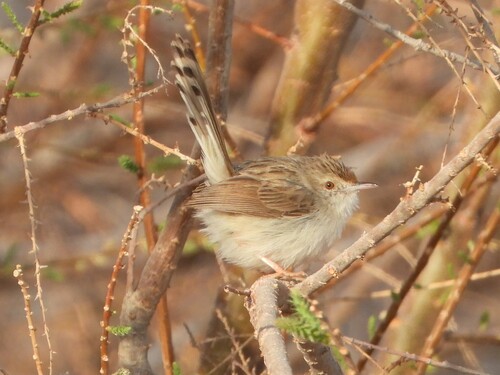
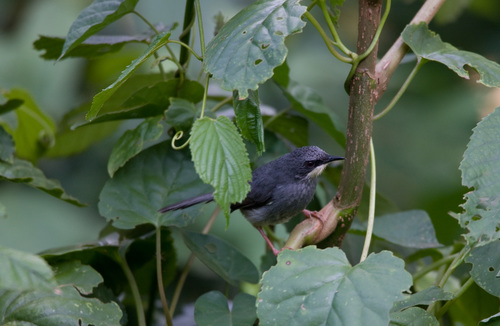
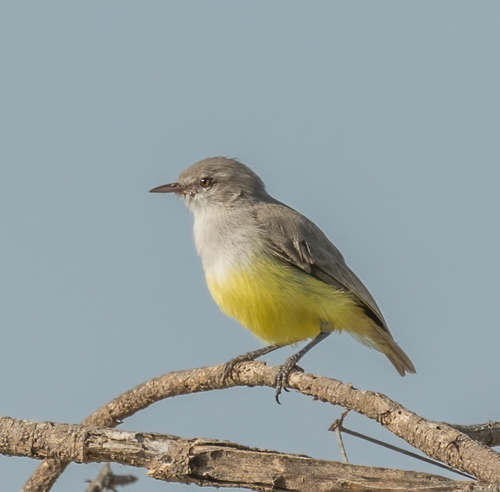
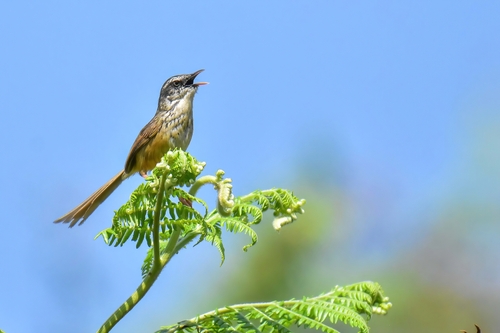
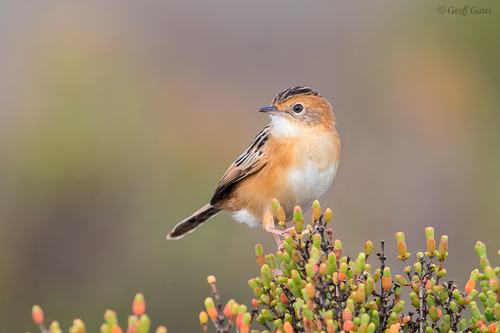
The golden-headed cisticola (Cisticola exilis) is a small bird species, with adults reaching 9–11.5 cm (3.5–4.5 in) in length and weighing 6–10 g (0.21–0.35 oz); males are slightly heavier than females. While it resembles the black-backed cisticola (Cisticola eximius), the golden-headed cisticola has a shorter tail during the breeding season. It also looks similar to the zitting cisticola (Cisticola juncidis), but lacks the rich golden head that defines this species. Breeding males have unique characteristics: a golden body, a golden-orange head, a dull chin, and a shorter tail. The shorter tail of breeding males is thought to be a product of sexual selection, as it has been shown to improve male reproductive success. Outside of the breeding season, both males and females look similar to females, with a cream-coloured underside and a brown upperside. Their upper bodies have black or dark brown streaks, their black wings are edged in buff, they have a golden head, a white throat, and a dull gold shade on the back of their neck. Juveniles resemble adults, only differing in being lighter in overall colour. The golden-headed cisticola produces a range of distinct vocalisations that, as documented by the Sunshine Coast Council, vary from a "teewip" to a "wheezz, whit-whit". When it vocalises, the species raises a small crest on its head. This cisticola has a very large range and population, found across Australia, Cambodia, China, India, Indonesia, Lao People's Democratic Republic, Myanmar, Nepal, Papua New Guinea, Philippines, Taiwan, Thailand, Timor-Leste, and Vietnam. Its total extent of occurrence is estimated to be 36,800,000 km² (14,200,000 mi²), and it is the most common cisticola species in Australia and across the region from India to the Philippines. Its preferred habitat includes grassy hills, savannas, woodlands, scrublands, rivers, wetlands, and irrigated farmland, specifically in areas with tall, thick grass. Outside of the breeding season, the species mostly stays close to the ground. In Northern Australia, grassland fires sometimes push the species into forest edge habitats. Records of its maximum altitude vary: the scientific journal BioLife reports it lives at altitudes of 1,200 m (3,900 ft) or lower, while the Handbook of the Birds of the World notes it can reach up to 1,500 m (4,900 ft) in China and 1,800 m (5,900 ft) on the island of Lombok.