About Cissus trifoliata (L.) L.
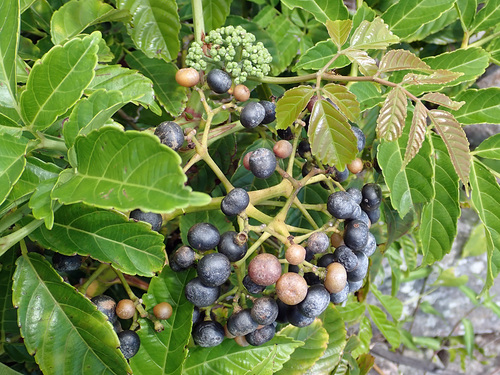
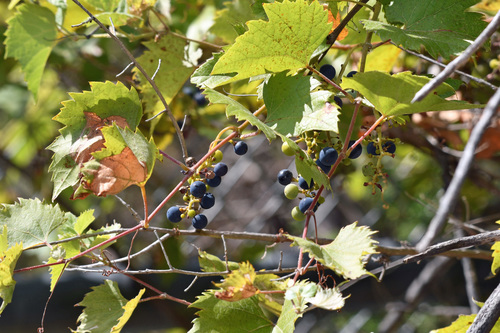
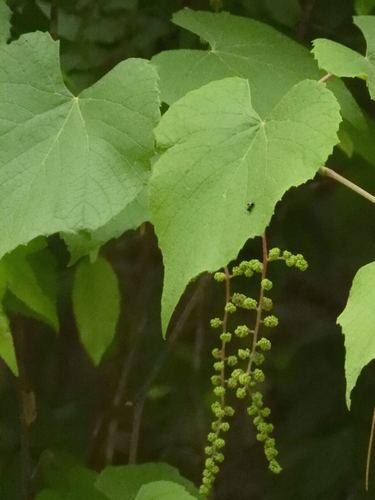
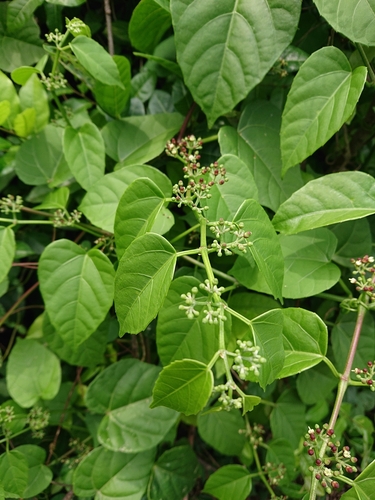
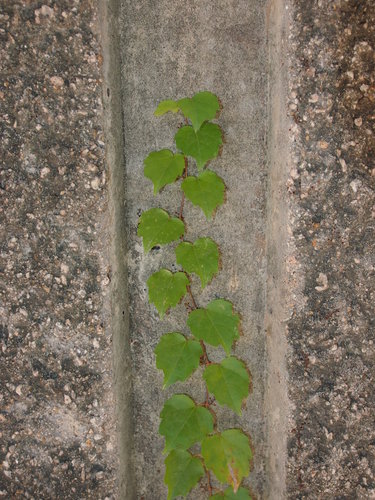
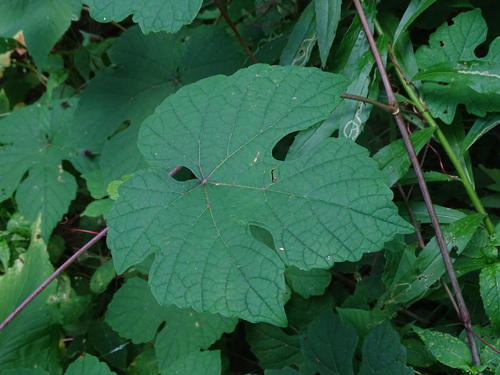
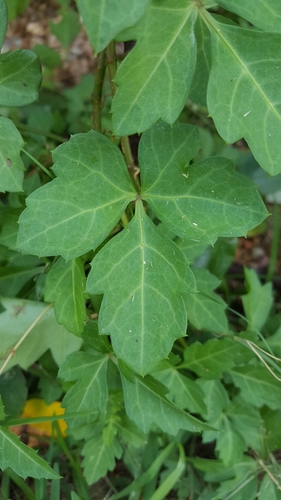
Cissus trifoliata (L.) L., commonly called possum-grape, sorrelvine, vine-sorrel, or hierba del buey, is a New World plant species belonging to the grape family. It is native to the southern United States, multiple states of Mexico including Quintana Roo, Yucatán, Michoacán, Oaxaca, Puebla, Veracruz, Baja California, Chihuahua, Coahuila, Durango, Nuevo León, San Luis Potosí, Sinaloa, Sonora, and Tamaulipas, Venezuela, Colombia, and may also be present in Loja, Ecuador. It is also found across several Caribbean islands: Aruba, Bahamas, Cuba, Hispaniola, Jamaica, Puerto Rico, and St. Croix and St. Thomas in the U.S. Virgin Islands. This species is a woody perennial vine with trailing or climbing stems. Individual plants grow from large, brown-skinned tubers that have a strong unpleasant odor. Its leaves are palmately tri-lobed, fleshy or semi-succulent, and typically remain on the plant year-round, though they are deciduous in cold temperatures when exposed to roughly 26°F. The flowers are creamy yellow, four-parted, and have petals that spread open when blooming. Fruits are globose juicy berries that are black or deep purple, containing 1 to 4 seeds. The tubers of Cissus trifoliata are classified as poisonous, and contact with the plant can trigger dermatitis in people with sensitive skin. This species grows in agricultural areas, and has escaped to colonize waste areas, roadsides, river banks, upland slopes, and sandy washes. Its flowering season runs from November to May. Note that the common name possum grape is also used to refer to Vitis cinerea.