About Cissus quadrangularis L.
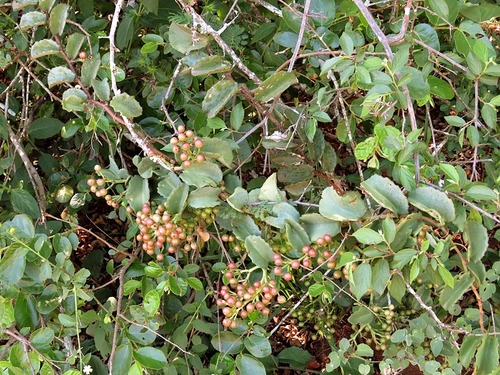
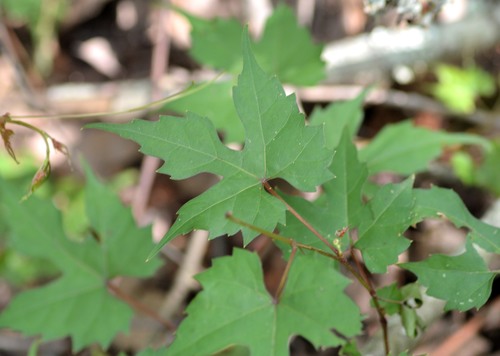
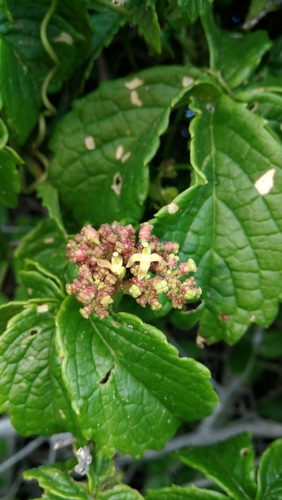
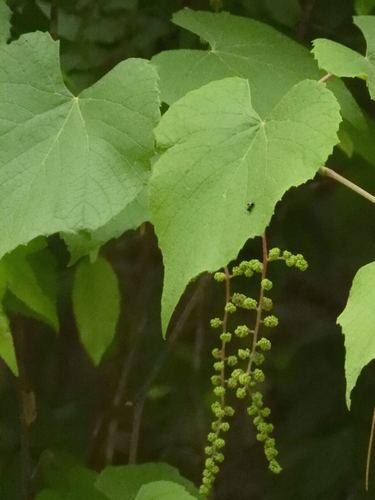
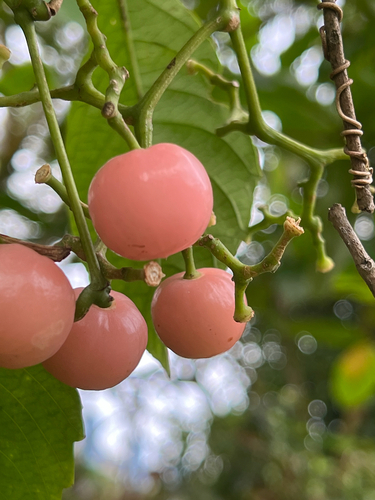
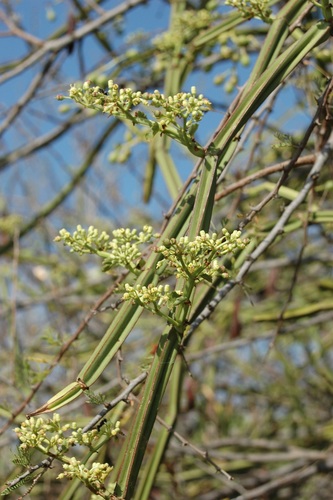
Cissus quadrangularis L. is an evergreen, fast-growing climber. Typically it reaches 1.5 m (4.9 ft) in height, though it can grow to 5 m (16 ft), spreading about 0.5 m (1.6 ft) wide. Its branches have a quadrangular cross-section, with internodes measuring 8–10 cm (3–4 in) long and 1.2–1.5 cm (0.5–0.6 in) wide. Each angle of the branches features a leathery edge. At the nodes, plants produce toothed, three-lobed leaves that are 2–5 cm (0.8–2.0 in) wide. A tendril emerges from the opposite side of each node. It produces racemes of small flowers that can be white, yellowish, or greenish. Its ripe fruits are globular red berries. It is hardy to UK zone 10. It can grow in light sandy, medium loamy, and heavy clay soils, and prefers well-drained soil; it is also able to grow in nutritionally poor soil. It tolerates a wide range of pH levels, growing in acid, neutral, and basic alkaline soils, including both very acid and very alkaline conditions. It cannot grow in shade, prefers either dry or moist soil, and can tolerate drought. Cissus quadrangularis has been used as a medicinal plant since antiquity. It has been used in various classical Ayurvedic medicines to heal broken bones, as well as injured ligaments and tendons. In Siddha medicine, it is classified as a tonic and analgesic, and is believed to help heal broken bones, giving it the name asthisamharaka, meaning "that which prevents the destruction of bones". The Assamese people and the Garo tribe of Meghalaya and Bangladesh have used Cissus quadrangularis to treat bone fracture.