About Cissomela pectoralis (Gould, 1841)
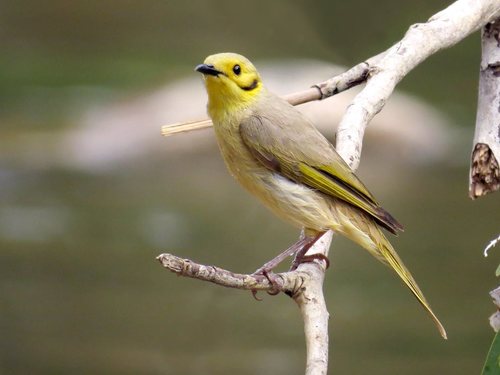
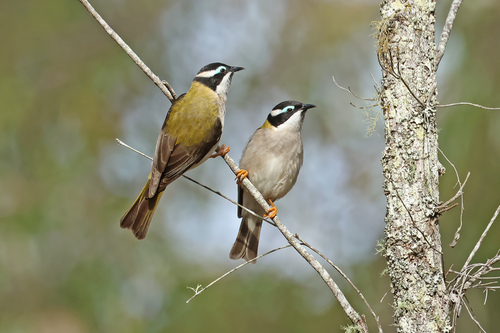
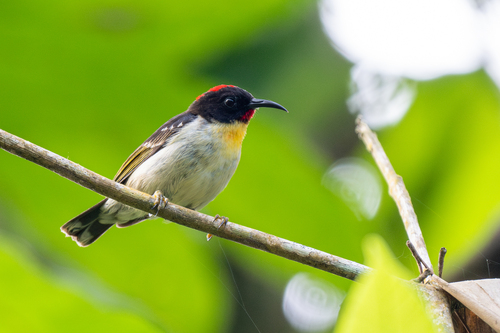
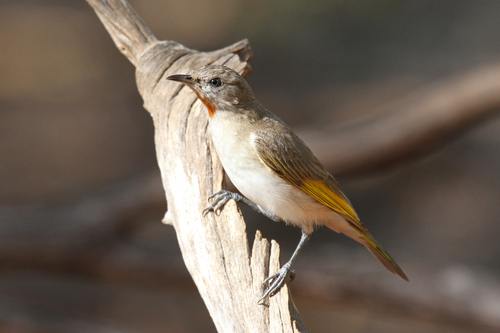
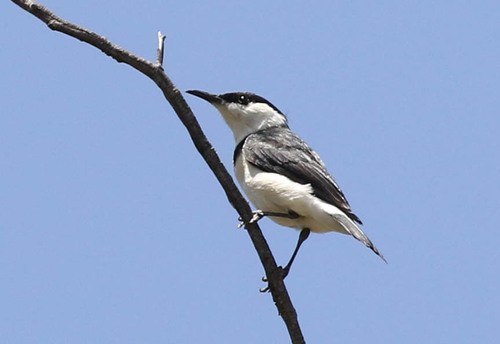
Scientific name: Cissomela pectoralis (Gould, 1841). The banded honeyeater is a small, pied honeyeater marked by a distinctive black breast band that crosses its white underparts. It has black back, tail, and head, as well as a long curved bill and long legs. This species measures 11.5–13.5 cm (4.5–5.3 in) in body length, has a wingspan of 12–14 cm (4.7–5.5 in), a bill that is 14–18 mm (0.6–0.7 in) long, and weighs between 8–13 g (0.3–0.5 oz). The banded honeyeater is currently rated Least Concern (LC) on the IUCN Red List, and holds the same Least Concern status under Northern Territory and Queensland conservation assessments. Its range is restricted entirely to tropical northern Australia, where it inhabits tropical grassy woodland, open forests, mangroves, and Melaleuca swamps. It feeds on nectar from eucalypts and other open-flowered species including Grevilleas, paperbarks, and Bauhinias, as well as on insects. It typically travels in pairs or small groups, though large groups may gather when abundant blossom is available. Across many parts of its range, the banded honeyeater acts as a blossom nomad, or makes seasonal movements.