About Cirina forda Westwood, 1849
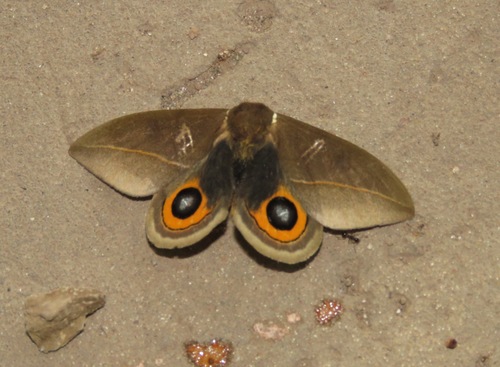
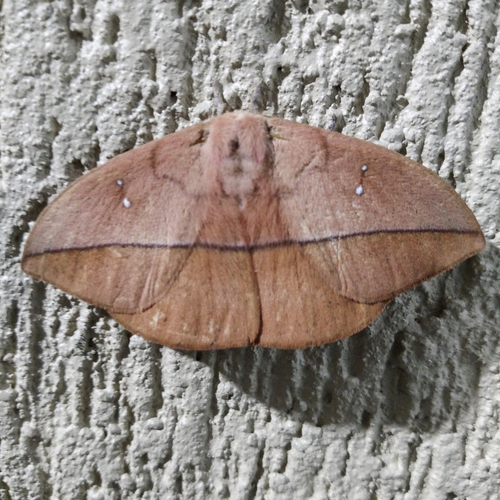
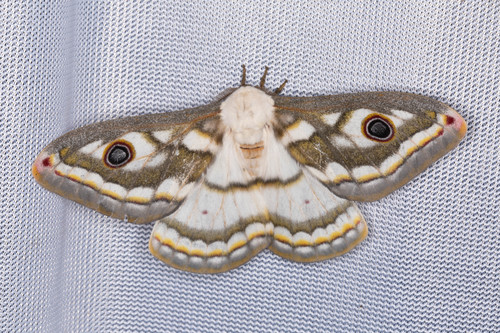
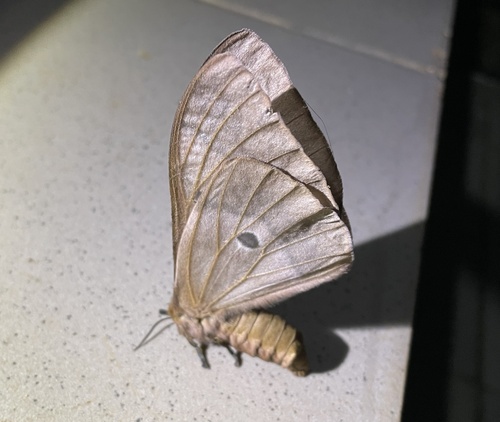
Cirina forda, commonly known as the pallid emperor moth or shea defoliator, is a moth species belonging to the family Saturniidae. It was first formally described by John O. Westwood in 1849. This species occurs across western Africa, with documented populations in Ghana, Nigeria, Zimbabwe, the Democratic Republic of the Congo, and South Africa. Adult moths are pale creamy brown; each hindwing bears a small darker spot, and the species lacks true eyespots. Cirina forda produces one new generation each year. Its larvae feed on Vitellaria paradoxa, and can cause heavy defoliation of host plants in Ghana and Nigeria. In South Africa, the preferred food plant for larvae is the tree Burkea africana. In Nigeria, the larvae of this species are eaten as part of entomophagy, the practice of eating insects. Pupation occurs in soft soil or sand located at the base of the larva's host plant.