About Circaea alpina L.
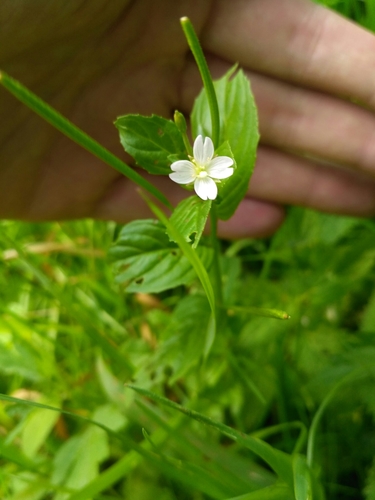
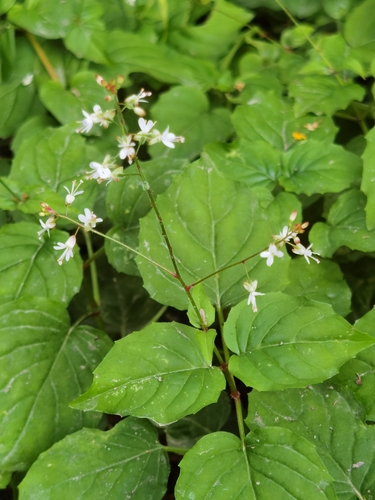
Circaea alpina L. has opposite, ovate leaves that measure 2–6 cm long and have coarse teeth along the edges. The petioles, which range from 1.5–4 cm (0.6–1.6 in) in length, feature a wing along their lower surface. Flowers and fruits are grouped close to the top of the fruiting raceme; each raceme produces 15 or fewer white or pink flowers, blooming from mid-May through early September. Every flower holds two white to light pink petals 1–1.5 mm (0.04–0.06 in) long, each divided into two lobes. It also has two white sepals that measure 1–2 mm (0.04–0.08 in) long. Its fruit is a small bur that contains a single seed. C. alpina can reproduce both vegetatively through stolons and by seed. In North America, Circaea alpina grows across the entire range of Canada, and in the United States it occurs from North Carolina to Maine, and from New Mexico to Washington. In Eurasia, its range covers Northern Europe, extending south to Albania and Bulgaria and east to Korea and Japan. This species favors moist, upland habitats. It is most commonly found in forests or near streams, at elevations from sea level up to 3,000 metres (10,000 ft).