About Ciona intestinalis (Linnaeus, 1767)
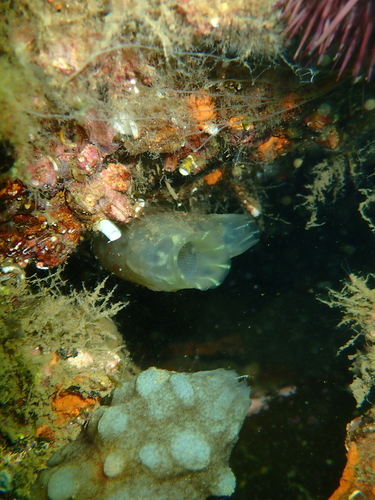
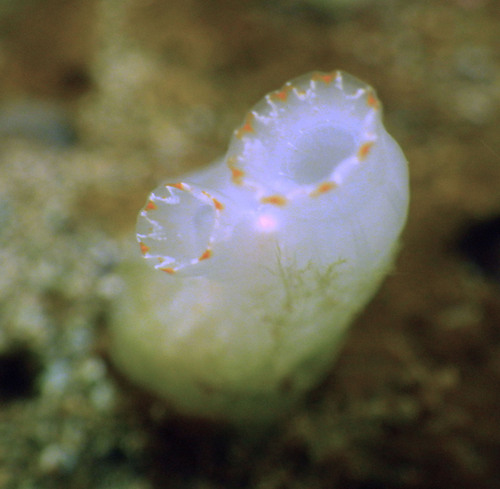
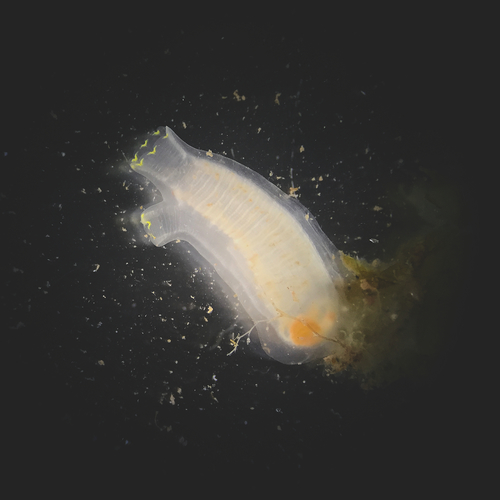
Ciona intestinalis (Linnaeus, 1767) is a solitary tunicate with a soft, gelatinous cylindrical body that can reach up to 20 centimetres (8 inches) in length. Within its species complex, body color and the color of the distal end of the siphons are the main external features used to distinguish its sister species. The body of Ciona intestinalis is bag-shaped, covered by a tunic that is secreted by the animal’s epidermal cells. It attaches permanently via a base at its posterior end. At the opposite anterior end, there are two openings: the buccal siphon and the atrial siphon. Water enters this ascidian through the buccal (oral) siphon, and exits the atrium through the atrial (cloacal) siphon. In Ciona intestinalis, CB1 and CB2-type cannabinoid receptors are targeted to axons, which indicates that cannabinoid receptors have an ancient role as axonal regulators of neuronal signalling. Ciona intestinalis is a hermaphroditic broadcast spawner that cannot self-fertilize. Released gametes remain viable in the water column for 1 to 2 days, and its larvae are free-swimming for 2 to 10 days. This species is self-sterile: it releases sperm and eggs into surrounding seawater almost at the same time, so it has been widely used for research into the mechanism of self-incompatibility. Self/non-self-recognition molecules are thought to play a key role in the interaction between sperm and the vitelline coat of the egg. The mechanism of self/non-self recognition in ascidians like Ciona intestinalis appears to be similar to the self-incompatibility systems found in flowering plants. Self-incompatibility promotes out-crossing, which provides an adaptive advantage in every generation by masking deleterious recessive mutations through genetic complementation.