About Cinnyris venustus (Shaw, 1799)
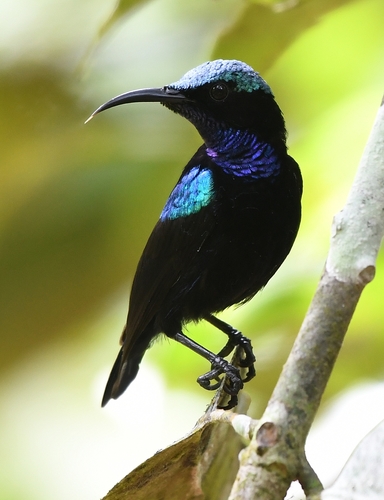
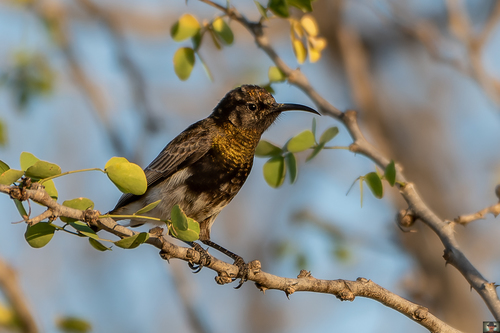
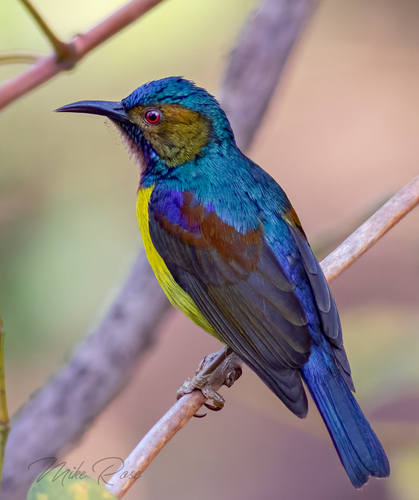
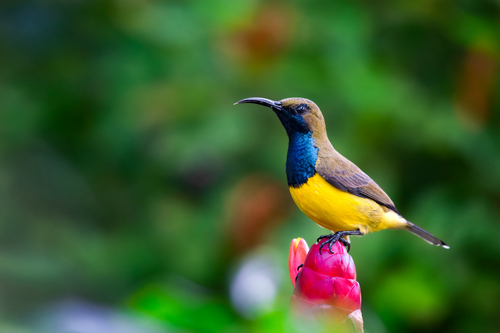
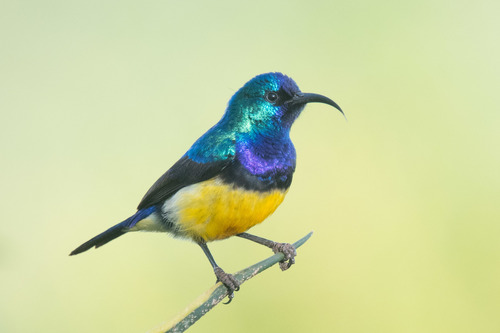
The variable sunbird, also called the yellow-bellied sunbird, has the scientific name Cinnyris venustus; it was previously classified under the name Nectarinia venusta, and is a member of the sunbird group. Sunbirds are a group of small Old World passerine birds that feed mainly on nectar, though they also consume insects, particularly when feeding their young. They have fast, direct flight achieved with their short wings. Most sunbird species can access nectar by hovering like hummingbirds, but they typically perch to feed for most of their feeding time. The variable sunbird is a fairly common resident breeder across equatorial Africa. This species lays two eggs in a suspended nest built in a tree, and inhabits open woodland and cultivated areas. Variable sunbirds are small birds, reaching only 10 centimeters in total length. They have medium-length thin down-curved bills and brush-tipped tubular tongues, both traits that are adapted for feeding on nectar. Adult males have glossy green coloring on the head, throat, and nape, plus a maroon breast band. In most subspecies, the male’s belly is yellow, but a small number of subspecies have orange or white bellies instead. Females have grey-brown upper plumage, yellowish underparts, and a distinct pale supercilium. Eclipse plumage males resemble females, but show patches of green coloring, most noticeably on the throat. The call of this species is a clear, repeated tew-tew-tew-tew-tew.