About Cinnamomum oliveri F.M.Bailey
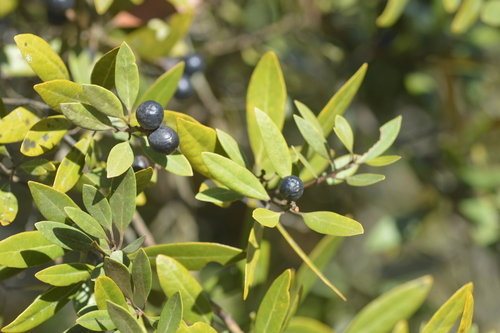
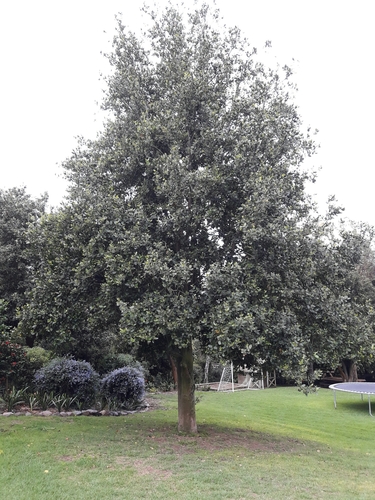
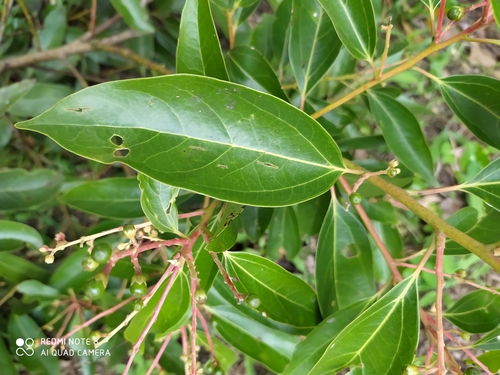
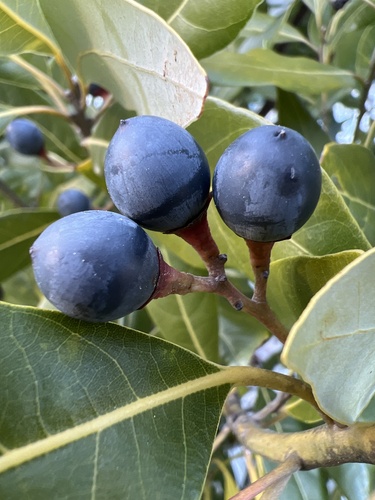
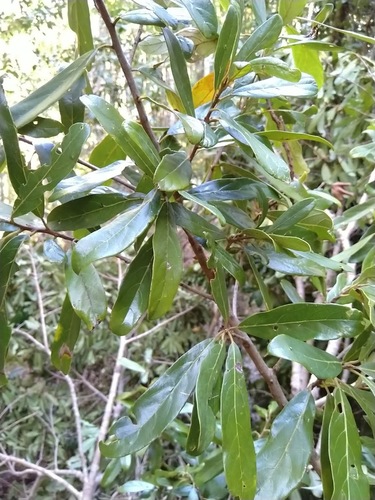
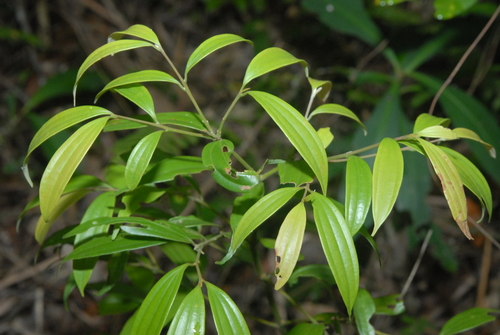
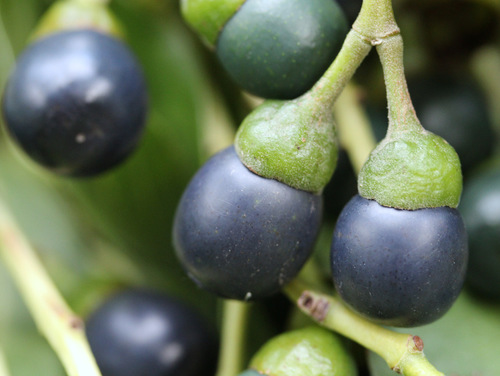
This plant is Cinnamomum oliveri F.M.Bailey. Its trunk is usually cylindrical, and occasionally flanged. The bark is grey or brown, with a corky layer that forms vertical lines of corky pustules. Leaves are opposite and simple, with entire wavy margins; they are smooth, lanceolate, pointed, and gradually taper toward the base. Leaves are shiny green on their upper surface, and bluish grey and glaucous on their lower surface. They measure 8 to 15 cm long and 2 to 4 cm wide, attached to a 6 to 12 mm long leaf stalk. Leaf venation is distinct on both leaf surfaces, and the midrib is raised. Between October and November, fragrant cream-coloured flowers grow in panicles at the ends of branchlets, or in leaf forks near the ends of branchlets. The fruit is a blue-black or black, oval, shiny, aromatic drupe, around 12 mm long. Fruit ripen between February and April, and they often develop galls. Fruiting occurs prolifically roughly every seven years. The fruit is eaten by rainforest birds, including the white-headed pigeon, pied currawong, and green catbird. Like fruit from most Australian laurels, removing the fleshy aril is recommended to help seeds germinate. Seeds have a short lifespan, as they deteriorate when dried. This species is common in warm temperate rainforest areas growing on sedimentary soils in cool mountain locations, and it can also be found in subtropical rainforest. The bark of Cinnamomum oliveri contains both tannin and an essential oil. The chemical content of the oil varies by the species' chemical variety: it may be rich in camphor, safrole, and methyleugenol, or rich in cinnamic aldehyde and eugenol. The oil may be used for medicinal purposes. The fragrant timber of this species is used for indoor lining and cabinet work. The timber weighs between 560 and 660 kilograms per cubic metre.