About Cinclodes comechingonus Zotta & Gavio, 1944
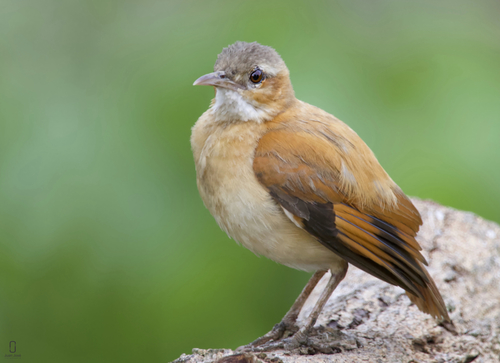
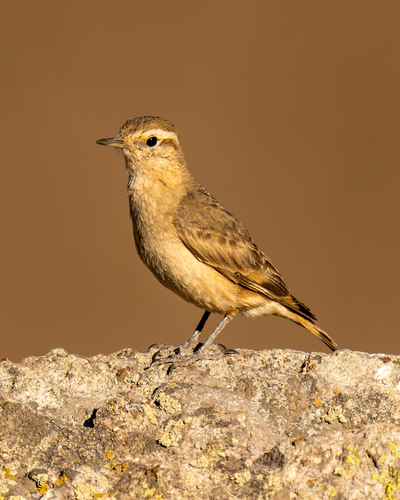
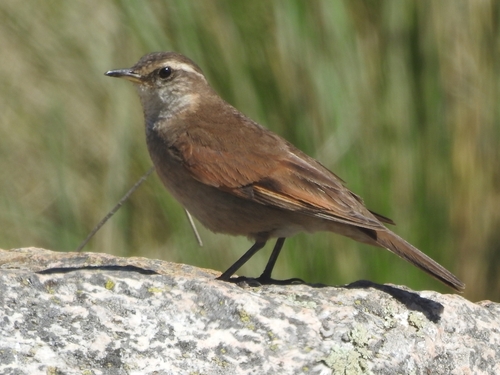
The Cordoba cinclodes, Cinclodes comechingonus Zotta & Gavio, 1944, is approximately 17 cm (6.7 in) long and weighs 25 to 32 g (0.88 to 1.1 oz). Both sexes share identical plumage. Adult individuals have a buff-white supercilium, and a dark gray-brown stripe extending from the lores through the ear coverts. Their crown and upperparts are gray-brown. Their wings are also gray-brown, with a wide rufous band at the base of the flight feathers that has black edges. This band is the largest and brightest of any species in the cinclodes genus. Their tail is dark gray, with the exception of the outer pair of feathers, which are blackish with pale rufous tips. Their throat and breast are white with dark scallop-shaped markings, their flanks are light brown, and their belly and undertail coverts are pale buff-white. Their iris is brown, their bill is black with a yellow base on the lower mandible, and their legs and feet are black. The Cordoba cinclodes is endemic to the Comechingónes Mountains of north-central Argentina, where it occurs from Córdoba Province north into Tucumán and Santiago del Estero provinces. It lives in open, grassy areas that are frequently rocky, and it associates with water less often than other cinclodes species. Most of its population is found at elevations between 1,600 and 2,800 m (5,200 and 9,200 ft), though it has been observed as high as 3,300 m (10,800 ft) near Aconcagua.