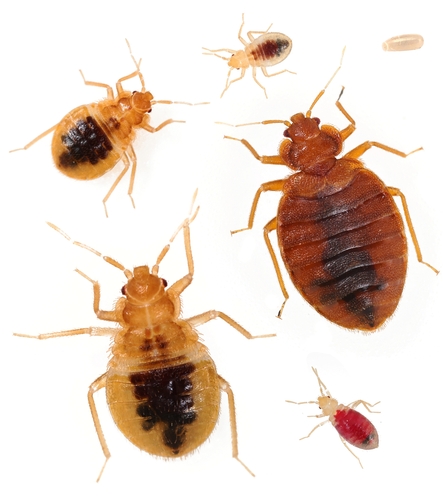
About Cimex lectularius Linnaeus, 1758
Cimex lectularius, commonly known as the common bed bug, is a species in the family Cimicidae. Its primary hosts are humans, and it is considered one of the world’s major nuisance pests. While bed bugs can be infected with at least 28 different human pathogens, no studies have confirmed that these insects can transmit any of these pathogens to people. They have been found carrying methicillin-resistant *Staphylococcus aureus* (MRSA) and vancomycin-resistant *Enterococcus faecium* (VRE), but the public health significance of this finding remains unknown. Investigations into the potential spread of HIV, MRSA, hepatitis B, hepatitis C, and hepatitis E by bed bugs have not found evidence that these insects can transmit these diseases. There is, however, some limited evidence that arboviruses may be transmissible by bed bugs. Bites from bed bugs, called cimicosis, can cause a range of skin reactions, from no visible effects at all to prominent blisters. Common effects of bites also include skin rashes, allergic symptoms, and negative psychological effects. Cimex lectularius is found worldwide in nearly every region settled by humans. Historically, bed bug infestations were especially common among low-income groups and occurred in large mass shelters. During the early stages of the modern global resurgence of bed bugs, tourist areas were the first to be heavily impacted. Today, bed bugs can be found in a diverse range of locations, including hospitals, hotels, trains, cruise ships, and even airplanes. Bed bugs most often travel as stowaways in luggage, but they can also be moved through furniture and other personal belongings, or spread between adjacent properties. Because there are no mandatory requirements to report bed bug infestations, exact data on how common infestations are is not available. Many infestations also go unreported due to the social stigma attached to having bed bugs. If a female adult bed bug feeds regularly, she can lay between two and three eggs per day throughout her entire adult lifespan, which can last several months. This means a single female can produce hundreds of offspring under optimal conditions. The eggs are tiny, measuring less than 1 mm across, yellowish-white, and vase-shaped. Females lay eggs in harborages—protected sites where bed bugs rest between blood meals, where they spend almost all of their time. Even though bed bugs are parasitic, they do not live on their hosts, and only make brief contact with hosts to feed on blood. At room temperature, eggs usually hatch within 10 days, but eggs become non-viable at temperatures below 14 °C (57 °F). Cimex lectularius goes through five immature life stages, and each stage requires a blood meal before the insect can develop to the next stage. The entire life cycle progresses faster at warmer temperatures, and slower at cooler temperatures. After the egg hatches, the larval bed bug must take one blood meal per week as it completes each of its five to six molts. Once the final molt is finished, the insect reaches the adult stage and is able to reproduce. Blood meals take several minutes to complete, and bed bugs will only feed when specific conditions are met: darkness, warmth, and the presence of carbon dioxide. C. lectularius typically feeds on hosts while they are asleep. They feed almost exclusively on humans, and are obligate blood feeders, meaning they must consume blood to survive. Newly hatched nymphs must eat a blood meal within two to three days, or they will die of starvation. Adult bed bugs, by contrast, can survive for as long as six months between blood meals.

